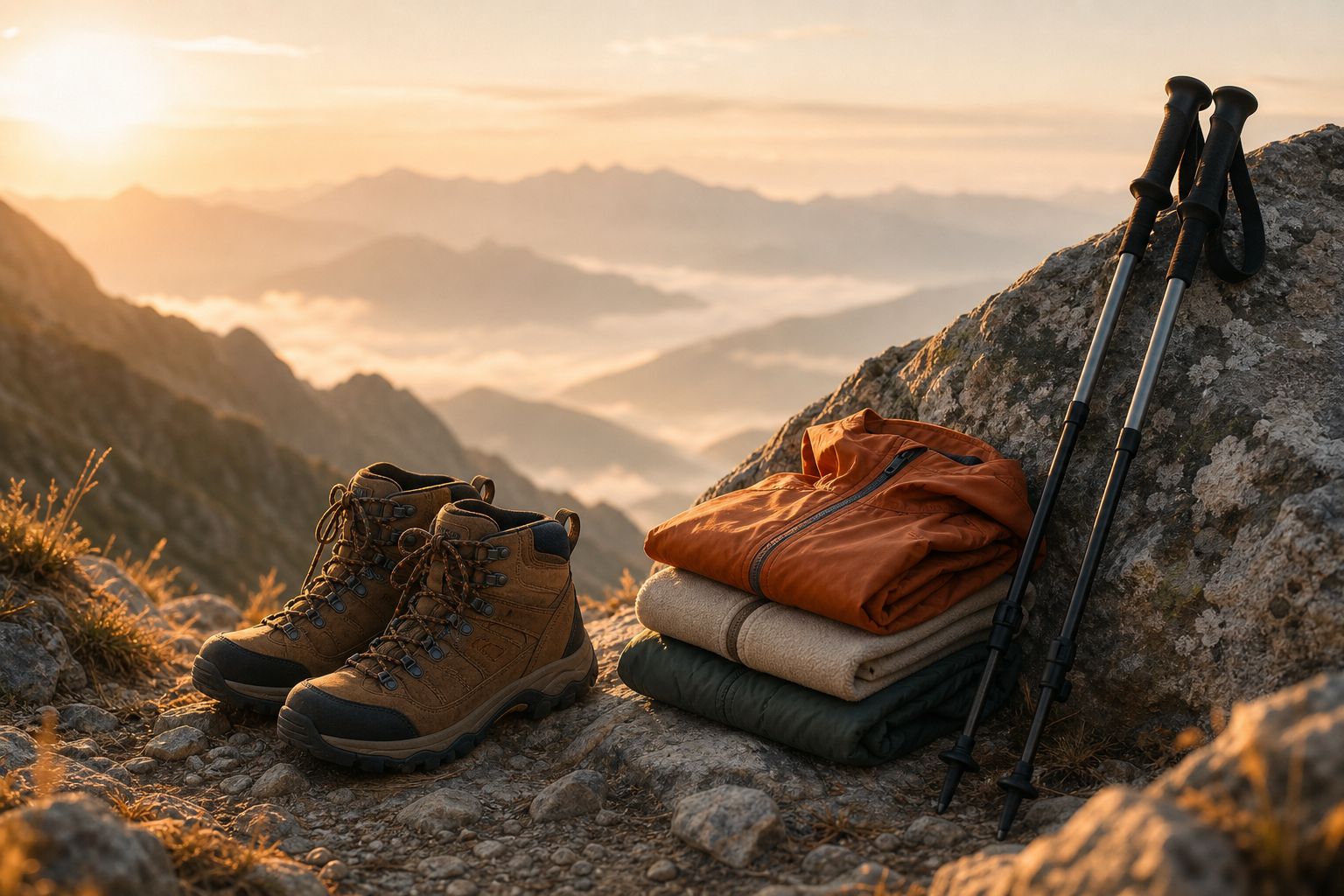
Gasping for breath at every step? Knees hurting so much that you question your life?
Hiking requires not just physical strength, but strategy.
Many think buying the best gear is enough and walking fast makes you strong. But true hiking veterans seem to walk very slowly on steep slopes, yet never need major rests all day, and always arrive at the mountain hut first.
The difference lies in correct gear configuration and pacing rhythm.
The Core of the Onion Layering System is “Dryness”, Not “Thickness”
At high altitudes, sweat is the invisible killer of hypothermia.
You might think the thicker you wear, the safer you are. But a super thick down jacket will make you sweat heavily during movement. The heat carried away by sweat evaporation is far more terrifying than you think.
The core purpose of the onion layering system is not blindly seeking thickness, but to quickly adjust according to “movement (sweating)” and “rest (wind exposure)” to keep the body dry and comfortable.
| Layer | Name | Material | Function |
|---|---|---|---|
| Base | Wicking Layer | 100% Synthetic Fibers | Quickly wick sweat from the skin surface to keep dry |
| Mid | Warmth Layer | Fleece or Lightweight Down | Lock in the heat emitted by the body |
| Outer | Protection Layer | Waterproof & Breathable Material | Windproof, rainproof, and snowproof |
Base layer is strictly forbidden to use cotton materials. Cotton absorbs water and is extremely hard to dry. When the cold high-mountain wind blows, it will stick to your body like an ice pop, which is the beginning of hypothermia.
Clothing Switch Between Movement and Rest
| State | Recommended Clothing | Reason |
|---|---|---|
| Moving (sweating) | Base layer + outer layer as needed | Avoid overheating and heavy sweating, keep dry |
| Short Rest (1-3 mins) | Keep unchanged | Time is short; sweat has no time to cool down |
| Long Rest or Camp Arrival | Put on a down jacket immediately | After stopping, cold wind will carry away several times more heat |
“Take it off when hot, put it on when cold; never be lazy.”
It is completely normal to adjust your clothes every 5 minutes while hiking.
Reducing Load is Reducing Oxygen Consumption: Ultralight Principles
In a high-altitude oxygen-depleted environment, every kilogram you carry consumes extra oxygen.
Reducing backpack weight is not just to make you walk comfortably, but directly reduces cardiopulmonary burden, indirectly lowering the risk of high altitude illness.
| Ultralight Principle | Explanation |
|---|---|
| Multi-use items | Buff can be used as a mask, sweat towel, and neck warmer |
| Calculate food precisely | Do not bring too many redundant "just-in-case" snacks; accurately calculate calories per meal |
| Choose lightweight gear | Choose the lightest version of gear with the same function |
| Shared gear sharing | Stove, cookware, and other group items shared for carrying |
Gear Myth: Oxygen Canisters are Not Life-Savers
Many feel safe putting two oxygen canisters in their backpack. But continuously pressing and inhaling from commercial portable oxygen canisters, one canister usually runs out within 2 to 5 minutes.
Oxygen canisters can only temporarily delay symptoms, not treat high altitude illness.
The best source of oxygen is your feet: walk down immediately when encountering danger.
How to Walk the "Rest Step"? Let Bones Carry the Weight
Many people are used to stepping with their toes when climbing, which causes the calf gastrocnemius muscle to fatigue and cramp extremely fast.
The correct way is to use bones rather than muscles to bear the body weight.
Correct Movement of Rest Step
| Step | Movement | Effect |
|---|---|---|
| 1 | Every step you take, step firmly with the whole sole | Disperse pressure, avoid overloading the calf |
| 2 | Slightly relax the knee the moment you step up | Prepare to enter bone lock |
| 3 | Fully straighten and lock the back leg bone | Use bones to bear weight, giving thigh muscles a 0.5-second relaxation |
This technique lets your bones help you carry the weight, while muscles are only responsible for propulsion.
It looks slow, but the energy consumption throughout the day is far less than rushing blindly.
Pacing Size Adjustment
| Terrain | Pacing Principle |
|---|---|
| Gentle Slope | Normal stride, maintain stable rhythm |
| Steep Slope | Shorten stride, rather take more steps than large strides |
| Extremely Steep | Walk in a zig-zag pattern to reduce the steepness of vertical ascent |
Coordinating Breath and Pacing: The Core Formula of "Dynamic Energy Saving"
The speed of pacing is not determined by feet, but guided by breath.
Breathing and Pacing Formula
| Terrain | Breathing Pace | Explanation |
|---|---|---|
| Slightly Steep | Step one step inhale, step one step exhale (1:1) | Maintain aerobic zone |
| Steep | Step one step, inhale + exhale (1:2) | Complete a full breathing cycle with every step |
| Extremely Steep | Stand still inhale, step exhale | Completely guide pacing with breathing |
Once you find your breathing is chaotic and you start gasping for air, shorten your stride immediately.
Never force your way up while gasping for breath.
Pursed-Lip Breathing: The "Breathing Hack" at High Altitude
| Step | Movement | Time |
|---|---|---|
| Inhale | Inhale through nose | 2 seconds |
| Exhale | Purse lips like blowing out a candle, exhale slowly | 4-6 seconds (exhale is 2-3 times of inhale) |
Exhaling slowly with pursed lips generates a small back pressure in the airway, which can support the bronchi and alveoli, preventing them from collapsing early due to low high-altitude pressure, giving alveoli more time for gas exchange.
Diaphragmatic Breathing: Inhaling Oxygen with Lower Lung
When tired or anxious, people tend to switch to shallow "chest breathing," using only the upper part of the lungs.
| Action | Explanation |
|---|---|
| Belly rises when inhaling | Push the diaphragm down to fully open the lower lobe volume of lungs |
| Belly contracts when exhaling | Relax naturally, prepare for the next deep inhalation |
The lower part of the lungs is filled with more capillaries.
Diaphragmatic breathing makes the effective oxygen intake of the same breath far greater than chest breathing.
Scientific Rest: Why "Those Who Cannot Rest Cannot Hike"?
Hypothermia most commonly occurs "within 5 to 10 minutes of just stopping to rest".
During movement, the body is like a furnace. Once stopped and blown by cold wind, sweat evaporation on clothes will carry away several times more heat.
Short Rest Formula: Stand to Rest, Less Than Three Minutes
| Frequency | Method | Time |
|---|---|---|
| Every 50-60 mins of moving | Do not sit down, do not unload pack, stand leaning against a tree or rock wall | 1-3 minutes |
| What to do | Adjust breathing, take 3 sips of water, eat a gummy or salt candy |
Standing keeps muscles in a slightly warm state. Time is short; sweat has no time to cool down, and the body will not enter hypothermia mode.
Major Rest Formula: Put on Clothes Before Sitting Down
| Frequency | Method | Time |
|---|---|---|
| Every 2-3 hours or lunch | Put down pack, pull out down jacket and put it on in the very first second | 15-20 minutes |
| When sitting | Never sit directly on cold stones, cushion with backpack or foam pad |
At this point, you might feel hot or even be sweating, but you must do "preventative warming". Coldness will invade your core from your buttocks before you know it.
Spending an extra 30 seconds to put on clothes can save you the huge price of being unable to walk later, or even retreating due to hypothermia.
Let Pacing Take You Further
Gear is external protection; pacing is internal rhythm.
Combining correct clothing strategy, ultralight configuration, rest step technique, and breathing pace is what the hiking world calls "Dynamic Energy Saving".
Master this system, and you will be able to enjoy the scenery along the way, instead of just gasping for breath.
Reference
- Altitude sickness - Wikipedia
- High Altitude Illness - Centers for Disease Control, Taiwan
- High-Altitude Physiology, Prevention and Treatment of High Altitude Illness - Yushan National Park Headquarters, Ministry of the Interior
- Travel Medicine Education and Training Center
- Travel Health Service - Mountain Sickness