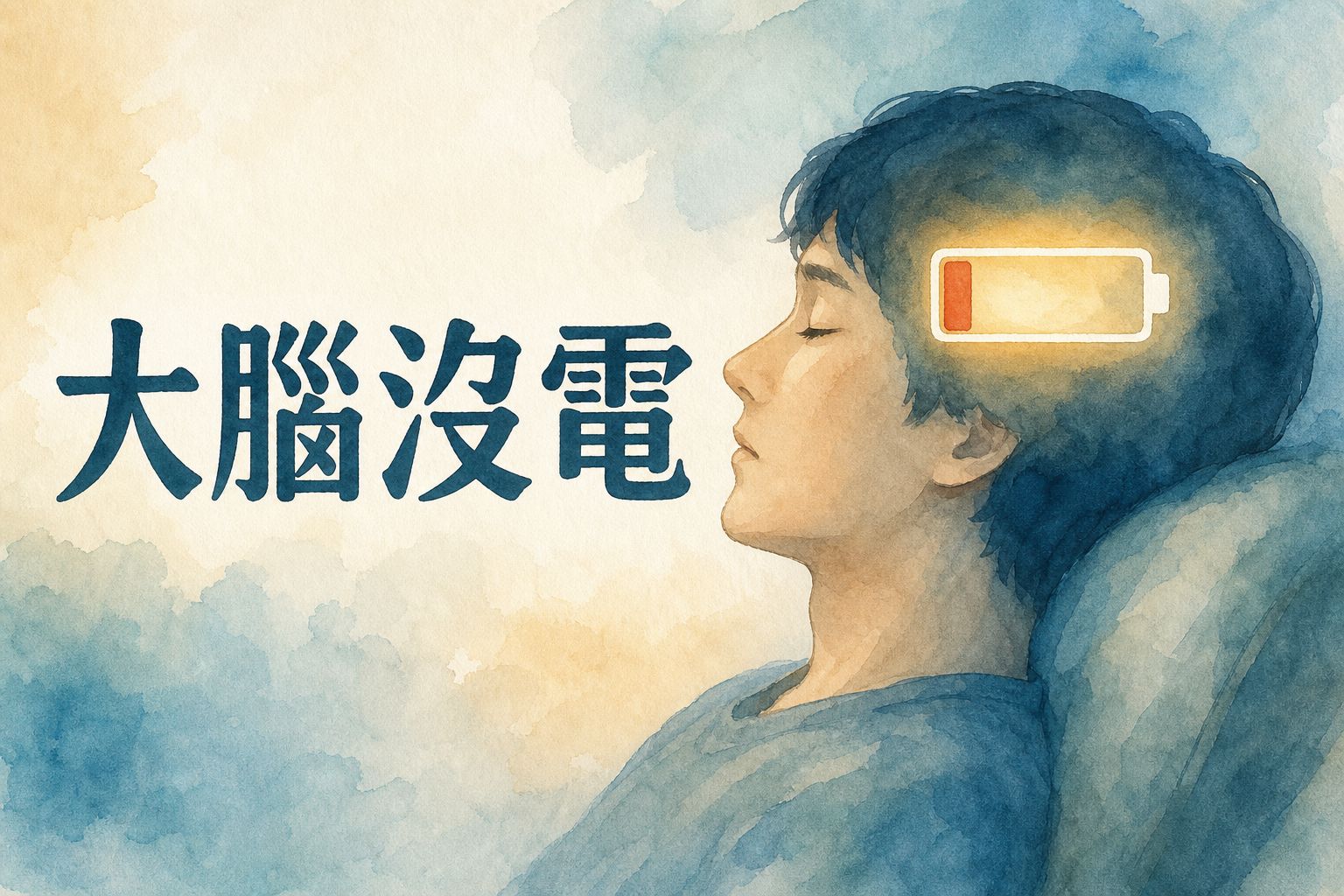
Have you ever felt this way? You know in your heart that you should work and there’s a pile of things waiting to be done, but your body feels like concrete, completely refusing to move.
You lie there frantically blaming yourself, and as a result, the more you rest, the more tired you feel.
Don’t rush to label yourself as ‘useless’. This isn’t laziness; it’s your brain flipping an invisible safety switch.
Why Does the Body Feel Like Concrete When You Want to Move?
When the brain is under chronic stress or anxiety, in order to prevent a total system crash, it activates a self-protection mechanism that forcibly cuts off your drive to act.
There are three interconnected reasons behind this:
| Mechanism | What happens in the brain | How you feel |
|---|---|---|
| Dopamine Depletion | The dopamine system responsible for motivation is temporarily bankrupt, and receptors become desensitized | You feel ’not stimulated enough, unable to get going’ for any task |
| Executive Function Tripping | The prefrontal cortex’s energy is drained dry, causing neural signals between planning and execution to disconnect | The mind wants to do it, but the body receives no commands |
| Freeze Response | Stress is so overwhelming that you can neither fight nor flee, causing the nervous system to enter a play-dead mode | Heart rate, metabolism, and mobility are forcibly turned down |
When facing threat, the human autonomic nervous system has three responses: fight, flight, and freeze.
When the brain assesses that it can neither fight nor flee, it activates the most ancient freeze response, leaving you frozen like an animal playing dead.
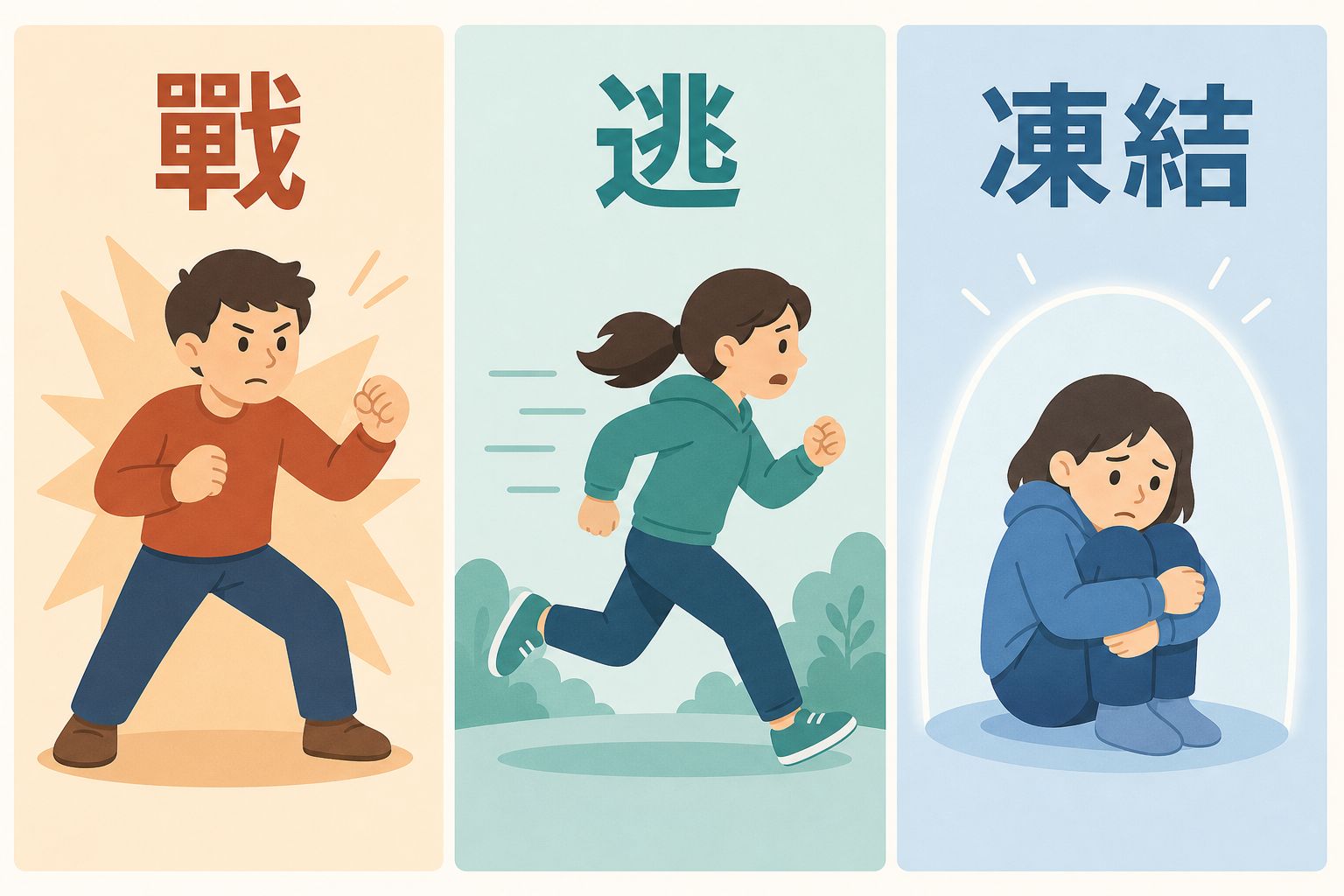
Under stress, the freeze response is the brain’s emergency protection mode, not a problem with your willpower.
The fact that you cannot move right now does not mean you are broken; it means the
brainhas forcibly pulled the fuse to prevent the entire system from burning out.
Why Do You Feel Exhausted Even After Lying Down All Day?
Since the brain is in a low-power mode, why is lying down all day still so tiring?
Because your brain is experiencing mental friction.
When you lie in bed, your reason is blaming yourself for being useless, and your emotions are anxious about what to do next. This invisible internal battle is actually more energy-consuming than running a marathon.
- Body cannot move
- Reason blames itself
- Anxiety spikes
- Brain’s mental friction becomes more severe
- Body gets more tired and even harder to move
When you lie down but keep thinking about work and criticizing yourself, your brain is fighting an internal war at 200% power, which is the real reason why the more you rest, the more tired you feel.
Therefore, the first step is not to find motivation, but to stop the bleeding first.
The “Reboot Method” that Truly Charges the Brain
To truly fully recharge, you cannot rely on motivational quotes to push yourself; that will only add fuel to the fire.
What you need is a brain reset to channel the overloaded energy from the brain back into the body.
| Method | Why it works |
|---|---|
| Visual Fasting | Over 30% of the brain’s neurons process vision. Turn off bright lights, wear an eye mask, and listen to lyric-free ambient sounds to instantly cut the CPU load by half |
| Aimless Walking | Without headphones or looking at your phone, activate the brain’s default mode network to automatically clean up memory and emotional clutter |
| Low-Cognitive-Load Activities | Watch an old movie you’ve already seen 10 times. The brain has absolute control over the plot, allowing the amygdala to completely relax |
| High Somatosensory Stimulation | Take a hot shower and focus on the feeling of hot water hitting your skin, switching the brain from thinking mode to sensing mode |
The only key point is: reduce the number of decisions the brain needs to make.
Tonight, pick a video you’ve watched many times, take a hot shower, and lie down in a dimly lit room—this is the best factory maintenance for your brain.
How to Avoid the Trap of “Pseudo-Recovery”?
Some people return to work as soon as they feel slightly better, only to run out of power again in less than a day.
This is called pseudo-recovery, just like a phone showing 100% when plugged in, but shutting down instantly once unplugged and running a high-energy App.
To avoid a second blackout, you must rebuild the power grid gradually in stages.
| Stage | Timeframe | What to do |
|---|---|---|
| Cut Off Mental Friction | 1–3 days | Lie down guilt-free, turn off work communications, and reduce decision-making |
| Micro-Action Guidance | 4–7 days | Soak in the sun for 10 minutes daily, walk aimlessly, and complete micro-tasks under 1 minute |
| Low-Energy Dry Run | Afterwards | Use the 20% energy consumption testing method to do only 30 minutes of mechanical chores, and shut down the computer to rest immediately when time is up |
The focus of the dry run is not to finish the tasks, but to test how long the brain can hold up under load, while protecting the fragile, newly repaired power grid.
How to confirm if you are truly recovered? Do not use "whether you have motivation" as the standard.
When you start to feel ‘so bored, I want to find something to do’, can decide what to eat for lunch in 3 seconds, can sincerely laugh at old movies, and wake up without a heavy body, it means the power grid is truly rebuilt.
Accept Your Current Low-Battery Self
Don’t rush to find your life goals.
When the brain’s energy is depleted, it automatically shuts down all thoughts about the future and ideals, because those are too luxurious and energy-consuming for you right now.
Therefore, not being able to find goals right now is a completely normal physiological protection.
Put finding goals at the very end. Start first with thoroughly lying down guilt-free. This is like a severe cold for the brain. Accepting your current low-battery self is the first step to rebooting.