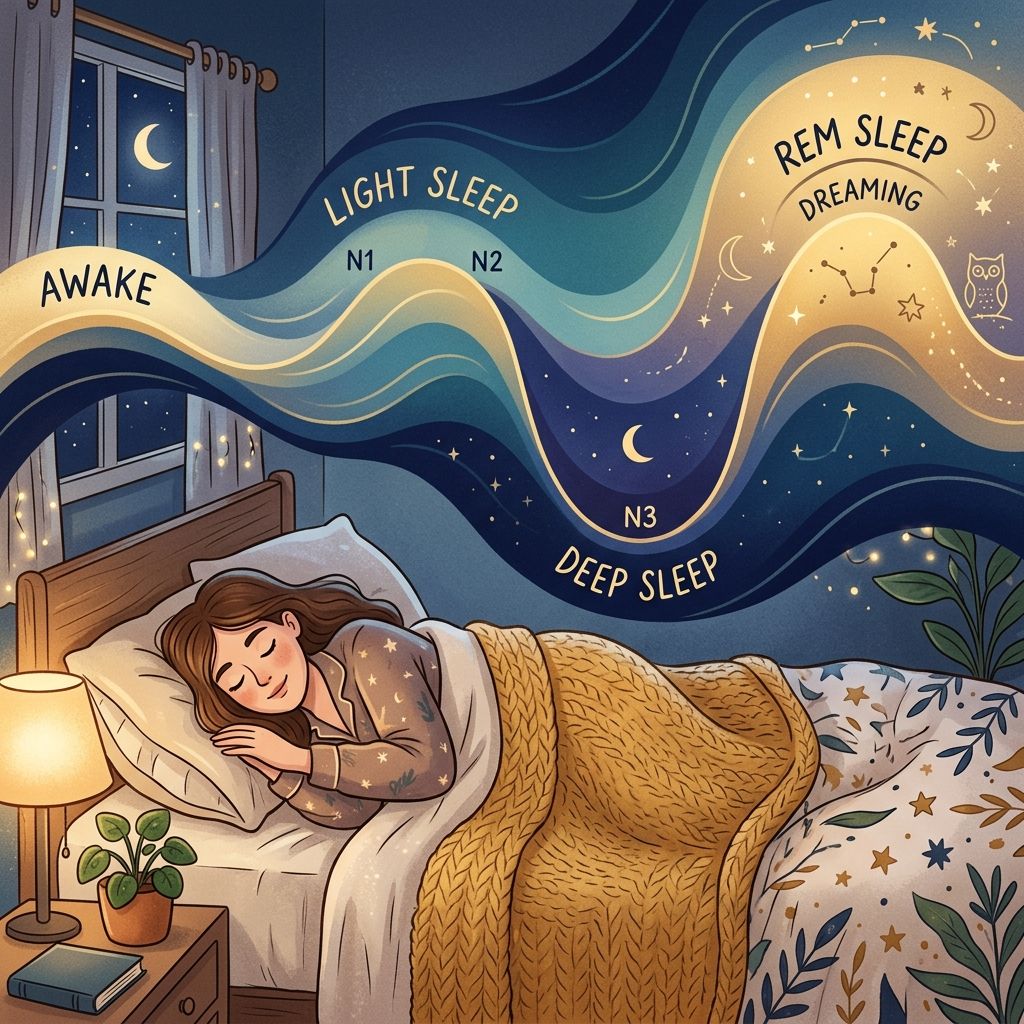
Sleeping 10 hours on the weekend, yet waking up with a sore body and a foggy brain, as if run over by a truck?
You probably have had this experience: clearly sleeping for a long time, but not feeling “fully charged” at all the next day, completely running out of energy after less than 2 or 3 hours of activity.
Actually, this is not because you didn’t sleep enough, but because there is a problem with your “sleep efficiency”.
Sleep is like charging a mobile phone. If the charging cable has a poor connection and high-drain apps are left running while charging, the battery still won’t be fully charged even if plugged in for 10 hours.
What exactly do we experience when we sleep at night?
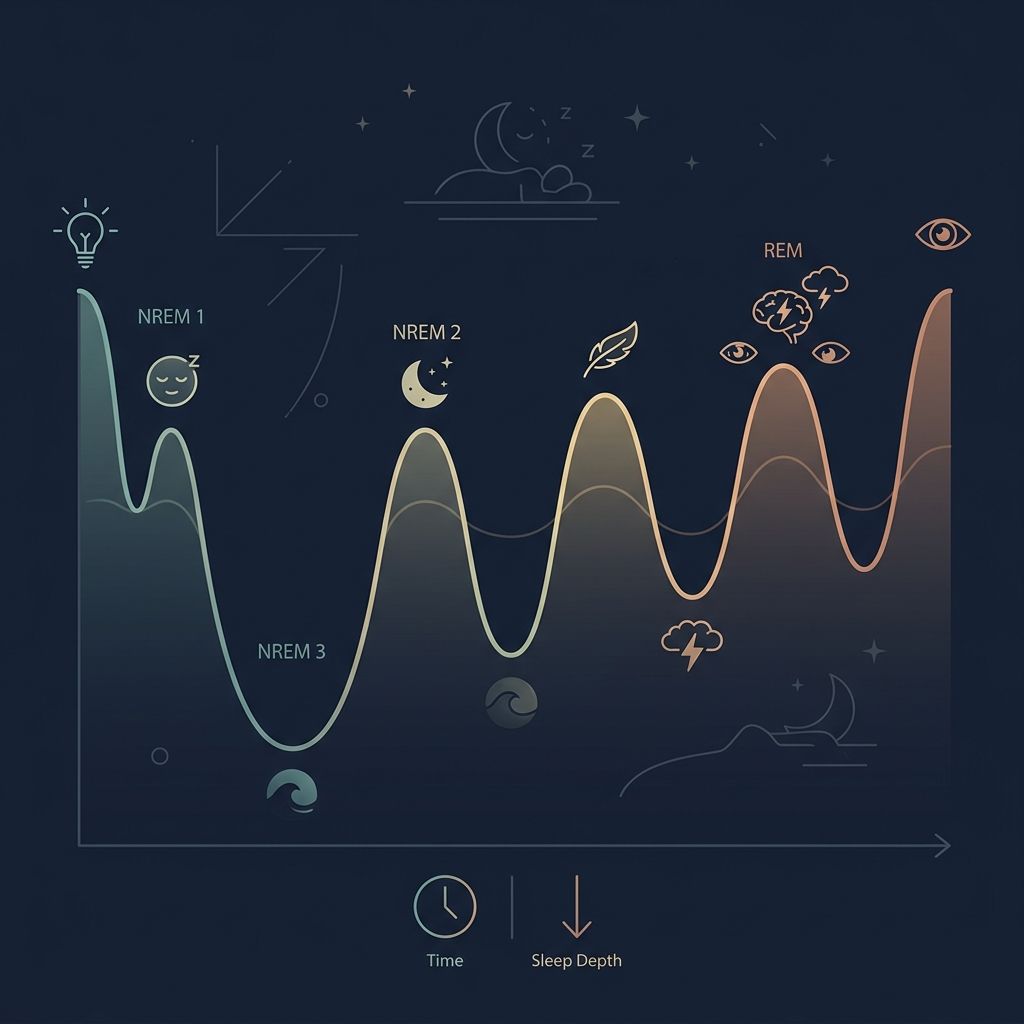
Many people think that sleeping is a straight line from closing to opening eyes, but human sleep is actually a cycle consisting of several 90-110 minute “sleep cycles”.
Each cycle passes through the following stages in sequence:
| Sleep Stage | Characteristics | Function |
|---|---|---|
| Light Sleep (N1-N2) | Slowed heart rate, relaxed muscles, but easy to wake up | The body’s “standby mode”, consciousness begins to rest |
| Deep Sleep (N3) | Extremely slow brainwaves, lowest heart rate and blood pressure, hard to wake up | Brain detox, growth hormone secretion, muscle and immune system repair |
| REM Sleep (REM) | Rapid eye movement, brain as active as during the day | Consolidation of memory, organizing daytime emotions and thoughts |
A complete night of sleep usually cycles 4 to 6 times (about 6 to 9 hours).
Deep sleep accounts for only 15%-25% of the night (about 1 to 2 hours), yet it is the “golden repair period” for the brain and body.
Why is waking up during the “deep sleep” phase so painful?
If you have ever felt like your “soul was violently ripped out” the moment the alarm went off, it is very likely because you were forced awake right during the deep sleep phase.
During deep sleep, brain activity drops to its lowest and body muscles are completely relaxed, as the body executes high-priority repair procedures. Being interrupted at this time is like unplugging a computer while it is running a system update; you will end up in an extremely groggy state.
How to avoid being woken up by an alarm during “deep sleep”?
This requires using the 90-minute sleep cycle rule to work backward and find your bedtime.
Assuming you want to wake up at 7:00 AM, here are a few “golden bedtimes”:
| Cycle Count | Pure Sleep Time | Recommended Bedtime |
|---|---|---|
| 6 Cycles | 9 Hours | 9:45 PM |
| 5 Cycles | 7.5 Hours | 11:15 PM |
| 4 Cycles | 6 Hours | 12:45 AM |
The average person takes 15 minutes to fall asleep, and the times above already include these 15 minutes.
What exactly is the brain doing during deep sleep?
Although deep sleep is short, what happens during this time is the most important part of the entire night’s sleep.
| Function | Description |
|---|---|
| Brain Wash | Brain cells shrink by about 60% during deep sleep, allowing cerebrospinal fluid to flood in like a car wash, flushing away metabolic waste accumulated during the day (including amyloid beta associated with Alzheimer's disease) |
| Growth Hormone Burst | 75% of the human body’s growth hormone is secreted during deep sleep, responsible for repairing muscle tissue and rebuilding the immune system |
| Nerve Decompression | Completely shuts down the sympathetic nervous system (fight-or-flight mode), allowing tight nerves to fully cool down after intense brain work |
If deep sleep is insufficient, no matter how long you lie down, your brain and body are actually “repeating a grade” without graduating.
Who stole your deep sleep?
Many people “sleep for 8 hours but wake up feeling like they haven’t slept,” which is medically called “ineffective sleep”.
The problem is not “insufficient time,” but that “deep sleep has been stolen.”
Common Culprits Stealing Deep Sleep
| Culprit | How It Steals |
|---|---|
| Sleep Apnea | Airway collapse leads to brief brain oxygen deprivation. Although you do not actually wake up, the brain spends the night being “pulled back” from deep sleep to light sleep to resume breathing |
| Alcohol | Drinking alcohol helps you “fall asleep faster,” but once metabolized, it completely shatters deep sleep and REM sleep in the second half of the night, filling it with imperceptible micro-arousals |
| Residual Caffeine | The half-life of caffeine is as long as 5-7 hours. The cup of coffee you had at 3 or 4 PM may still leave 1/4 of its caffeine in your body by 11 PM, blocking the brain’s signals to receive the “sleep debt” |
| High-Sugar Midnight Snacks | The stomach and intestines must work overtime to digest through the night, activating the sympathetic nervous system and raising core body temperature, which naturally prevents the brain from entering deep sleep |
| Hot or Bright Room | If the core body temperature cannot drop, the brain mistakenly believes you are in a crisis and locks you in easily-aroused light sleep all night |
Most deep sleep is concentrated in the first half of the night (the first 3-4 hours of falling asleep). If this golden period is disrupted, no amount of sleep later can make up for it.
How to get back stolen deep sleep?
Deep sleep cannot be extended by willpower, but there is a fixed physical trigger mechanism for the brain to switch into deep sleep. By doing the right things, you can effectively increase your deep sleep time.
Core Cooling: The Physical Switch for Deep Sleep
The body must experience a drop of about 1-2°C in core body temperature (visceral temperature) before the brain can smoothly switch into deep sleep.
| Method | How to Do It |
|---|---|
| Take a hot bath 90 minutes before bed | Hot water expands blood vessels on the skin surface. After bathing, heat dissipation accelerates significantly, and core body temperature drops to its lowest point just as you prepare to sleep, pushing the brain directly into deep sleep |
| Set bedroom temperature to 18-22°C | Avoid excessively heavy blankets. Sweating at night raises the core body temperature and interrupts deep sleep |
Fix “Wake-Up Time” Instead of Obsessing Over Bedtime
No matter how late you slept last night, wake up at the exact same time (keeping the error within 30 minutes).
By fixing your wake-up time, you accumulate enough “sleep debt” to trigger your body to fall asleep naturally at night. Instead of obsessing over “what time you can fall asleep tonight,” a stable wake-up time is the most effective way to recalibrate your biological clock.
Cut Off “Deep Sleep Thieves”
| Action | Description |
|---|---|
| No alcohol 4 hours before bed | Alcohol is the greatest enemy of deep sleep. It is better to fall asleep later than to use alcohol for sleep |
| No caffeine after 2 PM | Includes coffee, green tea, hand-shaken drinks, and cola |
| No heavy meals 3 hours before bed | Especially high-starch and high-sugar midnight snacks |
Establish a 30-Minute “Bedtime Buffer Zone”
Put down your phone 30 minutes before bed and do some boring, brainless activities:
- Dim the bedroom lights
- Stretch your body
- Listen to relaxing music
Allow the brain’s engine to cool down slowly, instead of jumping directly from full throttle to shutdown.
Things You Might Not Know About the “90-Minute Rule”
The 90 minutes is only an “average value”; each person’s sleep cycle may fall between 80 and 110 minutes.
You can use this method to find your brain’s own unique “cycle code”:
- Experiment for three consecutive days with the “5-cycle” recommendation (e.g., wake up at 7:00 AM, go to bed at 11:15 PM)
- If you wake up automatically a few minutes before the 7:00 AM alarm and feel energetic, congratulations, your cycle is indeed 90 minutes
- If waking up at 7:00 AM is still painful, try shifting bedtime 15 minutes earlier or later, and fine-tune a few times to capture it
When you wake up feeling like “time went by so fast, as if it dawned just as you closed your eyes,” it means your deep sleep was very solid last night.
Sleep is like charging a mobile phone; what matters is if the charging “voltage is stable,” not how long it’s plugged in.
Try to distance yourself from the culprits that steal your deep sleep, and retrieve your golden repair period.