The most difficult part of the Pomodoro Technique is often not the 25 minutes of focus, but whether you are willing to sit back down in your seat after the 5-minute break.
Many people get stuck in this context switching obstacle, finding it even harder to rebuild motivation to restart after the break ends.
How to Use the Two-Minute Saving Method When the Timer Rings?
The key to solving thought interruption is not cleaning up your work beautifully, but deliberately leaving a mental anchor.
At the moment the timer rings, spend 1 to 2 minutes writing down your current progress and the next step to do.
This approach utilizes the
Zeigarnik Effect, intentionally stopping at the most smooth and unfinished part, keeping the brain slightly attached to this task.
Because you still have the unfinished part on your mind, you can instantly slide back into the work state after the break ends, without needing to spend time getting back into the zone.
What to Do If You Are in a Flow State or Finished Early?
In reality, the Pomodoro timer will not always end exactly at 25 minutes, requiring some flexible handling:
| Scenario | Recommended Approach |
|---|---|
| In a flow state, don’t want to be interrupted by the alarm | For beginners, it is recommended to force a stop to keep the suspense and build discipline; experienced users can extend it, but must arrange double break time |
| Finished the task early | Do not end early; use the remaining time for overlearning, rechecking content or optimizing details |
Why Is Using Your Phone a Pseudo-Break? The Real Purpose of the 5 Minutes Is the Diffuse Mode
Although the 5-minute break seems like relaxation, many people’s practices actually fail to achieve the effect of resting.
Using a phone provides high cognitive load and high dopamine stimulation; the brain not only fails to truly rest, but actually becomes more tired.
Truly effective rest is letting the brain switch to the diffuse mode, clearing the temporary information accumulated just now, and automatically connecting different information in the background, which actually makes it easier to generate inspiration.

How to Fully Relax Your Eyes and Body During Breaks?
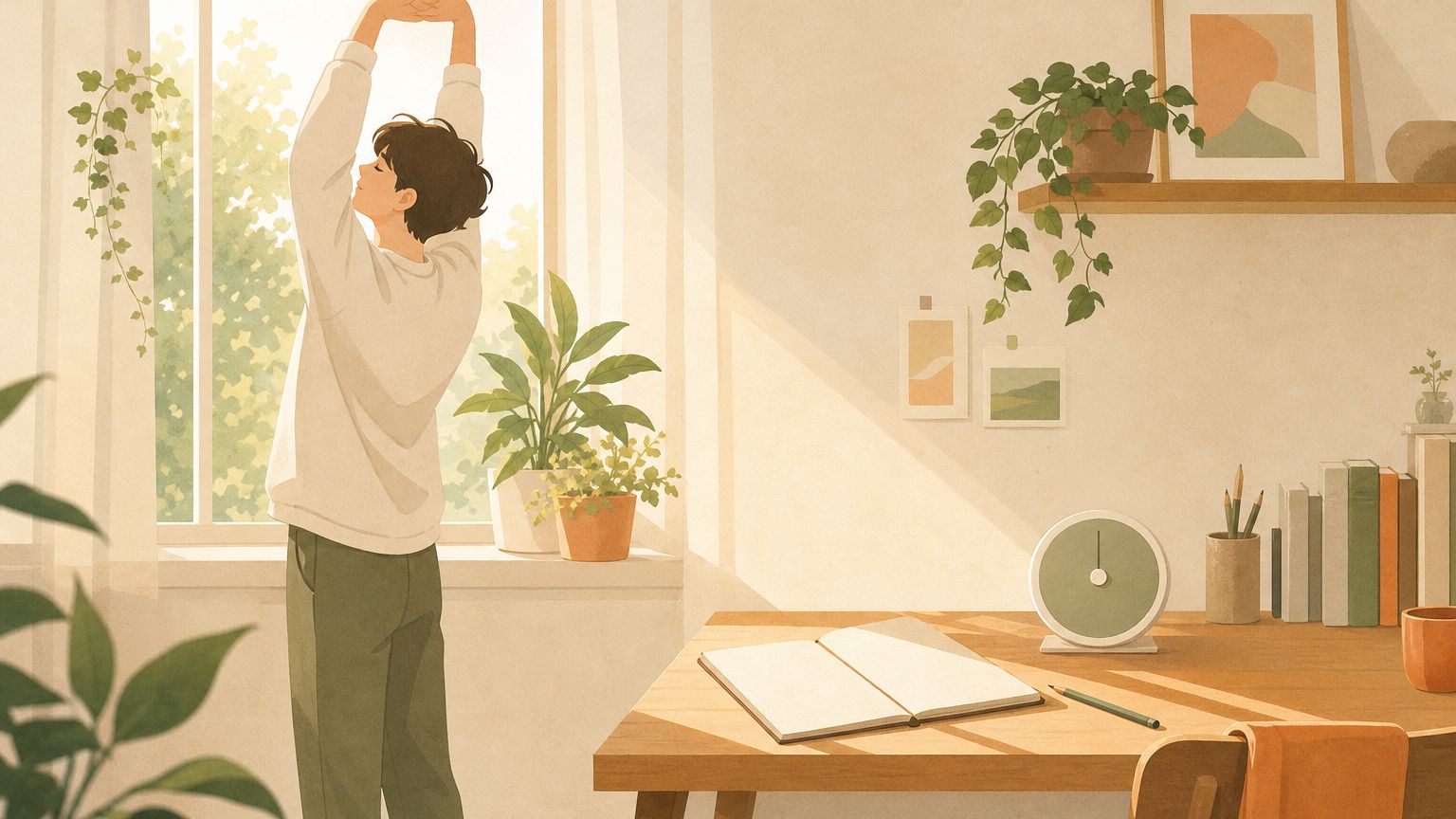
While the brain switches to the diffuse mode, the body also needs corresponding relaxation movements:
| Body Part | Relaxation Method |
|---|---|
| Eyes | 20-20-20 rule, look at a place 20 feet away for 20 seconds to relax the ciliary muscles |
| Body | Walk around the pantry, or do a few calf raises and chest expansion stretches to activate the muscle pump and offset the pressure of prolonged sitting |
Knowing how to rest properly and establish checkpoints, the Pomodoro Technique will no longer be an exhausting tool that forces you to hold on, but a rhythmic system that helps you output continuously without easily getting fatigued.