
When speaking of the Pomodoro Technique, the image that pops up in most people’s minds is probably an office worker sitting in front of a computer or a student preparing for exams.
But did you know? When facing never-ending chores, or children who might knock on your door at any time, the Pomodoro Technique is actually an underrated life tool.
Can You Use the Pomodoro Technique for Physical Labor Like Chores and Gardening?
When using the Pomodoro Technique for physical labor, the focus of protection is no longer focus, but muscles and endurance.
Different types of household chores suit different ratios:
| Chore Type | Recommended Approach |
|---|---|
| Deep Cleaning | Limit to one area, set a 25-minute sprint, and move to the next area when the time is up to avoid the feeling of helplessness from trying to clean the whole house at once |
| Head-down labor such as gardening and weeding | Use a 20:5 ratio, and perform reverse stretching during breaks to offset the strain caused by bending over for long periods of time |
| Boring chores like washing dishes and folding clothes | Directly set a 15-minute sprint with no break to replace procrastination with a sense of speed |
For physical labor Pomodoros, the key is timely intervention for rest, rather than waiting until you are sore to stop.
How to Protect Your Eyes and Spine in a 5-Minute Break?
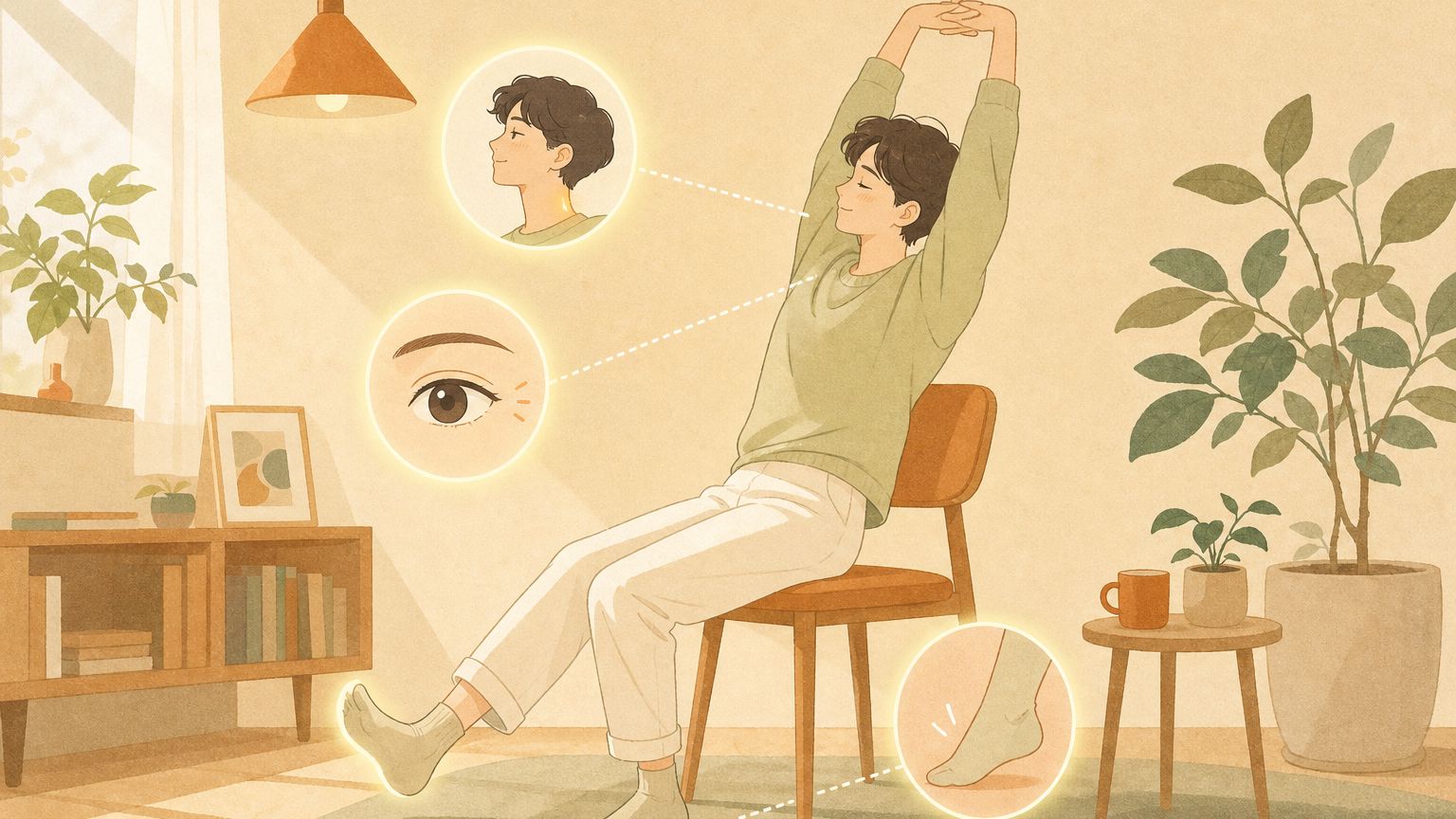
While the brain gets rest, the body is often ignored. For different parts of the body, a 5-minute break can offer effective care:
| Body Part | Care Method |
|---|---|
| Eyes | 20-20-20 Rule: Look at something 20 feet away for 20 seconds every 20 minutes to relax the ciliary muscles |
| Lower limb blood vessels | Do a few calf raises to activate the calf muscle pump and avoid blood stagnation caused by prolonged sitting |
| Spine and joints | Perform reverse movements such as chest opening and chin tucks to offset the strain from hunching and bending over |
These movements do not require leaving the room or any equipment, yet they allow the body to release tension before starting the next Pomodoro round.
How to Share Time with Kids When Working from Home?
The scariest part of working from home (WFH) is not having too much work, but kids knocking on your door at any time.
A practical approach is the time splitting method: agree with your child that they will play by themselves for a period of time (e.g., half an hour), and then the adult will focus on accompanying them for the next half hour, alternating back and forth.
When children know that “it will be my turn soon,” they are usually more willing to wait than being put off indefinitely with “just a moment.”
If there are working parents in the household, you can apply the same logic to take turns splitting work intervals, ensuring that both can have an uninterrupted block of focused work time, rather than both having their day fragmented.
Can the Pomodoro Technique Help Kids Build Focus?
The Pomodoro Technique is not just a tool for adults; it is also highly suitable for cultivating focus in children, though the duration needs to be adjusted.
| Child’s Age / Status | Recommended Duration |
|---|---|
| First attempt at focus practice | Start with 10 minutes and gradually extend it after success |
| Basic focus habits already established | Can be slowly extended to 15 to 20 minutes |
The core of the Pomodoro Technique is actually rhythm. Whether using your brain or your muscles, doing it alone or with the whole family, finding the rhythm that suits your life will help you leave a little more margin for yourself amidst the busyness.