
Do you often feel like you’ve been busy all day, with a packed calendar, but still feel like you accomplished nothing before leaving work?
Actually, the problem isn’t necessarily a lack of effort, but rather that your focus is constantly being interrupted.
The Pomodoro Technique uses a set period of time to divide work and rest, which is a simple way to regain control over your focus.
What Are the Basic Steps of the Pomodoro Technique? Why Do Many People Give Up Within a Week?
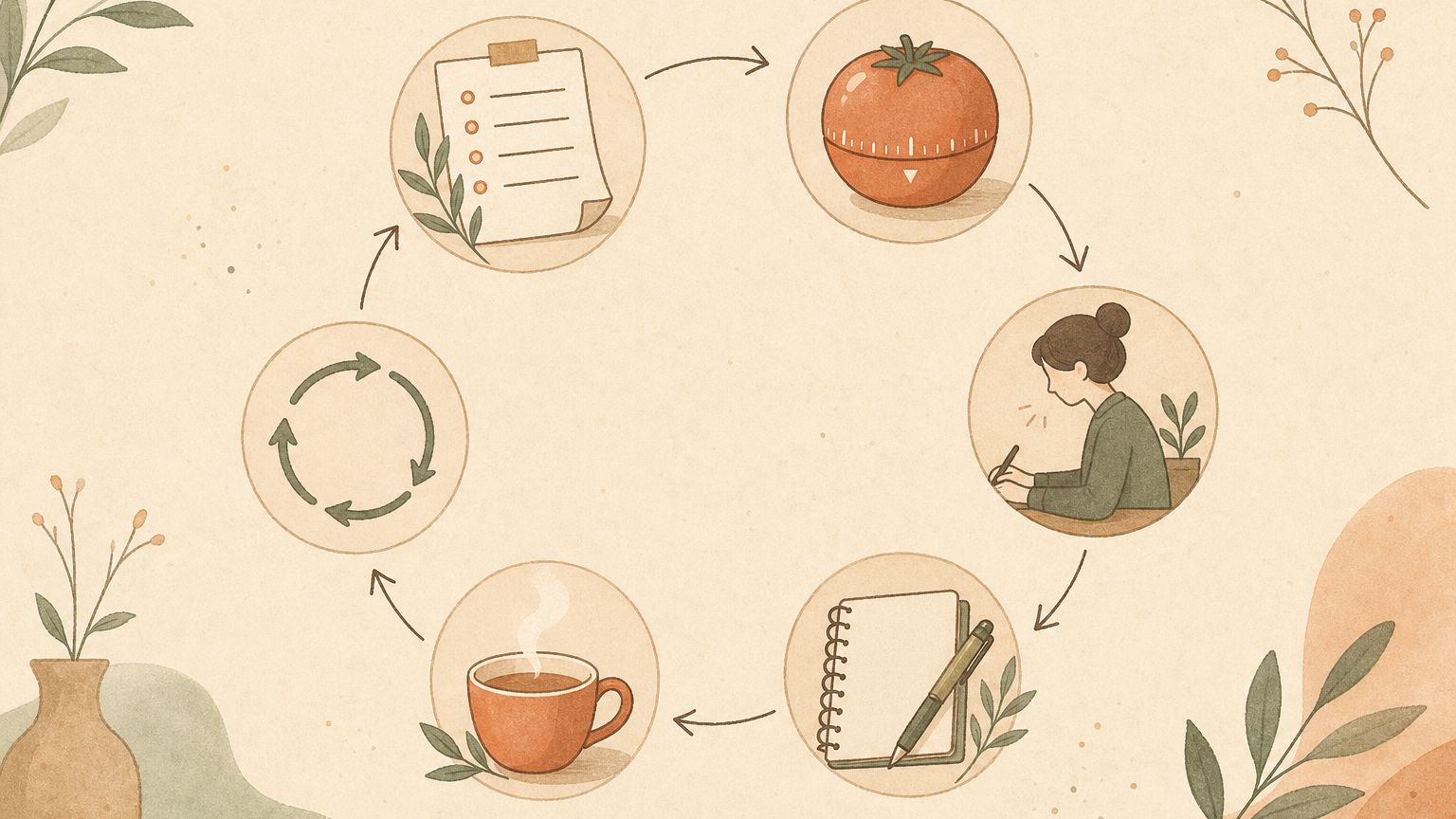
The operation of the Pomodoro Technique is not complicated; the core is repeating a fixed cycle:
| Step | Description |
|---|---|
| Select a Task | Choose one thing from your to-do list, and clarify what needs to be done before starting |
| Set a Timer | Set a countdown timer for 25 minutes |
| Focus on Work | Do only this one thing during the time, with no multitasking |
| Mark and Record | Check it off and record it after the alarm rings, accumulating completed Pomodoro sessions |
| Short Break | Take a 5-minute break to give your brain a breather |
| Repeat the Cycle | After completing 4 Pomodoro sessions, take a longer break of 15 to 30 minutes |
It seems simple, but many people cannot last a week before giving up. The reasons usually lie in two areas.
The first reason is a lack of pre-planning. Pressing the timer directly to start working without first cataloging what needs to be done today leaves you doing one Pomodoro after another without knowing which direction you are heading in.
It is recommended to first list your to-dos on a “Task Inventory Sheet,” and then estimate how many Pomodoros each task needs using a “Today’s Work Sheet” to capture the actual workload you can finish today.
The second reason is breaking the golden rule of the Pomodoro Technique.
The most easily ignored rule of the Pomodoro Technique is that it cannot be divided and cannot be paused.
Once you handle other things midway, this Pomodoro session must be voided and restarted, and cannot be paused to resume later.
How to Turn Office Distractions Into an Unstoppable Focus Shield?
When running a Pomodoro in the office, the biggest challenge is usually not your own distractions, but external interruptions like colleagues, messages, and phone calls.
Distractions can be roughly divided into two types, requiring different coping mechanisms:
| Type of Distraction | Coping Mechanism |
|---|---|
| Internal Thoughts | Prepare an “Emergency Memo” to write down other thoughts immediately, leaving them for the break and not interrupting the current Pomodoro |
| External Disturbances | Put on headphones to build a physical barrier, and set your messaging app status to “Focusing” to reduce the chance of colleagues interrupting you |
If a colleague has already walked up to you, you can first inform them of the work you are doing, then negotiate by asking if they can wait a moment, and finally schedule a specific time to reply.
This action is not about refusing to help, but rather moving the distraction from “now” to “later” so that you can finish the current Pomodoro first.
How to Smoothly Transition to the Next Pomodoro Session After the Alarm Rings?
Many people completely loosen up as soon as the alarm rings, making it harder to return to work after the break.
The solution is to take 1 to 2 minutes to perform a save action at the moment of the alarm:
Write down your current progress and the very next step to be taken.
This approach utilizes the Zeigarnik Effect, intentionally stopping at a convenient spot so that your brain maintains a slight attachment to the unfinished task, allowing you to quickly get back into the flow after the break.
Avoid checking your phone during the 5-minute break. The high dopamine stimulation from social media makes it harder for the brain to re-immerse in work that requires patience, making the next Pomodoro session harder to start.
The Pomodoro Technique is not about slicing work into prison-like grids, but rather helping you block distractions outside and reserve focus for yourself.
Pick one task from today’s list, set 25 minutes, and you too can regain control over your time.