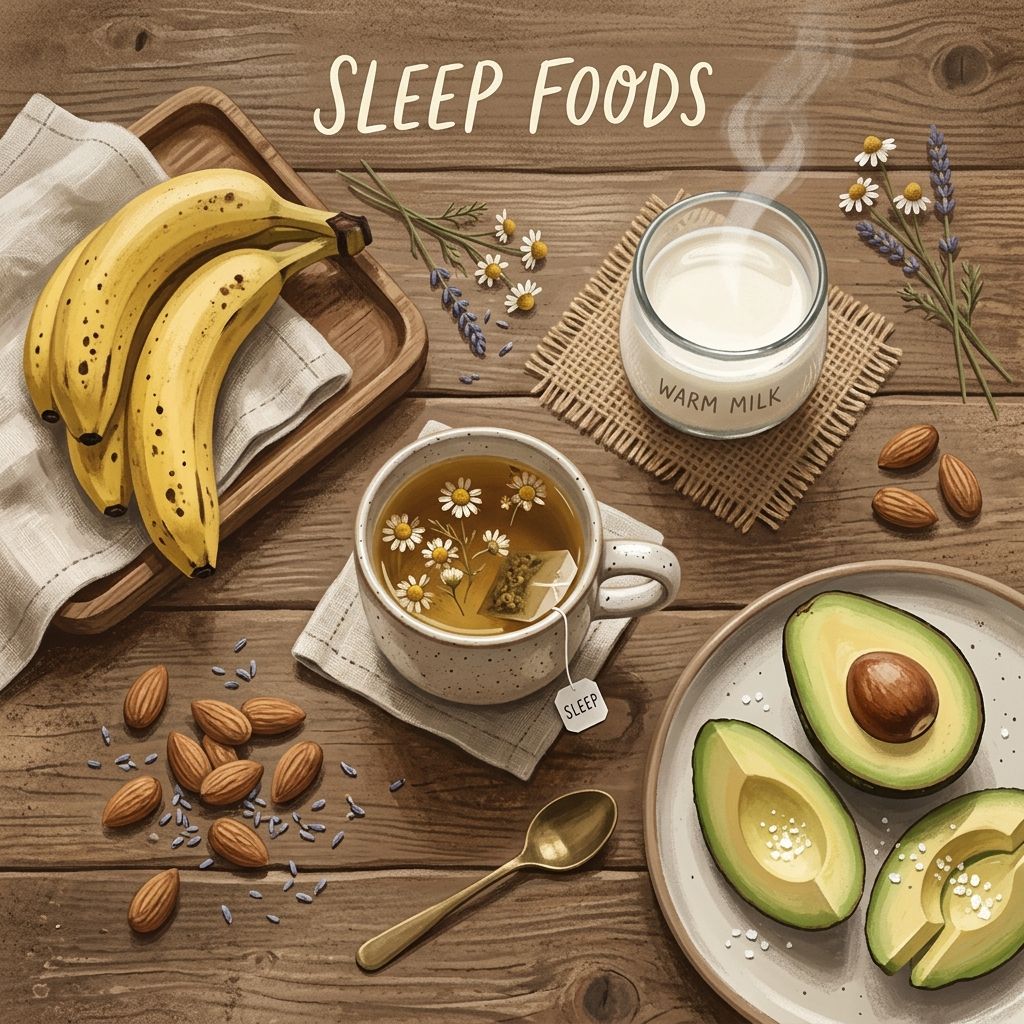
Sleeping well isn’t just a matter of "what time you go to bed."
What you eat directly decides whether your brain can shut down smoothly tonight.
First, Get Clear: Which Foods Are "Stealing" Your Sleep?
Before discussing what to supplement, it’s more important to cut out what is destroying your sleep. Many people spend a lot of money on health supplements but ignore the daily "mines" they eat.
Mine 1: Alcohol
Many people feel that "having a glass of red wine helps sleep," which is a very common misunderstanding.
Alcohol can indeed make you fall asleep faster, but it does something terrible in the second half of the night:
The
acetaldehydeproduced after alcohol metabolism will severely disrupt REM sleep and deep sleep.
You sleep like you passed out in the first half of the night, but constantly experience light sleep, nightmares, and frequent waking in the second half of the night.
| Feeling of Drinking | What Actually Happens |
|---|---|
| "It’s easier to fall asleep after drinking" | Alcohol suppresses brain activity, acting like you got knocked out, not actual sleep |
| "Waking up suddenly in the middle of the night" | The acetaldehyde produced after alcohol metabolism stimulates sympathetic nerves, forcing you awake |
| "Waking up the next day with a heavy head" | Deep sleep is shattered, and the brain’s repair work is not completed |
Recommendation: Avoid alcohol for at least 4 hours before bedtime.
Mine 2: Caffeine
You might think "I stopped drinking coffee long ago," but the half-life of caffeine is about 5-7 hours.
In other words, that latte you drank at 2 PM still has nearly half of its caffeine in your blood at 9 PM.
Caffeine works by occupying the brain’s "fatigue receptors" (adenosine receptors), preventing you from feeling tired. But fatigue doesn’t disappear; it is just forced to be covered up.
And caffeine doesn’t only exist in coffee:
| Drink/Food | Caffeine Content |
|---|---|
| A cup of Americano (240ml) | About 95-200mg |
| A cup of black tea (240ml) | About 40-70mg |
| A cup of green tea (240ml) | About 25-50mg |
| A can of cola (355ml) | About 35mg |
| A piece of dark chocolate (30g) | About 20-25mg |
Recommendation: Do not touch any caffeine-containing drinks or food after 2 PM.
Mine 3: High-Sugar Late-Night Snacks
Eating sweets or drinking sugary drinks before bed puts your body on a blood sugar roller coaster:
- Blood sugar rises rapidly → Large amounts of
insulinare secreted to suppress it - Blood sugar is suppressed too much and crashes rapidly → The body releases
adrenalineandcortisolto "save the day" - These stress hormones wake you up between 2-4 AM
Moreover,
high-sugar foodsmake the stomach and intestines work overtime all night. The activation of the digestive system means thesympathetic nervous systemis activated. The result is: your brain is working overtime all night with your stomach.
Recommendation: Avoid high-sugar foods 2-3 hours before bedtime. If you are really hungry, choose a small handful of nuts or half a banana.
Meet the "Super Teammate" Nutrients for Sleep
After cutting out the mines, you can start supplementing trace elements that can help the brain and nervous system relax.
Magnesium: A Natural Nerve Relaxant
Magnesium participates in more than 300 enzymatic reactions in the human body, and one of its most important functions is down-regulating over-excited nerves.
| Form of Magnesium | Features |
|---|---|
| Magnesium Glycinate | High absorption rate, glycinate itself also has a nerve-soothing effect, the first choice for sleep |
| Magnesium Citrate | Good absorption rate, but high doses might cause loose stools |
| Magnesium Oxide | Cheap but absorption rate is very poor, most of it turns into a laxative |
People lacking
magnesiumare particularly prone to muscle cramps, twitching eyelids, and restless sleep. If you are under high pressure and love coffee, magnesium is consumed even faster.
Recommended dose: 200-400mg of Magnesium Glycinate before bedtime.
Tryptophan: The Raw Material for Melatonin
Tryptophan is an essential amino acid that the body cannot manufacture on its own and can only obtain from food.
Its conversion path is:
Tryptophan → Serotonin (makes you relaxed and happy) → Melatonin (makes you sleepy)
In other words, if tryptophan is insufficient in your diet, the brain has insufficient raw materials to make melatonin, and you naturally won’t feel sleepy at night.
Foods rich in tryptophan:
| Food | Description |
|---|---|
| Banana | Besides tryptophan, it also contains magnesium and B6, making it a good choice for a pre-bed snack |
| Oats | Slowly releases carbohydrates without causing blood sugar fluctuations |
| Turkey | Extremely high in tryptophan |
| Milk | Contains tryptophan and calcium, so "drinking milk before bed" is not completely baseless |
| Pumpkin Seeds | Contains both magnesium and tryptophan, killing two birds with one stone |
Vitamin D3: The Core of the Autonomic Nervous System
Vitamin D3 is not only related to bones; it is crucial for the regulation of the autonomic nervous system.
Studies have found that people lacking vitamin D:
| Performance | Description |
|---|---|
| Deep sleep time is significantly shortened | D3 affects the synthesis of serotonin in the brain, and when lacking, the precursor of melatonin is also insufficient |
| Sleepy during the day but can’t sleep at night | The circadian rhythm of the autonomic nervous system loses calibration |
| Prone to anxiety and low mood | D3 is related to the brain’s GABA receptors, and deficiency makes nerves more easily excited |
The proportion of vitamin D deficiency is actually very high in modern life due to the heavy use of sunscreen and staying indoors all day.
Recommendation: Supplement 1000-2000 IU of Vitamin D3 daily (oil-based capsules absorb better), or expose yourself to sunlight for 10-15 minutes after waking up.
Don’t Forget the Gut: Your "Second Brain"
You might wonder, what does the gut have to do with sleep? It has a lot to do with it.
Gut-Brain Axis
The Gut-Brain Axis is a two-way high-speed communication highway between the gut and the brain.
Trillions of bacteria live in your gut, and these microbiota talk directly to the brain through the vagus nerve.
About 90% of serotonin in the human body is manufactured in the gut.
If your gut microbiota is imbalanced, serotonin production will drop, which in turn affects melatonin synthesis.
Gut Inflammation = Brain Inflammation
When the gut microbiota is imbalanced and bad bacteria are too numerous, the gut barrier is damaged (leaky gut).
The bacterial toxins originally blocked in the gut leak into the bloodstream, triggering systemic chronic inflammation.
When this inflammation signal reaches the brain, it gives you brain fog, fatigue, and low mood, and sleep quality also collapses.
How to Nourish Your Gut?
| Strategy | Action |
|---|---|
| Increase dietary fiber | Consume 25-35g of dietary fiber daily (dark vegetables, legumes, whole grains), which is food for good bacteria |
| Supplement probiotics | Eat more naturally fermented foods (yogurt, natto, miso, kimchi) to maintain microbiota diversity |
| Reduce processed foods | Artificial additives and trans fats will directly kill good bacteria, letting bad bacteria dominate |
| Avoid unnecessary antibiotics | Antibiotics are "nuclear bombs" that kill both good and bad bacteria; remember to supplement probiotics to repair after use |
A Daily "Sleep-Aiding Diet Timeline"
Integrating the above knowledge, your day can be arranged like this:
| Time | Recommendation |
|---|---|
| Morning | Eat breakfast within 30 minutes after waking up, including whole grains (oats) + protein (eggs), to help cortisol peak at the correct time |
| Noon | Add deep-sea fish (salmon, mackerel) or dark vegetables to lunch to supplement Omega-3 and dietary fiber |
| 2 PM | This is the cutoff time for your last cup of coffee today |
| Evening | Appropriately consume foods containing tryptophan (turkey, tofu, pumpkin seeds) for dinner |
| 1-2 hours before bed | Supplement 200-400mg of Magnesium Glycinate + 1000IU of Vitamin D3 |
| 30 minutes before bed | If slightly hungry, eat half a banana or a small handful of nuts |
Good sleep is often built on a correct diet.
Starting today, consume less alcohol and caffeine, and eat more nutrients that can help nerves relax to provide the body with sufficient raw materials to build a good night’s sleep.