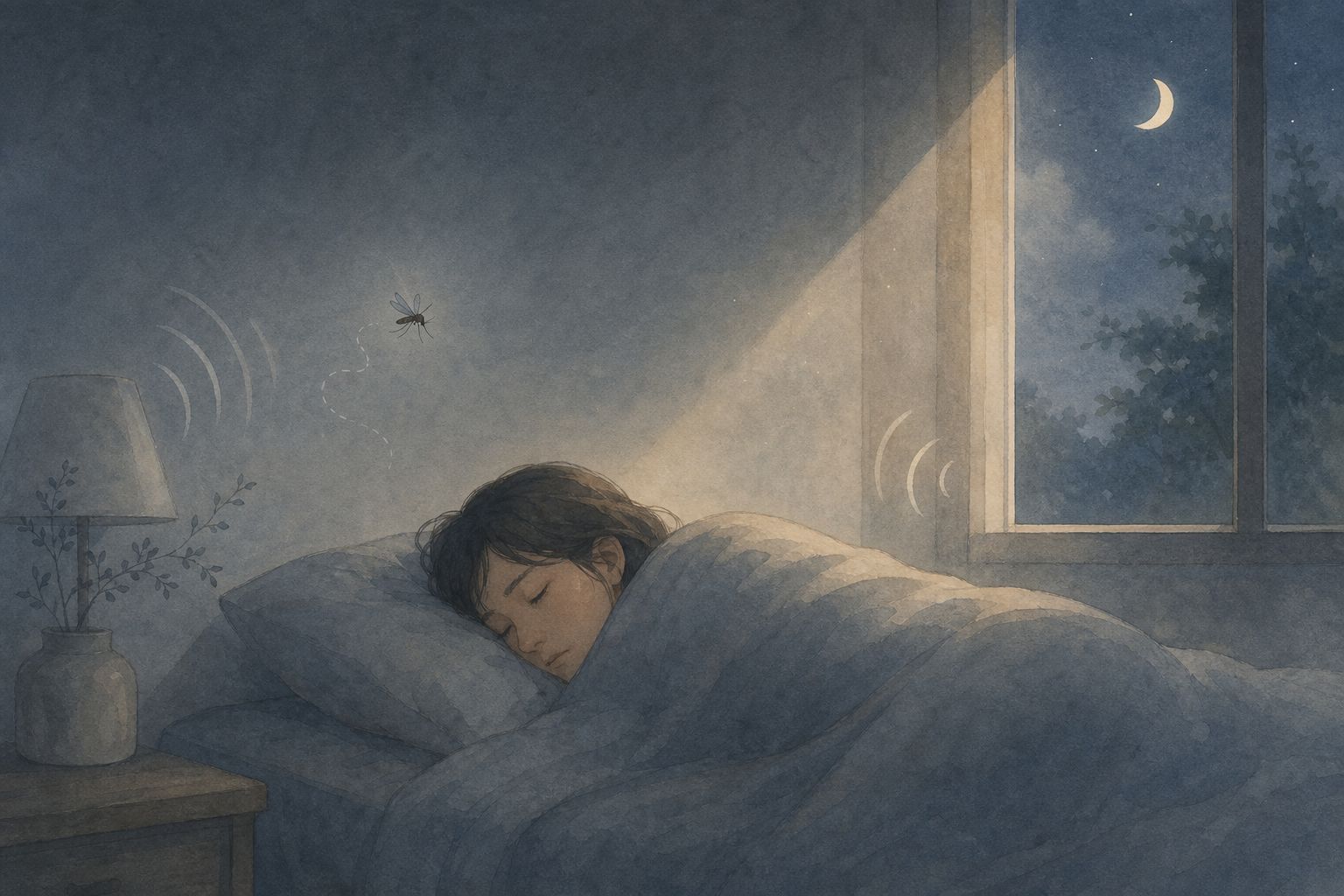
Have you ever had this experience: just as you are about to fall asleep, the buzzing of a mosquito sounds in your ear?
Or streetlights outside the window or a family member’s snoring keeps you tossing and turning all night?
Even though you slept all night, you still feel tired the next day. The problem might not be with you, but with your sleep environment.
Why Do Small Environmental Stimuli Keep You from Sleeping Well?
Many people think that falling asleep means resting, but in fact, the brain still detects environmental threats during sleep.
When there are pests, unnatural light, or noise in the room, the brain remains alert, unable to settle into deep sleep.
When sleep is fragmented, the body cannot recharge properly in deep sleep, and you naturally feel more tired the next day.
A complete sleep cycle goes from light sleep to deep sleep, and deep sleep is the golden window for the brain to clear metabolic waste.
Once the environment interferes, deep sleep is interrupted, which is equivalent to not sleeping well all night.
“Getting Used to It” Is Actually a Misunderstanding
Many people think that they just need to get used to these disruptions.
But even if you “feel like you’ve fallen asleep,” your body’s stress hormones continue to secrete due to these stimuli.
Sleeping in an interrupted environment over a long period, even if the hours are sufficient, can accumulate into chronic fatigue bit by bit.
How to Eliminate Environmental Disruption and Create a Sleep-Friendly Environment?
Environmental problems are the easiest to solve; just a small change makes a difference.
There are two directions: first, block the most direct stimuli, and then improve the atmosphere of the entire room.
| Direction | Specific Actions | Problems Solved |
|---|---|---|
| Physical Protection | Use mosquito nets, earplugs, eye masks | Directly block pests, light, and sudden noises |
| Environment Makeover | Install blackout curtains, play white noise | Block streetlight light pollution, mask background noise with steady sounds |
| Bedtime Preparation | Avoid bright light and screens before sleep | Allow melatonin to secrete normally, making it easier to fall asleep |
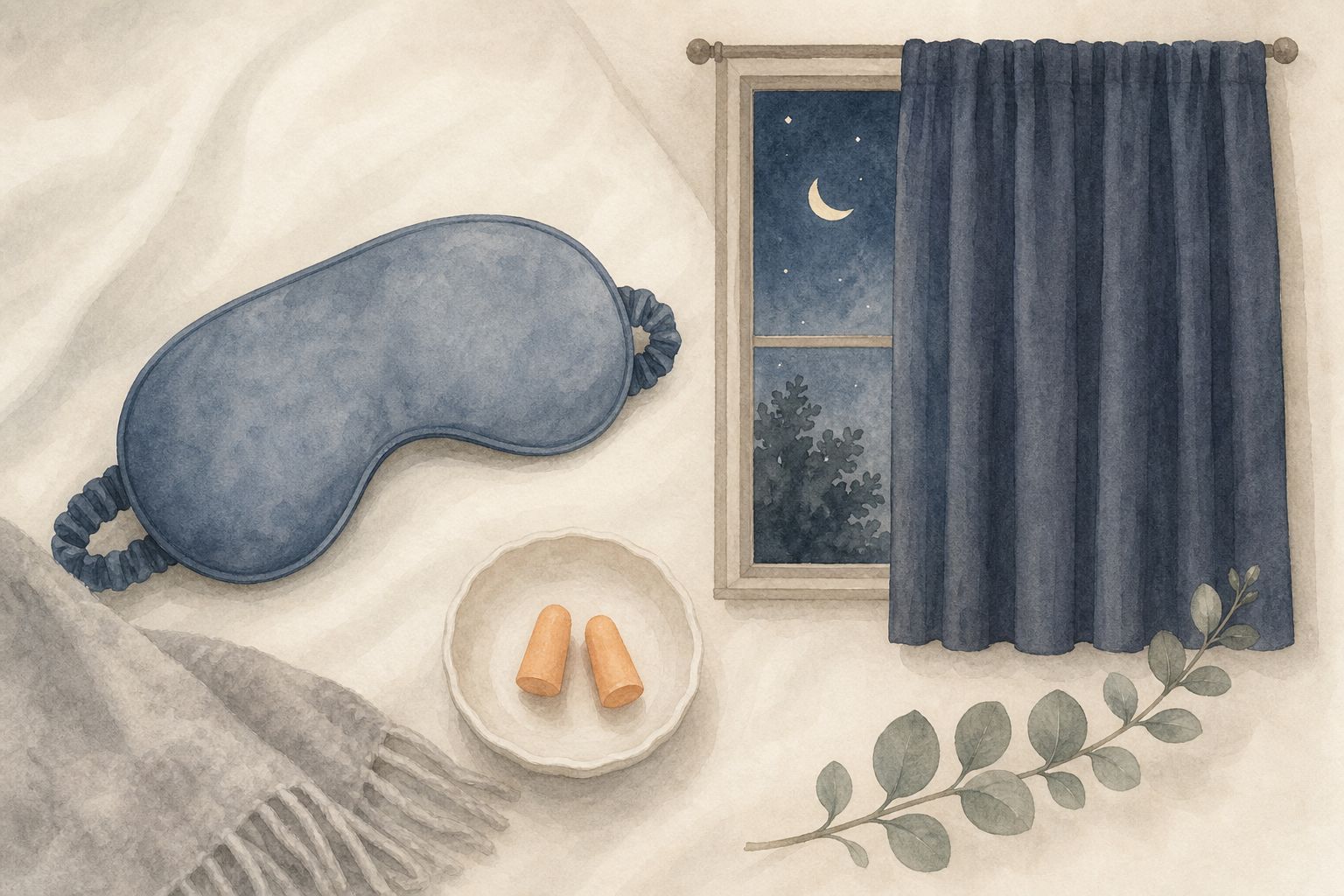
Eye masks, earplugs, and blackout curtains are the three-piece suite for a good sleep environment.
Regain Deep Sleep Without Medication
These methods sound simple, but their effects are often more significant than expected.
With just a little effort to improve your sleep environment, you can regain high-quality deep sleep without taking medicine.
The key is to make the brain feel that "it is safe here," so it can confidently turn off its guard and truly rest.
Check Your Bedroom Tonight
If you have felt for a long time that no matter how long you sleep is not enough, don’t rush to doubt your body.
Tonight before going to bed, spend a few minutes checking your bedroom:
- Are there any mosquitoes?
- Do the curtains block streetlights?
- Is the sound from next door too clear?
By eliminating these disruptions and giving yourself a peaceful night, you’ll find your energy the next day is much better.