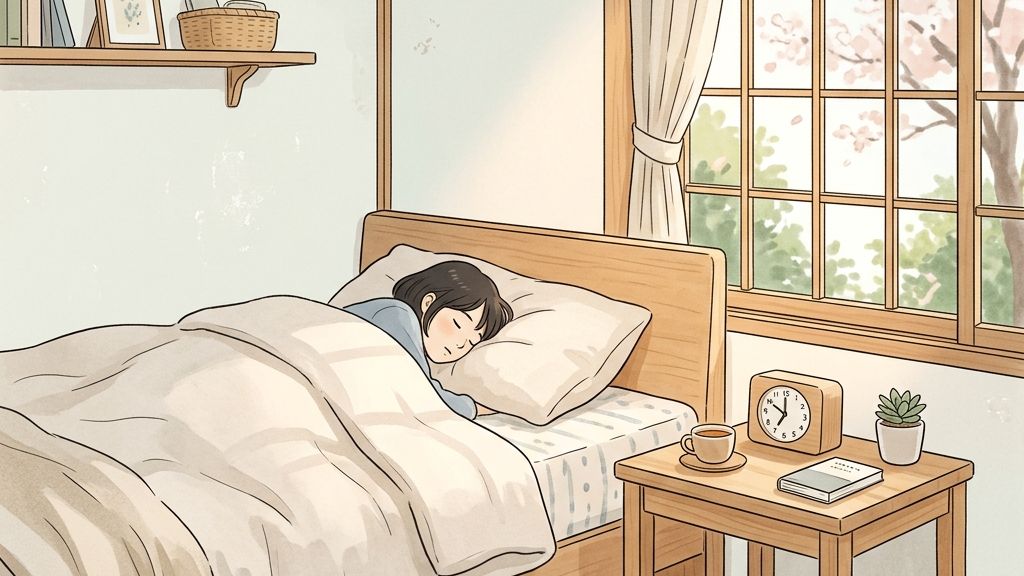
Do you often experience this: you sleep for nearly 9 hours straight over the weekend, only to wake up feeling completely weak and yawning constantly, yet sometimes after sleeping for only 6 hours, you wake up feeling surprisingly refreshed?
The key to sleep quality is not “how long you sleep”, but whether you wake up at the “right time”.
This is the highly popular R90 Sleep Method in recent years.
Sleep Cycle: The Key That Determines Your Energy Upon Waking Up
International renowned sports sleep coach Nick Littlehales shared in his book Sleep that the brain has a set of operating patterns while we sleep.
The sleep process for an average person can be mainly divided into the following 4 stages:
- Light Sleep (N1)
- Moderately Deep Sleep (N2)
- Deep Sleep (N3)
- Rapid Eye Movement (REM)
Together, these four stages make up a complete sleep cycle, which takes about 90 minutes. This is the core concept of the R90 Sleep Method.
The timing of waking up determines your mental state when you get out of bed.
If we are forcibly woken up by an alarm during the Deep Sleep stage (N3) when the brain is still in hibernation, we will feel particularly exhausted after getting up.
However, if we wake up exactly at the end of a 90-minute cycle, the brain has completed its loop. Waking up at this time feels the most comfortable, allowing the brain and body to get the most satisfying rest.
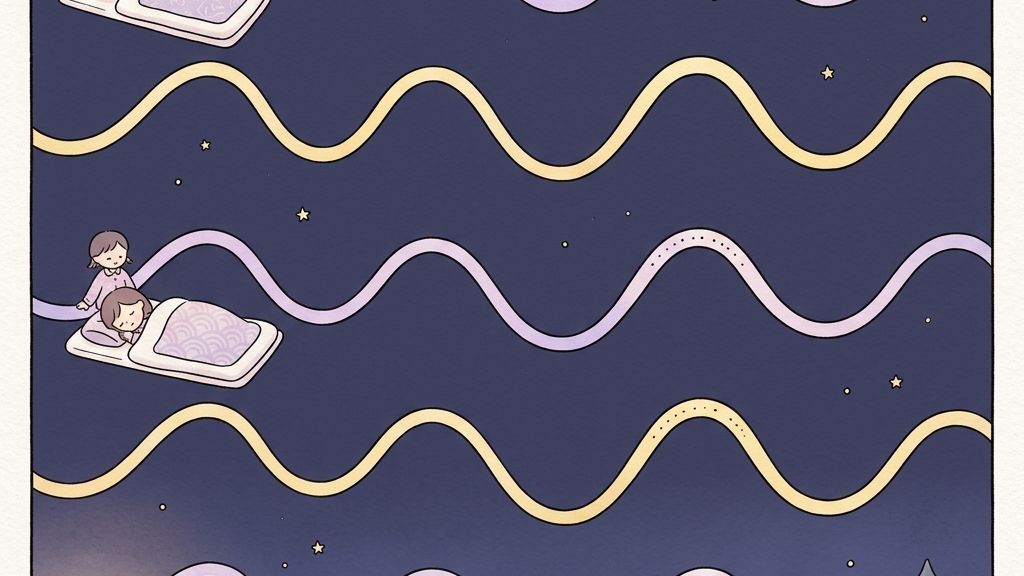
R90 Sleep Method: How to Backward Calculate Your Best Sleep Time?
Back-calculating the most suitable bedtime from your expected wake-up time is the first step in actively planning your mental state.
Knowing that 90 minutes is one cycle, we can use this principle to “back-calculate” our most suitable bedtime and actively plan our energy management.
Taking waking up at 6:30 AM as an example, calculate backwards by multiples of 90 minutes:
| Number of Sleep Cycles | Total Sleep Hours | Recommended Sleep Time | Applicable Scenario |
|---|---|---|---|
| 5 Cycles | 7.5 hours | 11:00 PM | Normal sufficient sleep, the most ideal healthy state |
| 4 Cycles | 6.0 hours | 12:30 AM | Slightly busy times, still maintaining basic work energy |
| 3 Cycles | 4.5 hours | 2:00 AM | Emergency sleep, the best choice when staying up late or working overtime |
This also explains: Why sleeping at 2:00 AM can actually make you more energetic
Suppose you get home at 12:00 AM, finish showering, and run errands until almost 1:00 AM. If you force yourself to lie down at 1:00 AM due to anxiety, and wake up at 6:30 AM, sleeping for a total of 5.5 hours, this is not an integer multiple of 90 minutes. You are very likely to be woken up by the alarm in deep sleep and feel sluggish the next day.
Conversely, if you relax and prepare leisurely to sleep at 2:00 AM, you will sleep for exactly 3 complete cycles (4.5 hours) and wake up naturally at the end of the cycle at 6:30 AM. You will actually be more energetic and in a better state than if you slept at 1:00 AM!
Coffee Nap: The Secret Weapon to Quickly Reboot Your Brain During the Day
The coffee nap combines midday relaxation with caffeine refreshment for doubled results.
In addition to nighttime sleep, if you suddenly feel tired during the day, you can use the Coffee Nap to quickly recharge your brain.
This is a technique that combines biological rhythms and caffeine time lag:
| Nap Method | Rest Duration | Caffeine Intervention | State Upon Waking |
|---|---|---|---|
| General short nap | 15 to 20 minutes |
None | Slightly recover energy, but subsequent refreshing effects are limited |
| Excessive nap | Over 40 minutes |
None | Woken up in deep sleep, feeling even more tired and groggy |
| Coffee Nap | 15 to 20 minutes |
Drink a cup of coffee before the nap | Midday sleep relaxation combined with caffeine taking effect, doubling afternoon energy |
Once consumed, caffeine takes about 20 minutes to be absorbed by the body and produce a refreshing effect. Drink a cup of coffee before preparing for your nap, and then immediately close your eyes to sleep for 20 minutes.
When you wake up, the relaxation effect of the nap combined with the caffeine that is just starting to take effect will double your afternoon energy, and you won’t have to worry at all about sleeping too long to get up.

Sleep Debt Warning: Do Not Sleep for Only Three Cycles Long Term
Although the R90 Sleep Method can help us flexibly adjust our schedule, it does not mean we can sleep for only 4.5 hours every day.
Long-term sleep deprivation causes the body to accumulate a large amount of “sleep debt”.
If nighttime sleep is less than 4 cycles (6 hours) for a long time, the brain and body cannot obtain sufficient repair, still leading to chronic fatigue, decreased concentration, and even compromised immunity.
The R90 Sleep Method is a tool for “energy planning” and “emergency management”. In daily life, maintaining a regular sleep of 4 to 5 cycles per night is the fundamental core to sustaining long-term health.
Conclusion: Manage Your Energy with Scientific Patterns
Sleep is not a game of duration, but an art of cycles.
Next time you have to stay up late or need to adjust your schedule flexibly, don’t force yourself to lie down immediately. Try back-calculating your bedtime by 90 minutes and try the Coffee Nap during lunch break.
Manage your energy in a scientific way and regain full vitality!