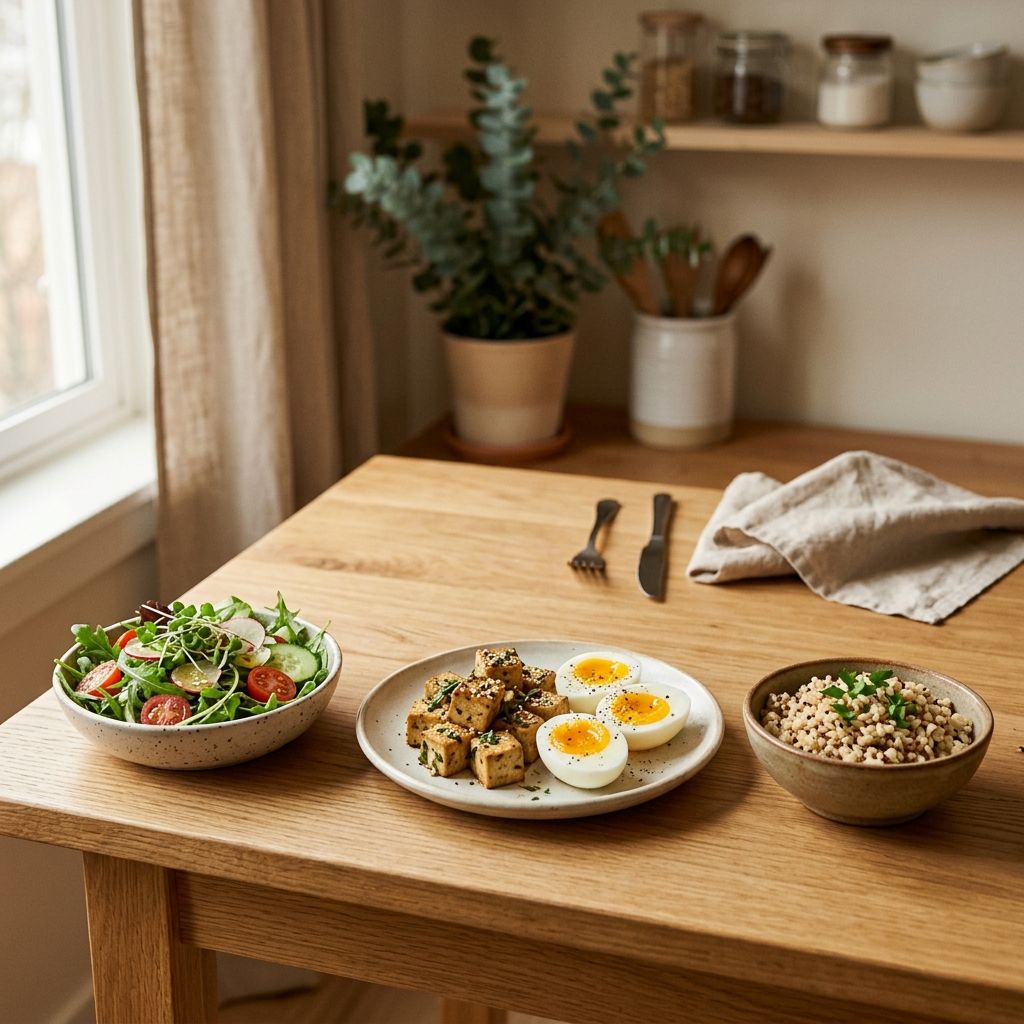
Whether you are working in the office or having lunch, you might have experienced this awkward situation:
You had a full lunch, but as soon as you returned to your desk, a wave of intense fatigue and sleepiness hit you, leaving you completely groggy. This is commonly known as a food coma. Even worse, after just two or three hours, even though you just ate, you start craving snacks or bubble tea again.
In fact, this might not be because you ate too much, nor is it due to a lack of willpower, but because your eating order during the meal was wrong!
If we don’t need to starve ourselves or intentionally cut calories, but simply adjust the order of picking up food and eating rice, we can feel more energetic, avoid post-meal sleepiness, and quietly help control weight. Isn’t that amazing? Today, let’s talk about this simple yet highly practical health tip.
Why Is the Order of Eating So Important for the Body?
Whether we eat meat first, vegetables first, or white rice first, the total number of calories consumed in this meal actually does not change.
So why does a different eating order have a completely different impact on the body? The key lies in the “speed” of food digestion and absorption.
If we are used to taking a big mouthful of white rice or noodles as our first bite, these refined carbohydrates will act like sprinters, rushing into the small intestine at high speed and rapidly converting into glucose to enter the bloodstream. At this time, your postprandial blood sugar will spike like a roller coaster.
To deal with this blood sugar crisis, the brain will issue emergency orders to the pancreas to secrete a large amount of insulin to help lower the blood sugar.
When blood sugar is rapidly lowered, the brain experiences fatigue due to the rapid drop in blood sugar. This is why you feel waves of sleepiness and fatigue after eating, commonly known as a carb crash.
Even worse, the heavily secreted insulin acts like a hyperactive mover, quickly carrying all excess calories in the blood to be converted into fat and stored away. Moreover, when blood sugar drops too quickly, the brain mistakenly believes the body is in a state of starvation, thereby sending out a “pseudo-hunger” signal, making you want to eat sweets again shortly after a meal.
What Is the Scientific Mechanism Behind Adjusting Eating Order?
Now that we know the dangers of blood sugar fluctuations, what should we do? If we change the order and imagine the gastrointestinal tract as a precise conveyor belt, the situation will be completely different.
Scientists and doctors recommend the golden order for blood sugar control as:
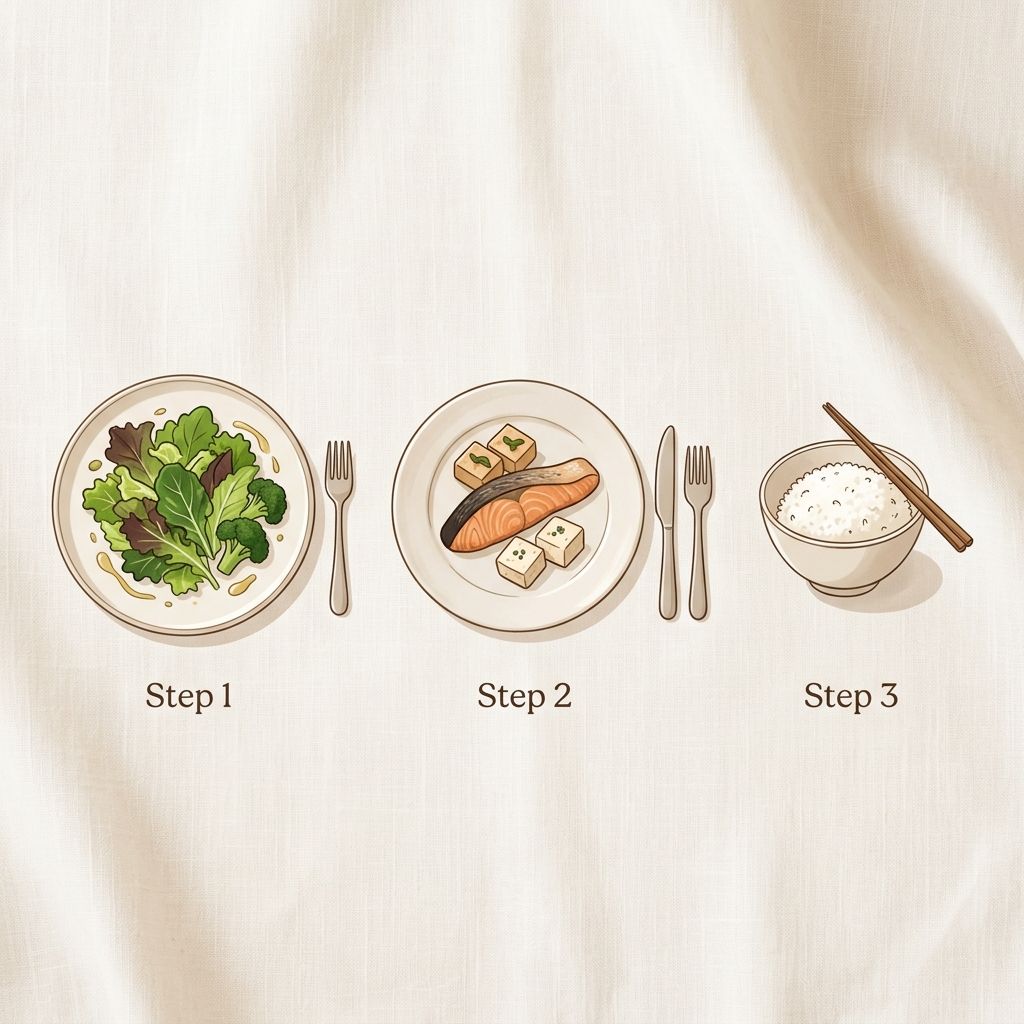
Vegetables ➔ Protein ➔ Carbohydrates ( Starch ) and fruits.
This order is backed by a very solid physiological mechanism:
| Step | Action | Description |
|---|---|---|
| 1 | Eat Vegetables First | Vegetables are packed with dietary fiber. When you eat vegetables first, fiber forms a mesh-like protective barrier in your stomach and small intestine. This mesh increases your satiety, and more importantly, it effectively blocks and delays the absorption speed of subsequent sugars. |
| 2 | Eat Protein Next | Next, eat protein and fat-rich foods like meat, fish, eggs, or tofu. When these nutrients reach the small intestine, they stimulate the secretion of a hormone called GLP-1 ( glucagon-like peptide-1 ) of the small intestine, which further delays gastric emptying. In other words, the speed of the conveyor belt is slowed down, and food in the stomach is delivered downward at a more stable pace. |
| 3 | Eat Starch and Fruits Last | Finally, eat starch like white rice, noodles, and fruits. When these carbohydrates arrive last, there is already a vegetable barrier mesh in place, and protein has slowed things down, forcing the sugar absorption rate to slow. In this way, your postprandial blood sugar curve will not show a steep peak, but rather a gentle hill, providing energy stably and slowly, allowing you to maintain long-term satiety while avoiding excessive insulin secretion. |
How to Easily Practice Healthy Eating Order in Daily Life?
Although it sounds like a lot of science, executing it in daily life is not difficult at all. Whether you eat out, eat in the office, or cook for yourself, we can implement it through the following simple scenarios:
| Scenario | How to Eat |
|---|---|
| Eating a Bento or Buffet | When opening the bento box, first pick out the green vegetables to eat. After eating all the vegetables in the side dish compartment, eat the main dish like pork chops, chicken drumsticks, pan-fried fish, or tofu, and finally eat them bite-by-bite with white rice. |
| Ordering at a Noodle Shop | Many people finish a bowl of dry noodles directly. It is recommended that while ordering noodles, you order one or two plates of blanched vegetables, plus a serving of braised tofu or braised egg. When served, finish the vegetables and braised dishes first, and finally start eating the dry noodles. |
| Eating Hotpot or Japanese Set Meals | This is also the easiest scenario to execute. When eating hotpot, put the vegetable platter in to cook first, then cook sliced meat or fish, and finally put in glass noodles or udon noodles before you are full. For Japanese set meals, eat the shredded cabbage first, followed by the main pork chop, and finally the white rice. |
In addition to paying attention to the order of dishes and the ATOMS principles for blood sugar control, which are
| Principle | Description |
|---|---|
| A (Amount) | Control the carbohydrate and total calorie intake of each meal. For example, the starch amount per meal should not exceed half a bowl to 80% full, avoiding overeating to reduce the burden on the pancreas. |
| T (Type) | Choose whole foods with a low glycemic index (low GI). Consume more high-fiber vegetables and high-quality proteins (beans, fish, eggs, meat), and reduce refined starch and sugary drink intake. |
| O (Order of Meals) | Adjust the eating order to delay blood sugar absorption. |
| S (Speed) | Slow down your eating speed, taking at least 20-30 minutes per meal. Chewing slowly helps the brain receive satiety signals, preventing overeating. |
| S (Sport / Speed of metabolism) | Consume blood sugar through regular exercise (such as aerobic exercise and resistance training) to improve the body’s sensitivity to insulin. |
Among them, chewing slowly is also key. Eating too fast will make it too late for the brain to receive satiety signals. Slow down the dining speed, giving the stomach time to transmit the “I’m full” message to the brain, which is also a good way to avoid overeating.
Common Myths and Exceptions Regarding Eating Order
Although adjusting the order has many benefits, it doesn’t mean we can use one trick for all situations. There are still a few exceptions and myths to keep in mind:
1. Portion Control Is Still the Foundation
Do not think that “as long as the order is right, calories or sugar can be consumed limitlessly”!
Portion control is always the most fundamental principle of health and weight loss.
If there are two large bowls of white rice in your bento, even if you eat them last, your total blood sugar and absorbed calories will still seriously exceed the limit. Eating order is just a technique to “optimize speed”, not a get-out-of-jail-free card.
2. Tailored Strategies for Different Ages: Seniors Over 60 and Those at Risk of Sarcopenia
For seniors over 60, or those who are less active and at risk of sarcopenia, Japanese experts and nutritionists suggest adopting a “protein first” strategy.
Because the most important thing for seniors to prevent is muscle loss and frailty. If they eat a large amount of vegetables at the beginning, they might feel full quickly, leading to insufficient protein intake afterwards.
Eating protein like meat, fish, and eggs first helps maintain muscle mass and boost energy, followed by vegetables, and finally starch.
3. Those with Sensitive Stomachs and Weaker Gastric Function
If your stomach is sensitive, or if you suffer from gastritis, acid reflux, etc., eating a large amount of high-fiber vegetables on an empty stomach might irritate the gastric mucosa and cause discomfort.
In this case, you can eat a few bites of protein food (such as tofu or lean meat) first to line the stomach, reduce excessive gastric acid secretion, followed by vegetables, and finally starch.
4. Is "Meat Before Veggies" Better Than "Veggies Before Meat"?
Generally, the order of "vegetables, then meat, then rice" is recommended for the public. This is because many meat dishes in daily life add a lot of fat during cooking (such as fried pork chops and braised pork).
If you eat high-fat meat first on an empty stomach, the fat will delay gastric emptying and also increase satiety, but it might be slightly unfavorable for long-term body fat and blood lipid control.
Eating low-calorie and fiber-rich vegetables first is a safer choice for general people to build satiety and control blood sugar.
Summary
Adjusting the eating order is not a painful dietary restriction, but a painless health method that requires no food reduction and only a slight change in habit.
At your next meal, why not try eating a few bites of green vegetables first, then enjoying the delicious fish and meat, and finally taking a few bites of white rice. As long as you master this simple pattern and pay attention to the total portion size of each meal, you can easily regain control of your physical energy, say goodbye to post-meal fatigue, and keep your body in the most stable energy state every day!