
Always feel your eyelids getting heavy and start yawning repeatedly during afternoon meetings after a hearty lunch, having to chug coffee just to survive?
Many people think this “sleepy after eating” phenomenon is perfectly normal.
However, you might be experiencing what is commonly known as a carb coma, or food coma.
Why Does Eating Make You Sleepy?
Many people think that feeling sleepy after eating is because blood rushes to the stomach to help with digestion.
While that is a small part of it, the true primary cause is the blood sugar rollercoaster.
When you consume large amounts of refined carbohydrates with a high glycemic index, such as white rice or noodles, your blood sugar spikes rapidly. In response, your body secretes a large amount of insulin to lower it, which subsequently causes your blood sugar to crash.
Stable blood sugar keeps your energy steady, while spiking and crashing blood sugar is the culprit behind post-meal fatigue.
This dramatic fluctuation of high and low is the real reason you “carb coma” and fall into a food coma after meals.
In addition, if you consume too much high-fat food, your body secretes more cholecystokinin to help with digestion, which also induces strong feelings of fatigue and sleepiness.
Carb Comas and Hypoglycemia Are Different
Both carb comas and hypoglycemia can make you feel tired and uncomfortable, but the fundamental difference between the two lies in whether your blood sugar is actually too low.
| Comparison | Hypoglycemia | Carb Coma |
|---|---|---|
| Primary Cause | Blood sugar truly drops below normal values, leading to insufficient energy | The drop after a rapid spike in blood sugar |
| Timing | After prolonged fasting or exercise | 30 to 90 minutes after eating |
| Main Symptoms | Shaky hands, rapid heart rate, cold sweats, panic feeling | Drowsiness, fatigue, brain fog |
| Relief Method | Immediate sugar replenishment, seek medical help if severe | Walking for 15 to 20 minutes will restore energy |
How to Shake Off Post-Meal Fatigue?
If you want to shake off post-meal fatigue, you can feel a difference just by changing a few eating habits.
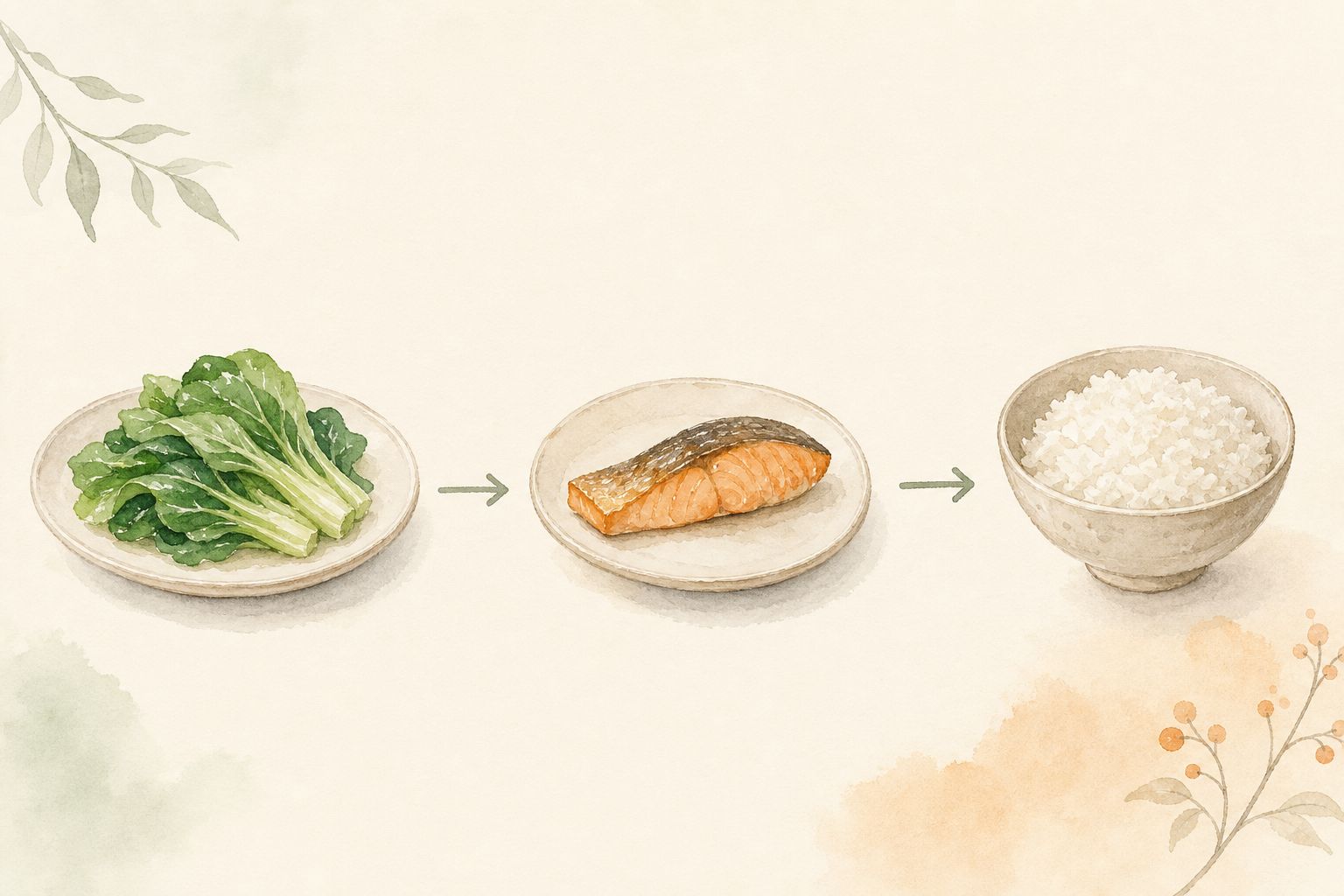
The simplest trick is to adjust your eating order.
Eat fiber-rich vegetables first, then proteins like eggs, beans, and meat, and finally carbohydrates. This will significantly slow down the rate at which your blood sugar rises.
| Countermeasure | Why It Works |
|---|---|
| Adjust eating order | Eat vegetables/kelp first, then protein, and carbs last to slow down blood sugar absorption |
| Control portions | Eat until you are 70-80% full to prevent blood from concentrating in the digestive tract |
| Choose food wisely | Replace refined starch with brown rice, nuts, and Vitamin B complex |
| Move after meals | Don’t sit down immediately; walk for 10 to 15 minutes to stabilize blood sugar |
Just Look at Your Plate to Know
The next time you eat, take a look at your plate. Is the proportion of carbohydrates too high?
Simply cutting your white rice in half and doubling the vegetables can dramatically boost your afternoon productivity.
It is worth noting that avoiding starch doesn’t mean you won’t experience a carb coma; sugary drinks and sweets can also cause blood sugar to spike rapidly. The key is always to stabilize blood sugar fluctuations, not just cut out carbs.
Say Goodbye to Carb Comas from Your Next Meal
Although a carb coma is not a disease, chronic blood sugar fluctuations can slowly increase inflammation in the body.
The good news is that it can be completely improved through daily habits.
Starting from your next meal, try eating vegetables first, then meat, and starch last. Eat until you are 70-80% full, and get up to walk around afterward.
Saying goodbye to post-meal sleepiness is not as difficult as you think.