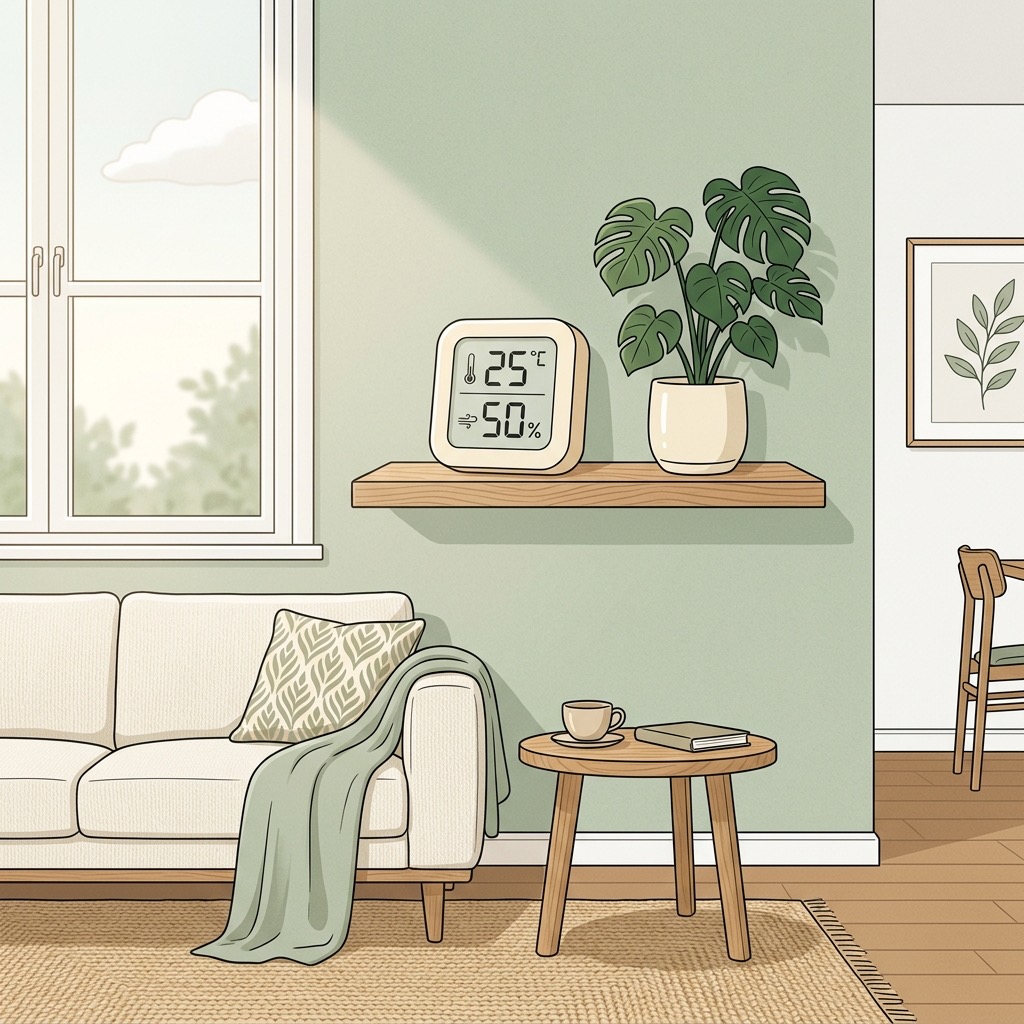
Every day before going out, we are used to checking the weather forecast for today’s temperature, but we often ignore the “relative humidity” right next to it.
In fact, the impact of relative humidity on our perceived comfort and physical health is often even more significant than simple air temperature!
Physiological and Environmental Hazards of High Humidity
When indoor relative humidity remains above 60% for a long period, both the human body and living environment begin to face a series of hidden hazards.
| Impact Dimension | Specific Symptoms and Phenomena | Mechanism Explanation |
|---|---|---|
| Body Heat Dissipation | Stuffy feeling, fatigue, high apparent temperature, increased risk of heatstroke | Sweat cannot evaporate in time, trapped heat accumulates in the body |
| Environmental Hygiene | Mold outbreaks, rapid breeding of dust mites |
High humidity environments serve as breeding grounds for microorganisms and allergens |
| Winter Sensation | Damp piercing cold, extremely low apparent temperature | Water conducts thermal energy rapidly, accelerating body heat loss |
Potential Concerns of Low Humidity
Since high humidity is problematic, is drier air always better? The answer is of course no!
When relative humidity drops below 40%, the body will also begin to issue warning signals:
When the air becomes excessively dry, moisture in the skin and mucous membranes evaporates faster, leading to dry, itchy, peeling skin, chapped lips, and dry, uncomfortable eyes.
In addition, dry air easily accumulates static electricity, while weakened skin and mucosal defenses increase the risk of viral invasion.
Finding the Most Comfortable and Healthy Golden Balance
Since both excessive humidity and extreme dryness trigger health issues, what is the ideal indoor environmental standard?
According to environmental health research, the golden temperature and humidity combination for the human body is as follows:
| Ideal Environment | Description |
|---|---|
| Ideal Indoor Temperature | Maintained between 24°C and 26°C. |
| Ideal Relative Humidity | Maintained between 40% and 60%. |
Staying within this golden range helps keep skin hydrated and clear while suppressing the growth and proliferation of mold and dust mites.
How to Actively Adjust Home Temperature and Humidity
Having understood the ideal standard, how can we practice environmental adjustments in daily life?
1. Make Good Use of Dehumidifiers and Air Circulators
During periods of high humidity, turn on the dehumidifier set to a target humidity of 55%, and pair it with an air circulator to promote even air circulation.
Applying ice packs to major blood vessels and taking warm showers are also great ways to help cool down the body during hot and humid conditions.
2. Smart Window Ventilation
Pay attention to outdoor humidity levels. When outdoor air is crisp and dry, open diagonal windows for cross-ventilation; when it rains heavily outside or humidity is extremely high, close windows tightly and turn on dehumidification equipment.
The next time you feel unexplained fatigue and stuffiness or dry, itchy skin, try checking the room thermo-hygrometer first—adjusting the humidity might resolve your discomfort!