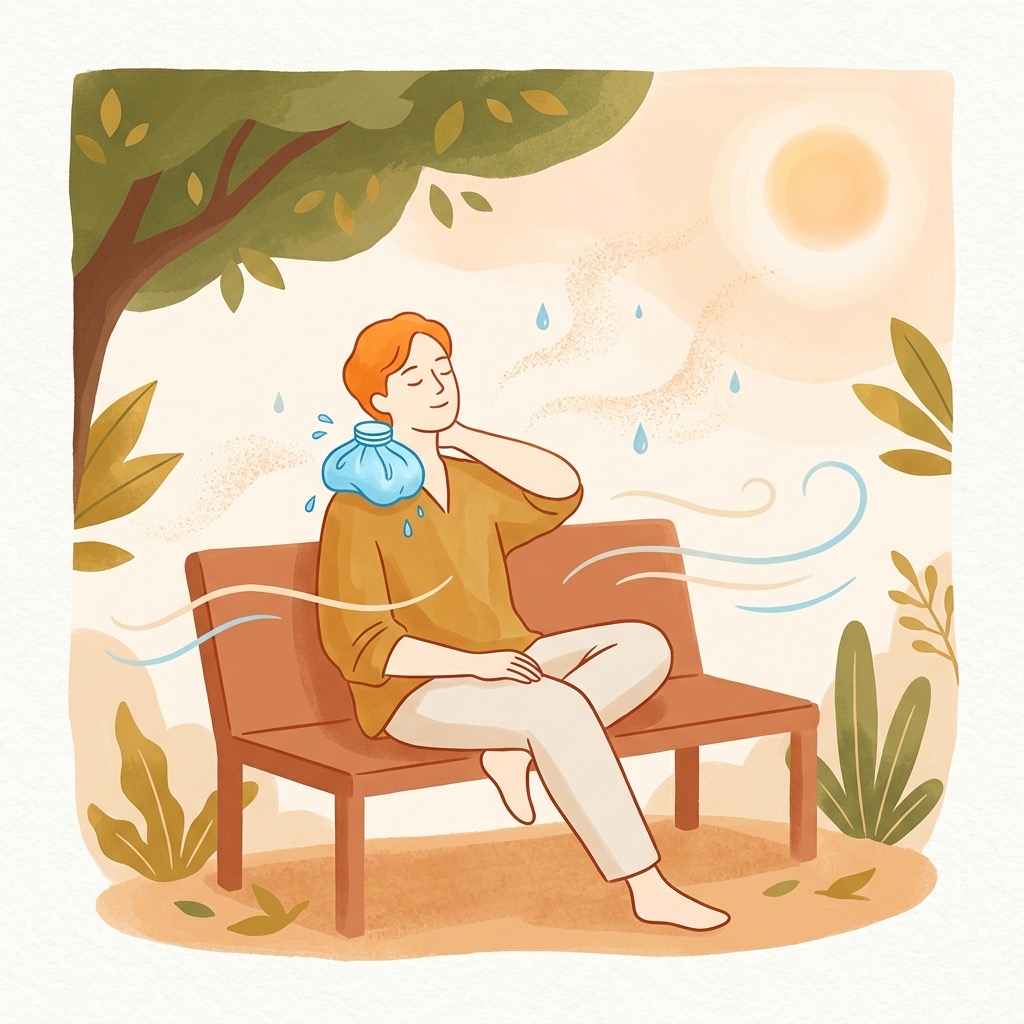
Have you ever had this experience: walking down a summer street without direct sunlight for just a few steps, yet feeling dizzy and close to heatstroke?
In fact, the real culprit making you feel stiflingly hot and uncomfortable is often not the temperature itself, but “high humidity.”
Why Sweating Doesn’t Equal Effective Heat Dissipation
You might think that as long as you are sweating, your body is dissipating heat.
In reality, the human body relies mainly on “sweat evaporation” to carry away body heat.
When atmospheric humidity is excessively high, sweat on skin cannot evaporate smoothly, locking heat inside body—this is why high humidity environments cause heatstroke.
| Environment Type | Evaporative Cooling Efficiency | Perceived Feeling |
|---|---|---|
| Dry High Temperature | High | Hot, but sweat evaporates quickly, feeling relatively dry |
| Humid High Temperature | Extremely Low | Sweat sticks to skin; trapped heat creates a steamer effect |
How to Actively Cool Down When Sweat Evaporation Fails
When natural evaporation fails, drinking ice water constantly isn’t enough; you need active cooling strategies.
Main cooling methods include:
| Method | Description |
|---|---|
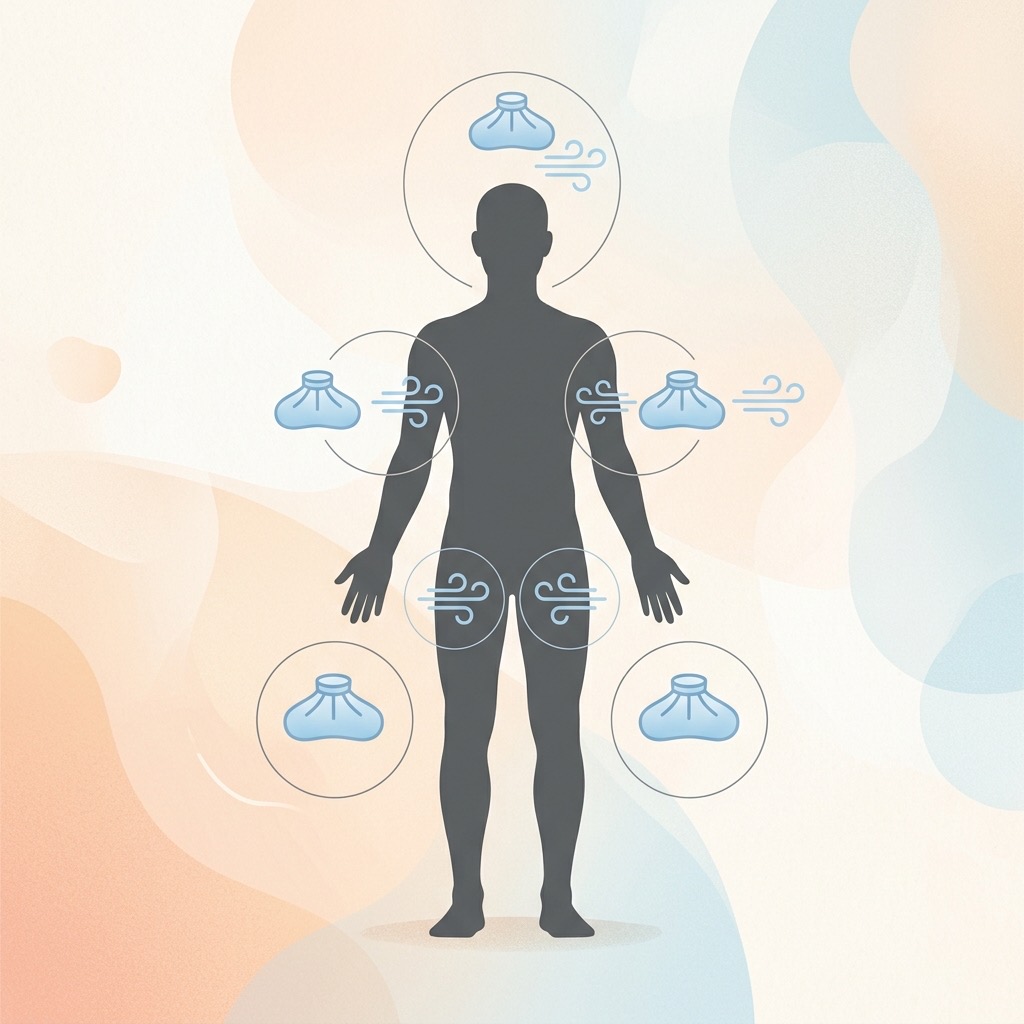
| Major Arterial Ice Packing | Place ice packs on Neck, Armpits, and Groin to directly lower circulating blood temperature |
| Water Spraying with Fan | Spray cool mist on skin with an electric fan to forcefully promote water evaporation via airflow |
| Lower Environmental Humidity | Move into air-conditioned or dehumidified indoors to improve heat dissipation conditions |
Should You Replenish Pure Water or Electrolytes After Heavy Sweating?
Besides external cooling, internal fluid regulation is equally crucial.
Do not drink only pure water when replenishing fluids
If you only drink plain water during heavy sweating, it will dilute blood electrolytes and even trigger hyponatremia.
It is recommended to drink cool water and electrolytes drinks; avoid ice-cold water, as it causes capillary constriction, hindering heat dissipation.
How to Quickly Distinguish Heat Exhaustion from Heatstroke
If the body’s cooling mechanism fails, how can we assess the severity of the condition?
| Item | Heat Exhaustion | Heatstroke |
|---|---|---|
| Sweating Status | Heavy Sweating | Little or No Sweat (Thermoregulatory center breakdown) |
| Body Temperature | Normal or Slightly High | Spiking Body Temp (Exceeding 40°C) |
| Consciousness | Dizzy, Weak, Conscious | Confused, Disoriented, or Comatose |
| Urgency | Immediate Cooling & Rest | Life-Threatening, Emergency Care Needed |
When encountering heat injuries, remember the “5 First Aid Steps”:
| Step | Description |
|---|---|
| 1. Shade | Move victim to a cool, ventilated shady area |
| 2. Unclothe | Loosen tight clothing |
| 3. Cool | Spray water, fan, or apply ice packs to major arteries |
| 4. Hydrate | If conscious, give cool water or electrolyte drinks |
| 5. Hospital | If unconscious, call emergency services (119/911) immediately |