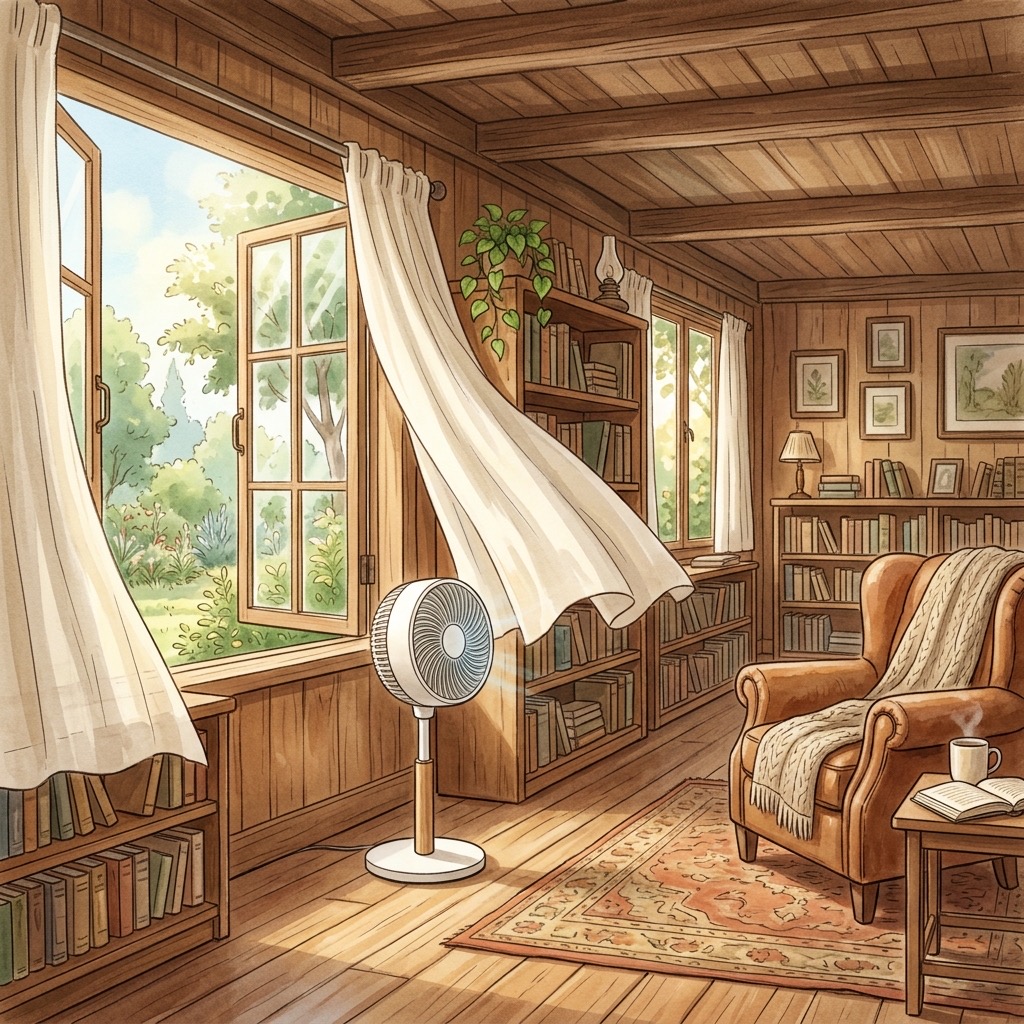
When you come home in summer and step into your room, does it feel like stepping into a giant oven—where even with the fan turned on, it only blows hot, stuffy air?
To cool down your room effectively, relying solely on lowering the AC temperature is not enough; identifying the root causes of heat accumulation is key.
3 Hidden Culprits Behind Trapped Heat in Your Room
Why does your room stay so stuffy and hot? Aside from direct sunlight outside, there are many heat sources indoors.
| Heat Culprit | Explanation |
|---|---|
| Solar Radiation & Wall Heat Storage | Building structures exposed to western sun or top-floor heat absorb massive heat into concrete walls, continuously releasing it indoor |
| Appliance Waste Heat & Living Heat | Computers, TVs, and lighting fixtures generate heat, while the human body itself is also a steady heat source |
| High Humidity & Poor Ventilation | The most critical culprit! Excess air humidity traps heat, combined with lack of cross-ventilation through doors and windows |
Cool Mode vs. Dehumidify Mode: Which Air Conditioner Setting to Choose?
Since humidity is the primary cause of stuffy heat, how should you choose your air conditioner mode?
Once humidity drops, the perceived apparent temperature can instantly decrease by 2–3°C
The Cooling Mode of an air conditioner naturally provides strong dehumidification while operating. In hot summer weather, Cooling Mode is the fastest choice to lower temperature and remove moisture
However, during the plum rain season or humid, mild weather, switching to Dehumidify Mode keeps the indoor air dry and fresh. Maintaining indoor relative humidity within the 40–60% sweet spot ensures optimal comfort.
How to Use Cross-Ventilation and Insulation to Cool Your Room Naturally?
If you don’t turn on the air conditioner, how can you dissipate heat from your room?
Three key elements for natural cooling:
| Element | Explanation |
|---|---|
| Diagonal Window Ventilation | Open the room door and diagonal window to create the longest airflow path |
| Physical Insulation | Close blackout curtains when going out during the day and apply window film to block radiant heat gain |
| Reduce Waste Heat | Mopping floors utilizes evaporative cooling to absorb heat, and turn off unused standby electronics |
3 Common Ventilation and Fan Misconceptions
Many people think opening windows or blowing fans will automatically bring cool air, but you might be doing it wrong!
| Common Misconception | Correct Concept |
|---|---|
| Opening windows on the same side only | Fails to create cross-ventilation! You must open diagonal windows to drive room-wide air exchange |
| Blowing circulator fan directly at people | Circulator fan should face outward to blow hot air out, or tilt toward walls to generate overall convection |
| Assuming AC exchanges fresh air | Air conditioners only circulate indoor air; you still need to open windows periodically for fresh outdoor air |