
Have you ever had this experience: you slept for nearly ten hours over the weekend, but when you woke up on Monday morning, you still felt weak all over and kept yawning?
Why does it seem like the more we rest, the more tired we get?
Fatigue might not just be due to a lack of sleep, but rather a problem with your body’s “energy management system.” What’s really dragging you down is often sleep, blood sugar, and your brain holding you back together.
Sleep: It’s Not About Sleeping Long, It’s About Sleeping Right
The first common culprit is sleep quality and circadian rhythm.
Many people think that as long as they lie in bed long enough, they will have energy, but the key is actually not the number of hours.
Sleeping long does not equal sleeping well. Interrupted sleep or lack of deep sleep will leave your body with no charge at all.
Add to that a bad habit: not getting sunlight after waking up and chugging a cup of coffee as soon as you open your eyes. This disrupts the normal secretion rhythm of cortisol and melatonin, leaving your body confused about whether to be awake or rest.
How to Sleep to Truly Recharge?
The correct way to recharge is to follow your body’s natural rhythm.
A complete sleep cycle is about 90 minutes, moving from light sleep, slightly deeper sleep, deep sleep, all the way to REM sleep. This is commonly known as the R90 sleep method.
If you are rudely awakened during deep sleep, you will feel like your body has left the bed, but your brain hasn’t booted up yet;
A full night’s sleep goes through several 90-minute cycles, and waking up naturally at the end of a cycle is the most comfortable
The actual implementation is very simple:
- Wake up and first get light and drink water to let your body know “daytime has arrived”
- Delay your first cup of coffee to after 9:30 AM
- Use the 90-minute cycle to calculate back your bedtime so that you wake up at the end of a cycle

Diet: The “Blood Sugar Roller Coaster” That Makes You Sleepy
The second culprit is blood sugar fluctuations that feel like a roller coaster.
Modern people love eating refined starch paired with sugary drinks. When you consume large amounts of white rice or noodles—foods with a high glycemic index—your blood sugar spikes rapidly.
In order to bring blood sugar back down, the body secretes a large amount of insulin, causing blood sugar to crash afterward.
Stable blood sugar keeps your mind steady, while spiking and crashing blood sugar is the culprit behind post-meal sluggishness
This dramatic fluctuation of high and low is the real reason you experience a “food coma” after eating.
Switch the Eating Order to Stabilize Blood Sugar
You don’t actually need to cut out carbs; just changing your eating order makes a noticeable difference.
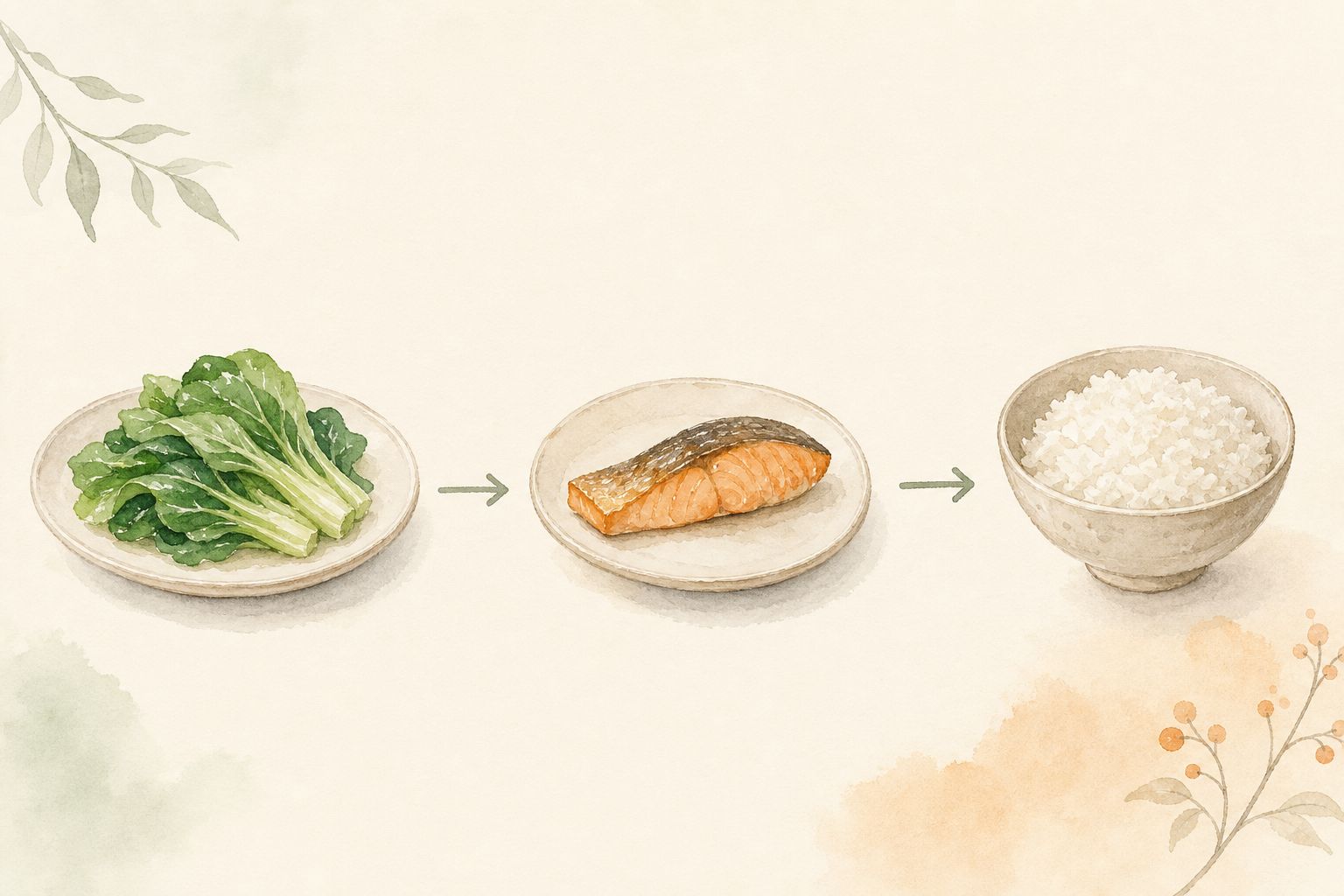
Eat fiber-rich vegetables first, then protein like eggs, beans, and meat, and finally starch. The rate of blood sugar rise will be much flatter.
| Practice | Why It Works |
|---|---|
| Vegetables First | Dietary fiber forms a buffer in the digestive tract, slowing down subsequent sugar absorption |
| Protein Second | Starts digestion, prolongs overall digestion time, and makes you feel fuller |
| Starch Last | The digestive tract already has a buffer, making the blood sugar spike significantly smaller |
| 70-80% Full | Eating too much concentrates blood in the digestive system, making thoughts sluggish and causing sleepiness |
Stress: Invisible “Brain Overload” and Chronic Inflammation
The third culprit is invisible brain overload and chronic inflammation.
If the brain spends all day dealing with anxiety and frequently switching tasks, it’s like a phone running dozens of apps in the background; the battery drains at the speed of light.
This pseudo-multitasking of replying to messages while watching videos and thinking about work looks busy but actually just leaves the brain idling constantly.
Long-term stress puts the brain into a “silent inflammation” state, leading to brain fog and reduced concentration that no amount of sleep can restore.
What Kind of Rest Does the Brain Truly Need?
Brain inflammation doesn’t hurt, but it makes you extremely tired. The trouble is, many people choose to scroll through their phones or binge-watch shows to relax after work.
Since 80% of human information comes from vision, scrolling through phones actually keeps overstimulated nerves active, meaning the brain never really gets off work.
Truly effective relaxation looks like this:
| Method | Description |
|---|---|
| Block Visual Stimuli | Close your eyes for 3 to 5 minutes, or use a warm towel over your eyes |
| Say Goodbye to Pseudo-Multitasking | Focus on only one thing at a time, and write down your to-dos instead of keeping them all in your head |
| Light Aerobic Exercise | Promote blood flow to help the brain clear out accumulated metabolic waste |
Closing your eyes and applying a warm towel is the true way to help the brain relax

Recharge Yourself Correctly
The secret to reclaiming energy is not “sleeping constantly,” but taking care of these three things at the same time.
Manage your sleep rhythm, stabilize blood sugar, and shut down unnecessary background processes for the brain, and fatigue will naturally fade away.
Next time you feel tired, don’t rush to blame yourself for being lazy. Spend a few seconds checking:
- Was last night’s sleep interrupted?
- Did you eat too much refined starch at lunch?
- Has your brain been running non-stop lately?
Start with these three aspects to recharge yourself correctly, and you’ll find your energy can stay on all day.