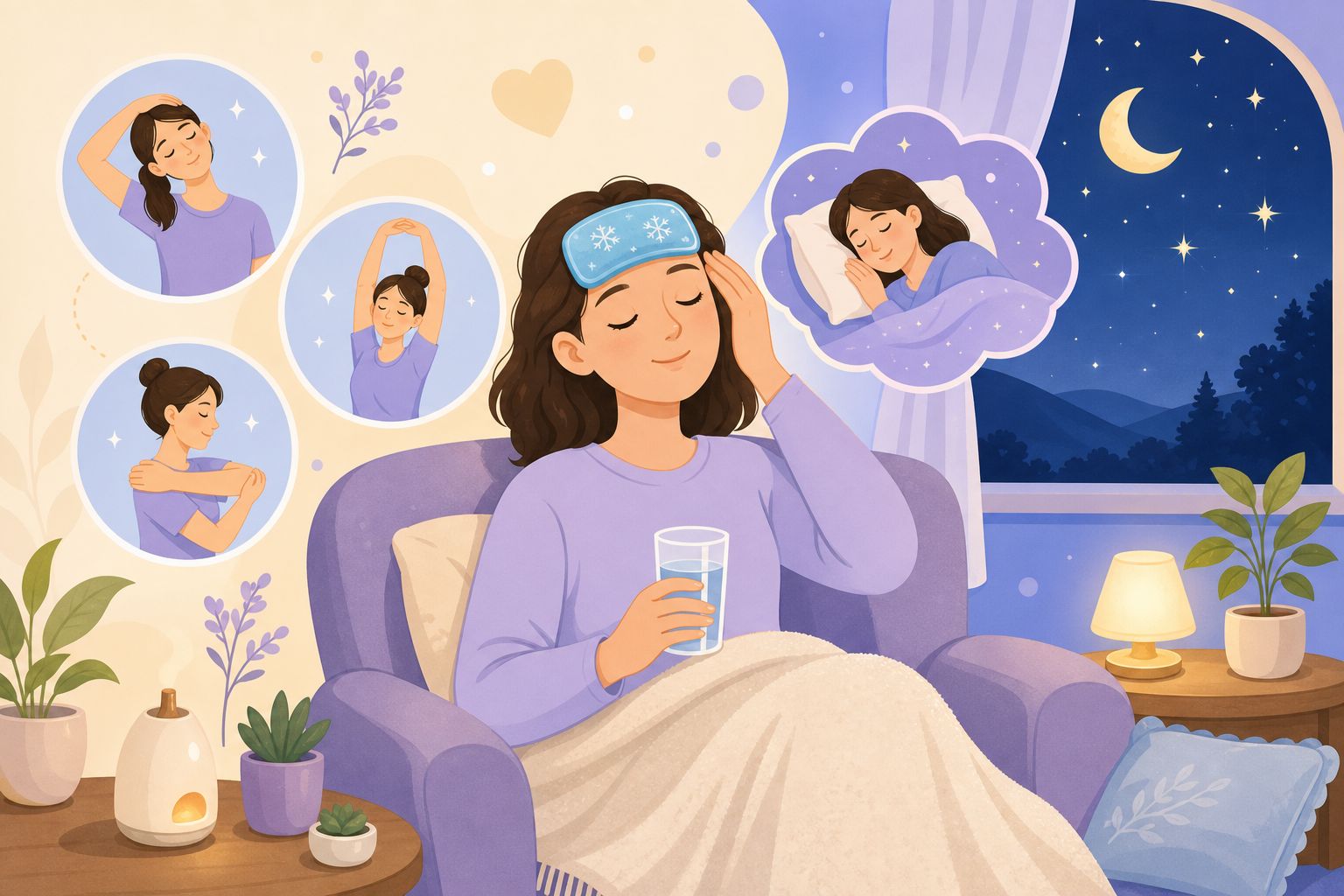
Do you feel like the entire world is spinning every time a headache strikes? Did taking pain relievers seem to have no effect?
In fact, different types of headaches require different coping methods. The three most common headaches— tension headaches , migraines , and cluster headaches —have completely different relief and prevention strategies. Using the wrong method not only fails but might also make things worse.
Three Headaches, Three Different Coping Strategies
We can adopt different coping strategies for different types of headaches:
| Headache Type | Relief Method | Best Timing |
|---|---|---|
| Tension Headache | Apply hot compress to neck and shoulders to relax muscles, do stretching exercises, or drink a cup of warm water | When feeling a tight band around the head or neck stiffness |
| Migraine | Rest in a dark, quiet room, apply cold compress to forehead, or consume a moderate amount of caffeine | Unilateral throbbing pain, accompanied by nausea and light sensitivity |
| Cluster Headache | Seek medical help immediately; doctors may use pure oxygen therapy or prescribe fast-acting medications | Severe pain around one eye, accompanied by tearing |
Relief methods for tension headaches and migraines are almost opposites
Tension headaches are suited for hot compresses to relax tight muscles, whereas migraines are suited for cold compresses to help blood vessels constrict. Getting them mixed up not only offers no help but might also worsen the pain.
First-Aid Tips During a Migraine Attack
When a migraine strikes, besides cold compresses and retreating to a dark room, here are a few tips:
- A moderate amount of caffeine helps constrict blood vessels and can slightly ease the discomfort
- Avoid bending over or lowering your head, as these postures will aggravate the throbbing sensation
- If you have pain relievers on hand, take them right when the pain starts; waiting until it becomes unbearable usually results in poor efficacy
How to Prevent Migraines in Daily Life?
Beyond finding relief when the pain strikes, we can actually take the initiative in our daily lives to prevent headaches from occurring.
Migrainesoften have specific “triggers”, and everyone’s “landmines” are slightly different.
Common triggering factors include:
| Trigger Type | Common Triggers |
|---|---|
| Lifestyle Habits | Insufficient sleep, staying up late, oversleeping, high stress |
| Environmental Factors | Weather changes, bright light stimulation, noisy environments |
| Dietary Factors | Alcohol, foods containing tyramine (cheese, chocolate), MSG |
| Hormones | Menstrual cycle fluctuations |
If you want to avoid frequent migraine attacks, the most important step is to identify your exclusive triggers.
Keep a Headache Diary to Identify Your Personal Triggers
You might think: “How do I know what my triggers are?”
The answer is a headache diary.
Every time a headache strikes, record the following information:
| Recorded Items | Examples |
|---|---|
| Onset Time | After waking up in the morning, during work in the afternoon |
| Pain Location & Sensation | Throbbing at the left temple, tight feeling across the entire head |
| Duration | 2 hours, half a day |
| Sleep the Night Before | Slept for only 5 hours, slept for over 10 hours |
| Diet on the Day | Drank red wine, ate chocolate |
| Weather & Environment | Rainy day, muggy weather |
| Stress Level | Rushing a report, arguing with a colleague |
After continuously recording for 2-3 months, you will gradually see patterns emerge
For example, you might find that you get a migraine every time the day after staying up late, or it strikes every time after eating cheese with red wine.
Once you know where your triggers are, you can consciously avoid them.
A Structured Routine is the Best Preventive Medicine
After identifying your triggers, the next step is to adjust your lifestyle habits.
| Prevention Strategy | Concrete Actions |
|---|---|
| Regular Routine | Try to go to bed and wake up at the same time every day, including weekends |
| Moderate Exercise | Regular aerobic exercise (such as walking, swimming) can stabilize the nervous system |
| Adequate Hydration | Mild dehydration can also trigger headaches; drink enough water every day |
| Stress Management | Learn relaxation techniques to prevent stress from continuously building up |
“Weekend migraines” are indeed real
Some people don’t experience pain when daily stress is high, but instead, a migraine strikes as soon as the weekend begins. This occurs because the body suddenly switches from a high-stress state to a relaxed state, and the nervous system fails to adapt in time.
Therefore, maintain a similar sleep schedule on weekends; do not suddenly sleep in until noon.
When to See a Doctor for Frequent Headaches?
If headaches have severely affected your quality of life, do not just tough it out on your own.
Frequently taking pain relievers might trigger “medication overuse headaches”, trapping you in a vicious cycle of more pain and more pills.
It is recommended to seek medical attention as soon as possible in the following situations:
- Headaches occurring more than 15 days a month
- Pain relievers become less effective, requiring increased doses to control the pain
- The pattern of the headache suddenly changes (e.g., from a dull ache to a sharp, intense throbbing)
- Severely impacts work, social life, and daily activities
A neurologist can evaluate whether you need preventive medications to fundamentally reduce the frequency of attacks, rather than just taking pain relievers every time it hurts.
Long-Term Strategies for Living with Headaches
Although headaches are annoying, as long as we understand their patterns, we can gradually regain control of our lives.
| Strategy | Key Takeaway |
|---|---|
| Understand Your Headache Type | Clarify whether it is tension, migraine, or cluster to use the right method |
| Keep a Headache Diary | Continuously track to find your personal triggers; everyone’s triggers are slightly different |
| Adjust Lifestyle Habits | Regular routine, moderate exercise, and adequate hydration |
| Use Medications Correctly | Do not over-rely on pain relievers; seek preventive treatment when necessary |
Don’t let headaches control your life; starting to understand them is the first step to reclaiming control.