When it comes to diabetes, the first thing everyone associates it with is “insulin”.
Some say that not having enough insulin causes the disease, while others say that injecting insulin ruins the body and is addictive.
What role does this “insulin” actually play in the body?
What Is Insulin? The Body’s “Exclusive Delivery Agent”
Imagine this: you eat a bowl of rice, and after digestion, a large amount of glucose floods into your bloodstream. These sugars are like boxes of packages, clogging up the entire “blood vessel highway”.
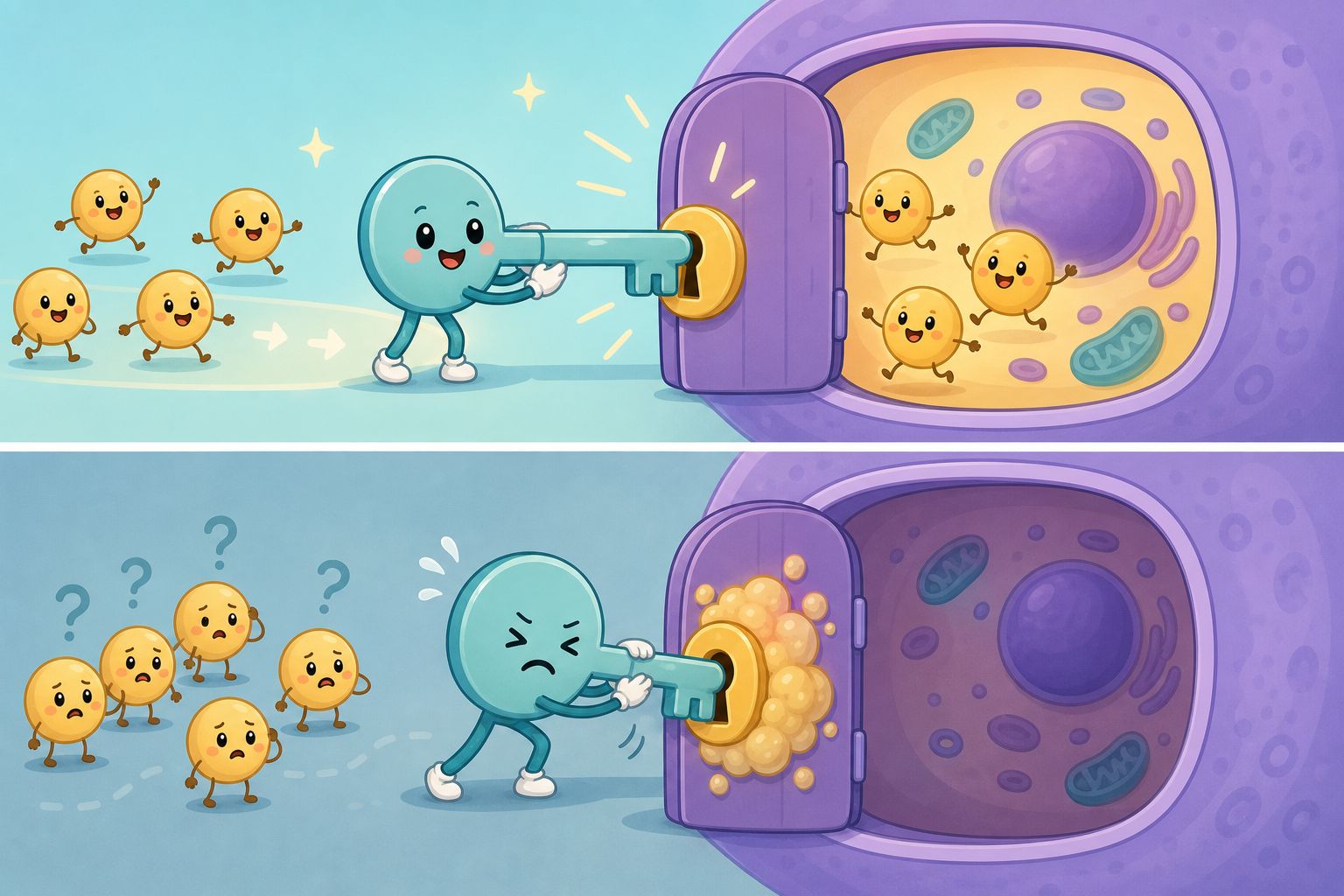
The problem is, cells cannot open the door on their own to absorb glucose. At this point, the pancreas secretes a hormone called “insulin”.
Its job is to:
| Process | Description |
|---|---|
| 1. Ring the doorbell | Insulin travels to the “receptors” on the surface of the cell |
| 2. Open the door | Triggers the cell to open its door |
| 3. Move goods inside | Allows glucose to enter the cell and be converted into energy |
Without
insulin, sugar can only stay in the bloodstream. Even though the cells are starving, the doors just won’t open.
Insulin is produced by a group of tiny workers in the pancreas called beta cells. They are on duty 24/7, starting mass production as soon as blood sugar rises.
What Is “Insulin Resistance”? Why Can’t the Door Be Opened Even with the Key?
If
insulinis the key, thereceptoron thecell surfaceis the lock.
Under normal circumstances, one key easily opens one door.
But if you eat too much for a long time and exercise too little, something happens:
The cell is already stuffed
With a steady stream of sugar being sent in every day, the cell’s energy warehouse has long been packed to capacity.
Since there is no room left inside, the cell simply makes a decision: change the lock.
| Stage | Body’s Reaction | Analogy |
|---|---|---|
| Early Stage | Cell receives too much sugar, starts reducing receptor sensitivity |
The resident finds the deliveries too annoying, turns down the doorbell volume |
| Mid Stage | Insulin finds it harder and harder to trigger the cell to open the door |
The delivery agent rings the doorbell desperately, but the resident plays dead and won’t open |
| Late Stage | Cell almost completely ignores insulin |
The resident directly cuts the doorbell wire |
This is insulin resistance: it is not a problem with the key, but rather the lock has been changed, the doorbell has been pulled, and no amount of keys can open it.
The modern diet combination (refined starches + sugary drinks + prolonged sitting) keeps cells in a chronic state of energy surplus, creating the perfect storm for insulin resistance.
What Happens After Insulin Resistance?
When cells refuse to open the door, sugar in the blood cannot go down.
The pancreas receives the signal that “blood sugar is still too high,” assuming it hasn’t sent enough insulin, so it makes a fatal decision:
Work overtime, work crazy overtime.
| Stage | What Happens | Result |
|---|---|---|
| Desperate Compensation | The pancreas increases insulin production by 5 to 10 times |
Blood sugar is forced down, and the values look normal |
| Hyperinsulinemia | Insulin concentration in the blood rises abnormally | Promotes fat accumulation and chronic blood vessel inflammation |
| Beta Cell Burnout | Forced to work overtime for several consecutive years | Beta cells begin to collapse batch by batch |
| Crash | Insulin production drops below normal levels |
Blood sugar goes completely out of control → Diagnosed with Type 2 Diabetes |
For many people, insulin resistance has quietly existed for over 10 years before they are diagnosed with diabetes.
During this period, blood sugar levels may appear “normal” because the pancreas has been sacrificing its life to keep the numbers down. It is only when beta cells run low that blood sugar suddenly spikes.
The Hidden Dangers of Hyperinsulinemia
Even if blood sugar numbers are normal, chronically high insulin itself is toxic:
| Danger | Description |
|---|---|
| Promotes visceral fat accumulation | Makes your waistline wider and wider |
| Accelerates vascular wall inflammation | Sows the seeds of arteriosclerosis |
| Increases cancer risk | High insulin stimulates abnormal cell proliferation |
Normal blood sugar ≠ Everything is fine with the body.
Hyperinsulinemia is the final warning sign before the blood sugar storm arrives.
Are Insulin Injections “Addictive”?
When doctors recommend insulin supplementation, many people’s first reaction is to refuse due to several common myths:
Myth 1: Getting insulin injections means “it’s very serious”
Insulin supplementation is not a death sentence. Its essence is to let the overworked pancreas rest.
Just like when all employees in a company are exhausted, it doesn’t mean the company is finished; rather, bring in external temp staff first to give our own employees a chance to recover.
Myth 2: Injecting insulin will “make it worse and worse”
Quite the opposite. Delaying it is what makes it worse.
Supplementing with external insulin when beta cells still have 50% left allows them to catch their breath and repair, and they may even recover some function.
But if you hold out until beta cells only have 10% left, the room for recovery at that point will be very limited.
Myth 3: Insulin injections lead to kidney dialysis
The truth is: chronic high blood sugar leads to kidney dialysis.
Chronically high blood sugar damages the microvessels of the kidneys, eventually leading to renal failure.
The role of insulin is precisely to lower blood sugar and protect the kidneys.
Getting insulin is not a sign of “going downhill,” but rather stepping on the brakes to prevent the body from continuing to crash off the cliff.
Protect Your “Insulin System”
Insulin is not the enemy; it is the body’s carefully designed blood sugar regulation mechanism.
The real problem is never insulin itself, but rather that we have pushed this system to the brink of collapse with poor diet and lifestyle choices.
The key to protecting the insulin system is: don’t let the pancreas work to exhaustion.
- Reduce refined starches and sugary drinks
- Exercise regularly (exercise can directly improve cells’ insulin sensitivity)
- Avoid chronically overeating
Understanding and caring for it is the fundamental way to stay away from diabetes.