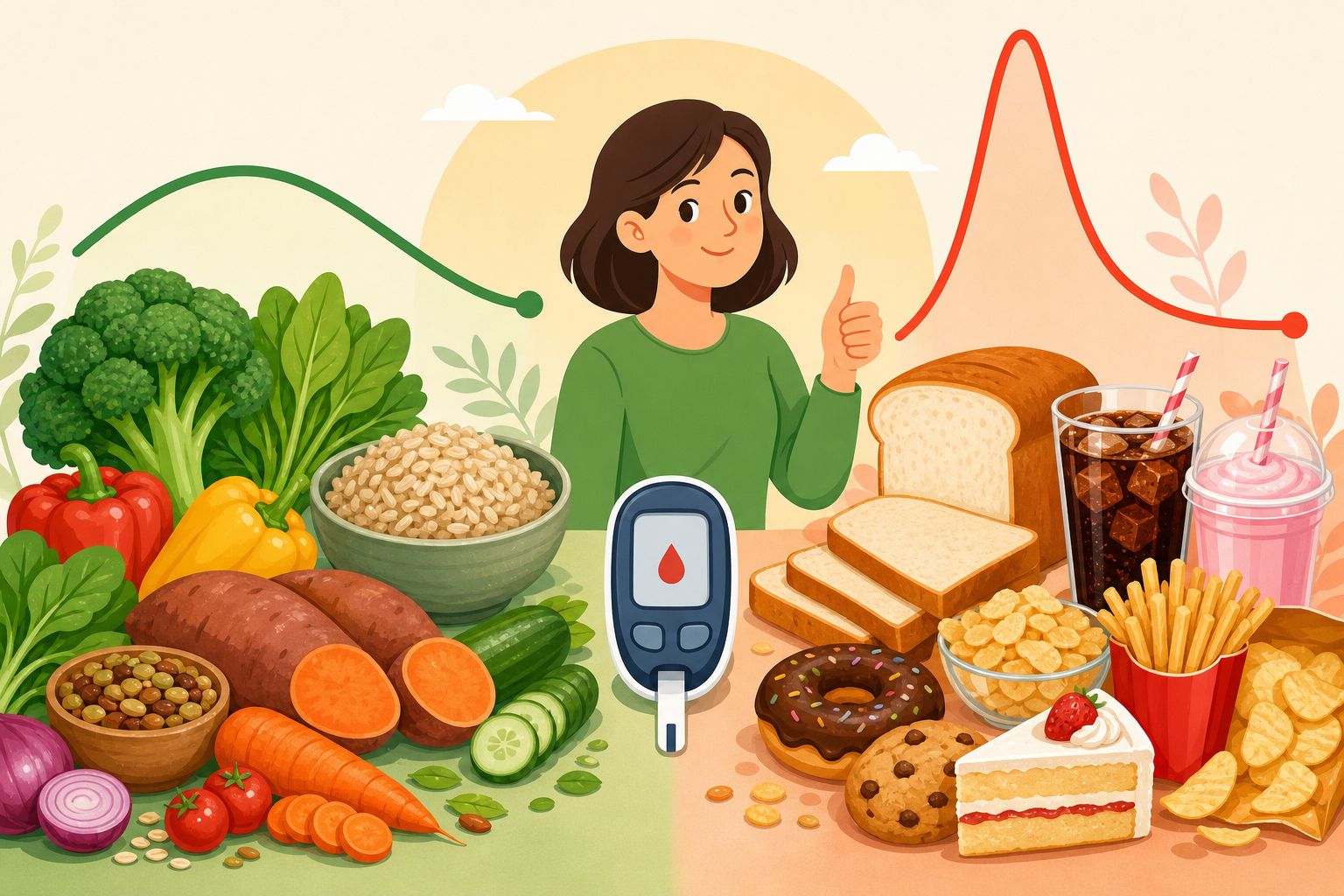
Have you also often heard people say: “Don’t eat too much sweet stuff, watch out for diabetes!”
The key is not just “sweetness,” but how the food you eat affects your blood sugar fluctuations.
How Does Food Turn into "Sugar" in the Body?
The carbohydrates (whether rice, noodles, bread, or fruit) we eat are broken down into glucose after entering the digestive tract, which then enters the bloodstream and causes blood sugar to rise.
At this time, the pancreas receives a signal and quickly secretes insulin to transport the sugar in the blood into cells, bringing blood sugar back to the normal range.
It is normal for blood sugar to rise after eating; the problem lies in the speed and magnitude of the rise.
This is why eating brown rice vs. white bread, although both are carbohydrates, has a world of difference in their impact on blood sugar. The key behind this is the Glycemic Index (GI).
What is the GI Value? Why is it Important?
The GI value (Glycemic Index) is a measure of how fast blood sugar rises after consuming a food.
| GI Level | GI Range | Blood Sugar Response | Representative Foods |
|---|---|---|---|
| High GI | 70 and above | Blood sugar spikes like a rollercoaster | White rice, white bread, sugary drinks, cakes |
| Medium GI | 56 ~ 69 | Blood sugar rises steadily | Brown rice, whole wheat bread, oats |
| Low GI | 55 and below | Blood sugar rises slowly and flatly | Sweet potatoes, vegetables, beans, most fruits |
High-GI foods digest extremely fast, pumping a large amount of glucose into the blood vessels within minutes, forcing the
pancreasto urgently mobilize.
How Do High-GI Foods Trigger Diabetes Step by Step?
When Eating Low-GI Foods
Food digests very slowly, and glucose enters the blood vessels in small, scattered batches. The pancreas only needs to release a small amount of insulin to systematically escort the sugar into the cells.
When Eating High-GI Foods
After refined starch and sugary drinks enter the digestive tract, like a reservoir releasing a flood, they turn into a massive wave of glucose within minutes, instantly stuffing the blood vessels to capacity.
The pancreas sounds an alarm and unleashes a massive amount of insulin all at once, trying desperately to press the blood sugar down.
If it’s just once in a while, the pancreas can handle working overtime. But if you are eating high-GI foods for all three meals, plus afternoon tea and night snacks, day in and day out:
| Stage | What Happens |
|---|---|
| Cell Breakdown | Insulin rings the doorbell like crazy every day to deliver sugar. The cells simply cannot use that much energy, so they disconnect the doorbell and pretend not to hear |
| Pancreatic Overwork | Blood sugar remains high. The pancreas thinks there isn’t enough insulin, so it squeezes itself even more crazily, secreting 200 or 300 times the normal amount |
| System Collapse | A few years later, the β-cells of the pancreas collectively die from overwork, no longer able to produce insulin, and blood sugar spirals completely out of control |
High-GI foods are a "blitzkrieg" on the
pancreas; every single strike is consuming its lifespan.
Is "Eating Too Full" as Dangerous as "Eating Too Sweet"?
Even if you eat very healthy low-GI foods (oats, brown rice, boiled chicken breast, vegetables) for every meal, as long as you eat too much for a long time and keep your body in a state of chronic energy surplus, it will lead to diabetes just the same.
High GI is a blitzkrieg, while chronic overeating is a war of attrition.
Why Does Overeating Also Trigger Diabetes?
| Stage | What Happens to the Body |
|---|---|
| Fat Cell Bursting | Excess energy is constantly stuffed into fat cells. Once they are stretched to their limit, they start to inflame |
| Fat Spreading | The overflowing fat spills into the areas surrounding the muscles, liver, and pancreas (visceral fat) |
| Card Reader Clogged | Ectopic fat releases free fatty acids, directly "clogging" the insulin card readers on cells |
This is why some people who look thin and eat relatively healthily still get diabetes.
They are "skinny-fat people" (hidden obesity). Their subcutaneous fat capacity is small, so even if they eat just a little bit more, fat goes straight into the internal organs.
Practical Dietary Adjustment Strategies
Eating shouldn’t come with guilt, as long as you learn a few simple substitution rules:
| Principle | How to Do It |
|---|---|
| Refined to Whole Foods | White rice → brown rice, multi-grain rice;white bread → sweet potatoes, pumpkin |
| Adjust Eating Order | Vegetables first → protein next → starch last, slowing down sugar absorption |
| Practice the 211 Plate | 2 portions of vegetables + 1 portion of protein + 1 portion of whole grains |
| Eliminate Liquid Sugar | The high-fructose corn syrup in sugary drinks will directly convert into visceral fat |
| Seventy to Eighty Percent Full | Stop eating when you no longer feel hungry, giving the body time to clear inventory |
What If You Really Want to Eat Sweets?
Don’t eat them alone on an empty stomach. Move them to after eating vegetables and protein in a regular meal.
With fiber and protein already blocking the way in the stomach, the speed at which the cake turns into sugar will be greatly delayed. The blood sugar that would have spiked vertically will instead become a slowly rising slope.
As long as there isn’t that "instant surge" shock, the
pancreasdoesn’t need to be forced to work crazy overtime, and insulin resistance naturally won’t occur.
The Key to Controlling Sugar Lies in "Quality" and "Quantity"
The dietary strategy for preventing diabetes can be summarized in one sentence:
Choose high-quality fuel (low GI) and control the total volume entering the fuel tank (not overeating).
You can still enjoy delicious food, as long as you learn to choose and pair them smartly, you can protect both your blood sugar and your pancreas.