When asked how to prevent diabetes, most people’s first reaction is: “Just eat less sugar!”
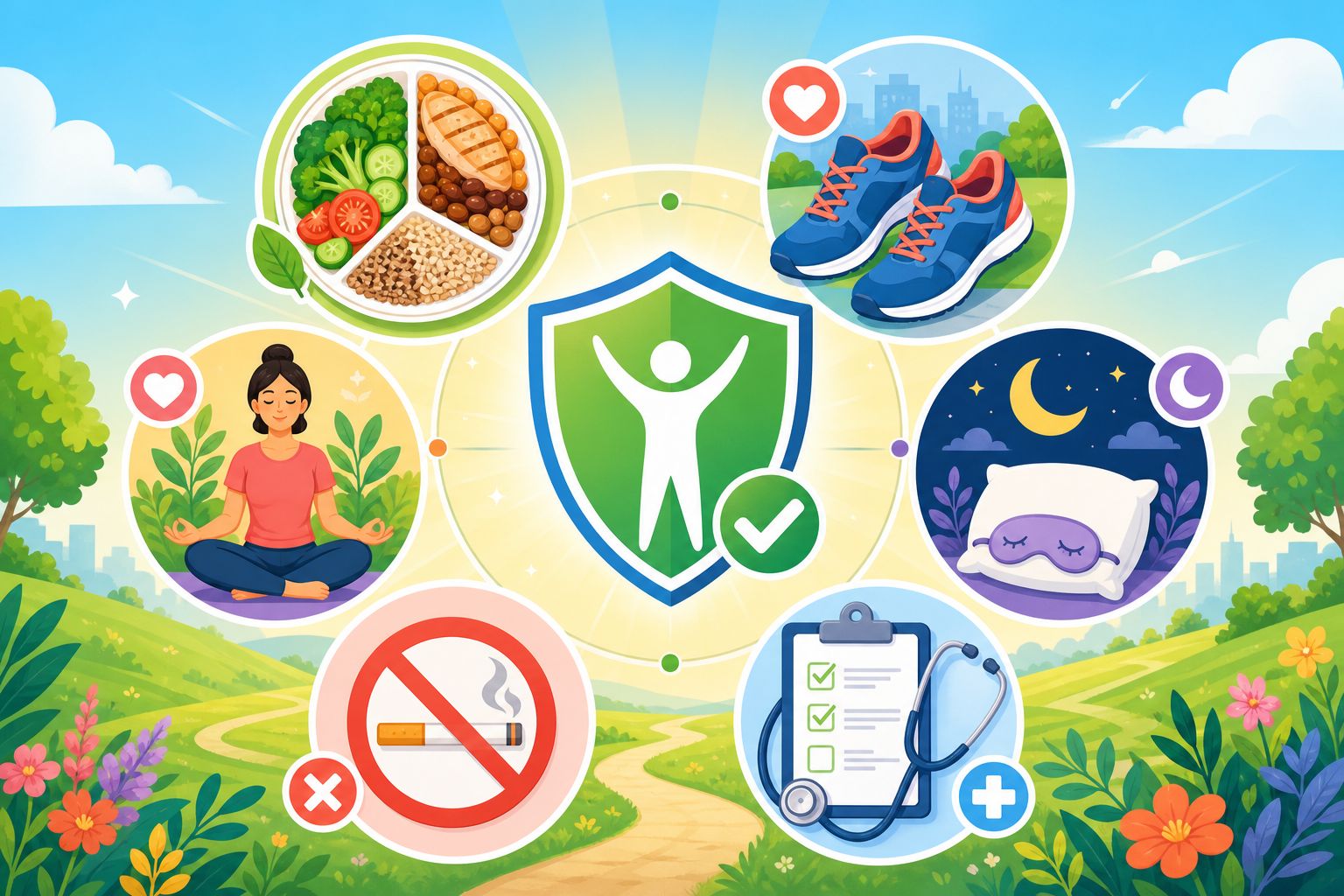
That’s correct, but it is only one of the six lines of defense.
Your exercise amount, sleep quality, and even the stress you bear daily are silently affecting your blood sugar levels.
Defense 1: Diet — Choose the Right Fuel, Control Total Intake
Diet is the first checkpoint for blood sugar. There is no need to completely eliminate starches or live like an ascetic, just master a few core principles:
| Principle | How to do it | Why |
|---|---|---|
| Refined to Whole | White rice → brown rice, multi-grain rice; white bread → sweet potato | Low GI foods allow blood sugar to rise slowly instead of spiking |
| Adjust the Order | Vegetables first → protein → starch last | Fiber and protein can slow down sugar absorption |
| Practice the 211 Plate | 2 parts vegetables + 1 part protein + 1 part whole grains | Naturally controls carbohydrate intake proportion |
| Cut off Liquid Sugar | Sugar-sweetened beverages, boba → water, sugar-free tea | Liquid sugar is absorbed the fastest, causing the greatest impact on the pancreas |
| 70-80% Full | Put down chopsticks when you don’t feel hungry | Eating too full long-term = making the pancreas work overtime long-term |
The focus of dietary control is not “what you cannot eat,” but “how to pair and how much to eat.”
Defense 2: Exercise — Activate the Body’s “Natural Glucose-Lowering Mechanism”
Muscleis the human body’s largest “natural glycogen storage.”
When you exercise, muscles act like a hungry sponge, actively absorbing glucose from the blood, even without the help of insulin to open the door.
| Exercise Type | Suggestion | Benefits to Blood Sugar |
|---|---|---|
| Aerobic Exercise | At least 150 minutes per week (brisk walking, swimming, cycling) | Consumes glucose on the spot, lowering blood sugar levels in real time |
| Resistance Training | 2 to 3 times per week (squats, dumbbells, resistance bands) | Increases muscle mass = expands glycogen storage, helping you stabilize blood sugar 24 hours a day |
Why is Resistance Training Especially Important?
Aerobic exercise is “consuming glucose in the moment,” while resistance training is “expanding the warehouse.”
The greater the muscle mass, the more glycogen the body can store.
Eating the same bowl of rice, a person with large muscle mass can easily digest these sugars, but for someone with low muscle mass, blood sugar will spike much higher.
You don’t have to go to the gym; starting with 20 squats and 10 wall push-ups daily is a great beginning.
Defense 3: Sleep — You Think It’s Fine, but Your Body is Already in Chaos
Sleep or no sleep? It matters a lot.
Studies show that people who sleep less than 6 hours per night have about a 28% higher risk of developing diabetes.
How Does Sleep Deprivation Mess Up Blood Sugar?
| Problem | Body Reaction | Consequence |
|---|---|---|
| Endocrine Disruption | Insulin sensitivity decreases | Eating the same food, blood sugar rises higher and falls slower |
| Ghrelin Spikes | The brain thinks you lack energy, frantically sending “I’m hungry” signals | You will unconsciously eat more, especially foods high in sugar and fat |
| Stress Hormones Rise | Cortisol remains high in the middle of the night |
The liver is stimulated to release more glucose into the blood |
A single night of poor sleep won’t do much, but sleeping only 5 hours every day means your body is building the foundation for insulin resistance daily.
What Counts as “Sleeping Well”?
It’s not just the duration, quality is more important:
- Target 7 to 9 hours, keeping a regular schedule
- Keep away from screen blue light 1 hour before sleep
- Keep the bedroom cool, quiet, and pitch-black
Defense 4: Stress Management — The Invisible Driver of Blood Sugar
Chronic stress is another often-overlooked blood sugar killer.
When you are constantly in a high-stress state (work pressure, interpersonal anxiety, financial worries), your body continuously releases cortisol (stress hormone).
Cortisol the instinctive task is to make sure you have enough energy to flee, so it will:
- Order the liver to release a large amount of glucose into the bloodstream
- Reduce insulin sensitivity in muscles and fat to keep glucose in the blood for backup
In ancient times, this was a life-saving mechanism to help you escape wild beasts.
But in modern times, your stressor won’t disappear in 10 minutes; it might last for months or even years.
Chronic stress = body in “fight mode” 24 hours a day = blood sugar constantly elevated + insulin continuously depleted.
Practical Ways to Adjust Stress
- 10 minutes of mindful breathing or meditation daily
- Regular exercise (exercise itself lowers
cortisol) - Consciously distinguish between “controllable” and “uncontrollable” things
Defense 5: Stay Away from Smoking and Alcohol
Smoking — Directly Damages Blood Vessels
The impact of smoking on diabetes is not as simple as just being “unhealthy.”
Nicotine and chemical substances in smoke will:
| Mechanism | Consequence |
|---|---|
| Damage blood vessel inner walls | Accelerate arteriosclerosis, bringing diabetes complications earlier |
| Increase insulin resistance | Smokers have a 30 to 40% higher risk of developing type 2 diabetes than non-smokers |
| Promote visceral fat accumulation | Even with normal weight, visceral fat may be high |
Drinking — Disrupts Liver’s Blood Sugar Regulation
The liver is the body’s blood sugar regulation center, responsible for releasing stored glucose when blood sugar is too low.
However, alcohol keeps the liver busy detoxifying alcohol, leaving no time for blood sugar regulation.
| Drinking Status | Consequence |
|---|---|
| Drinking on an empty stomach | Blood sugar may plummet (hypoglycemia) |
| Drinking with meals | Calories from alcohol plus food lead to a spiked total energy intake |
| Long-term excess | Increases risk of insulin resistance and fatty liver |
If you cannot quit alcohol completely, at least limit to: no more than 2 standard drinks daily for men, and no more than 1 standard drink for women.
Defense 6: Regular Health Examinations — The Last Safety Net
Get regular check-ups to intercept early.
Key Screening Items
| Item | Frequency | Purpose |
|---|---|---|
| Fasting Blood Glucose | At least once a year | Screen if you have entered prediabetes (100 ~ 125 mg/dL) |
| HbA1c | At least once a year | See the average blood sugar over the past 2 to 3 months |
| Oral Glucose Tolerance Test (OGTT) | When recommended by doctor | More accurately judge the body’s ability to handle glucose |
When to Pay Special Attention?
If you meet any of the following conditions, it is recommended to get regular checks every year:
- Age 40 or above
- BMI over 24
- Family history of diabetes
- History of gestational diabetes
- Long-term sedentary, lack of exercise
Prediabetes usually has absolutely no symptoms, and the only way to detect it is through a blood test.
Health is Accumulated Bit by Bit
Preventing diabetes does not require changing everything overnight, but rather naturally integrating these 6 habits into daily life:
| Habit | Explanation |
|---|---|
| Eat the right food | Choose whole foods, control portions |
| Get moving | Aerobic + resistance training |
| Sleep well | 7 to 9 hours of regular sleep |
| Manage stress | Mindful breathing, exercise to relieve stress |
| Stay away from smoking/alcohol | Reduce extra damage to blood vessels and liver |
| Regular checkups | Blood test once a year, intercepting problems at the earliest stage |
Today’s small changes will be your greatest health wealth in the future.