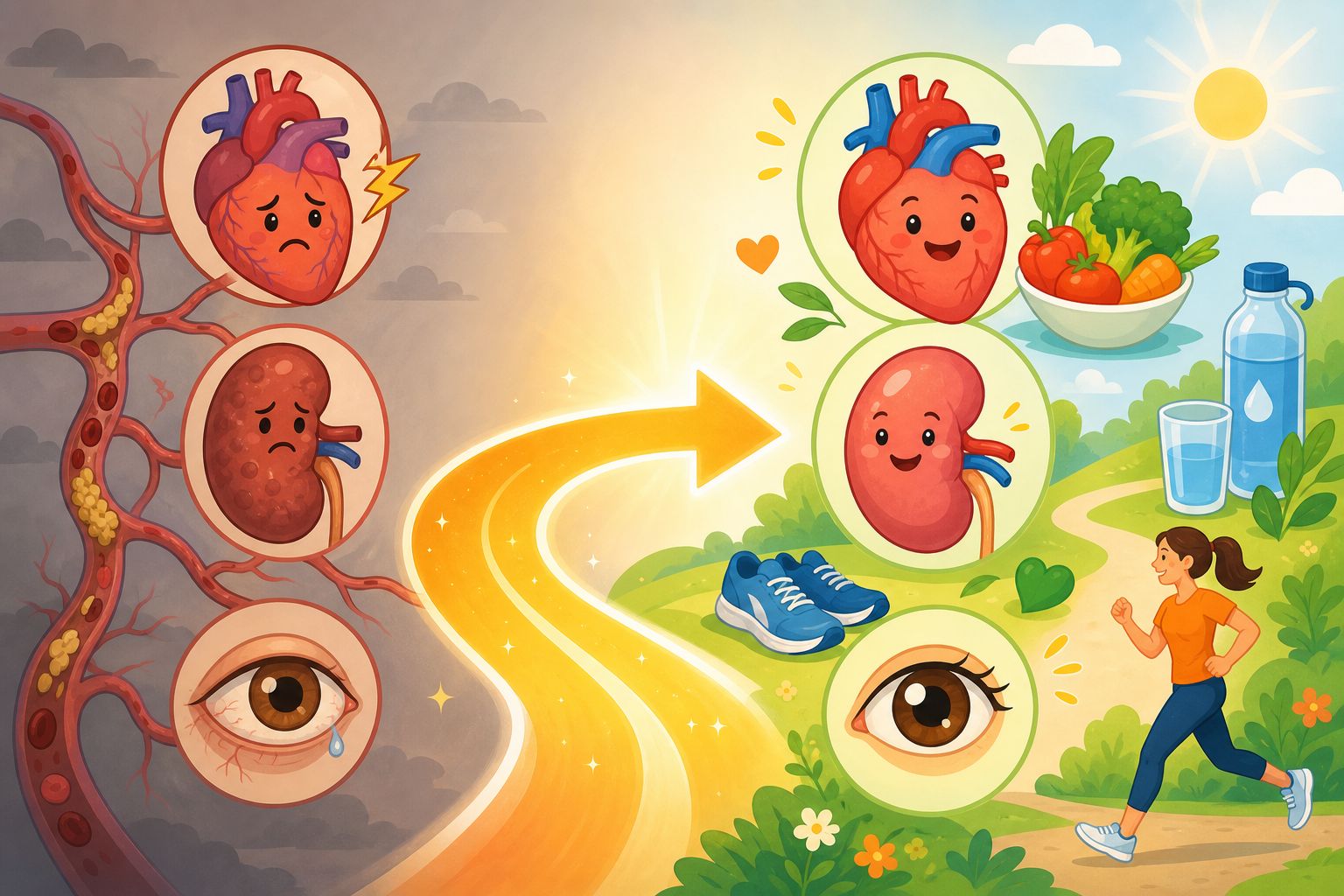
Many diabetic patients initially feel that “blood sugar is just a little high, and it doesn’t hurt anyway.”
But the real killer of diabetes is actually those complications that quietly eat away at body organs.
Why is High Blood Sugar So Dangerous?
Having too much sugar in the blood for a long time is like soaking all the blood vessels of the body in sugar water. Over time, blood vessels will start to inflame, harden, and become brittle, eventually clogging or rupturing.
Medicine divides the damage caused by high blood sugar into two major categories:
Acute Complications
| Name | High-risk Group | Situation |
|---|---|---|
| Diabetic Ketoacidosis (DKA) | Type 1 Diabetes | Extreme lack of insulin forces the body to burn fat, producing large amounts of toxic ketone bodies, leading to vomiting, abdominal pain, and rapid breathing |
| Hyperosmolar Hyperglycemic State (HHS) | Type 2 Diabetes | Blood sugar rises extremely high, causing severe dehydration, leading to confusion or even coma |
If these two conditions are not treated in an emergency room, they can be life-threatening.
Chronic Complications
Chronic complications are the most terrifying part of diabetes because they accumulate imperceptibly:
| Affected Organ | Pathology Name | Consequence |
|---|---|---|
Eyes |
Retinopathy | Ruptured microvessels bleed, which can lead to blindness in severe cases |
Kidneys |
Nephropathy | Loss of filtering function, ultimately requiring lifelong kidney dialysis |
Nerves |
Neuropathy | Hand and foot numbness and tingling, losing sensation in severe cases |
Heart |
Coronary Artery Disease | Blocked blood vessels, triggering myocardial infarction |
Brain |
Cerebrovascular Disease | Clogged or ruptured blood vessels, leading to stroke |
Feet |
Diabetic Foot | Wounds are difficult to heal due to nerve numbness and clogged blood vessels, possibly leading to amputation in severe cases |
Controlling blood sugar is not about satisfying medical test numbers, but about protecting blood vessels throughout the body.
As long as blood sugar is stabilized, more than 80% of these complications can be avoided.
Will Diabetes Get Better? Understanding “Clinical Remission”
Diabetes cannot be completely cured like a cold, because once diagnosed, the overworked β cells in the pancreas cannot regenerate.
But in recent years, the medical community has proposed an exciting concept: Clinical Remission.
Without taking any blood sugar lowering drugs or insulin, HbA1c is maintained at a normal level (< 6.5%) for more than 3 consecutive months.
In practical terms, this is equivalent to “recovery.” Although the genetic predisposition remains and overeating can lead to recurrence, as long as good habits are maintained, you will never experience the symptoms and complications of diabetes in your lifetime.
Particularly for newly diagnosed, obese Type 2 diabetes patients, there is a very high probability of achieving clinical remission through high-intensity lifestyle modification.
Practical Lifestyle Reversal Strategies
Diet Modification
| Strategy | Approach |
|---|---|
| Cut off liquid sugar | High-fructose corn syrup in sugary hand-shaken drinks and packaged juices bypasses the satiety mechanism and directly converts to visceral fat |
| Practice the 211 Plate | Each meal contains 2 portions of vegetables, 1 portion of protein, and 1 portion of whole grains, eating vegetables and meat first, and starch last |
| Swap refined for whole food | Swap white rice for brown rice and white bread for sweet potatoes to let blood sugar rise steadily instead of spiking |
| Adjust eating sequence | Eating vegetables first → then protein → and finally starch; fibers in the stomach will slow down sugar absorption |
Exercise Habits
Muscles are the body’s largest “natural sugar storage”.
Of the sugar we eat, 70% to 80% is consumed by muscles. The more muscle mass you have, the stronger your body’s ability to process blood sugar.
| Exercise | Description |
|---|---|
| Walk for 15 minutes after meals | Muscle contraction actively absorbs blood sugar, showing immediate results in lowering blood sugar |
| 150 minutes of moderate-intensity exercise per week | Brisk walking, cycling, swimming |
| Resistance training twice a week | Squats, push-ups, dumbbells to increase muscle mass |
Lifestyle Management
| Strategy | Description |
|---|---|
| Lose visceral fat | By losing just 5% to 7% of your initial body weight, the success rate of preventing diabetes is as high as 58% |
| Improve sleep | Sleeping less than 6 hours a day causes the body to secrete large amounts of stress hormones, directly pushing up blood sugar |
Does Taking Insulin Lead to Dialysis? Debunking Medication Myths
Many people have serious misunderstandings about insulin therapy, believing that “taking insulin leads to kidney dialysis.”
Taking insulin absolutely does not cause dialysis.
Past years because patients held out until their kidneys were already ruined before agreeing to take it, making insulin the scapegoat.
In fact, early use of insulin (even short-term injections for a few months) can give the overworked pancreas a full rest. With enough rest, pancreas function can actually recover, and there may even be a chance to stop injections and switch back to oral medications in the future.
| Myth | Fact |
|---|---|
| Insulin causes dialysis | Kidney dialysis is caused by long-term high blood sugar destroying kidneys, not by insulin |
| It cannot be stopped once started | Type 2 diabetes patients have a chance to reduce dosage or even stop medication after blood sugar stabilizes |
| Taking insulin means it is very severe | Early intervention is to let the pancreas rest, which is a protection rather than giving up |
Diabetes is Not the End of the World
Diabetes is an opportunity to re-examine your lifestyle.
Many diabetic patients start to exercise seriously, cut out refined sugar, and focus on diet because of this diagnosis. Over the years, not only is their blood sugar controlled better than normal people, but they also look fitter and more energetic than before they fell ill.
You cannot erase the diabetic predisposition in your genes, but you can definitely decide whether this disease will affect your lifespan and quality of life.
Control is still in your hands.