What is diabetes? Why is it becoming so common in modern society?
It all comes down to the “energy processing system” in our bodies.
What is the Core Nature of Diabetes?
The food we eat daily (especially carbohydrates) is broken down by our bodies into glucose, which acts as the fuel in our bloodstream.
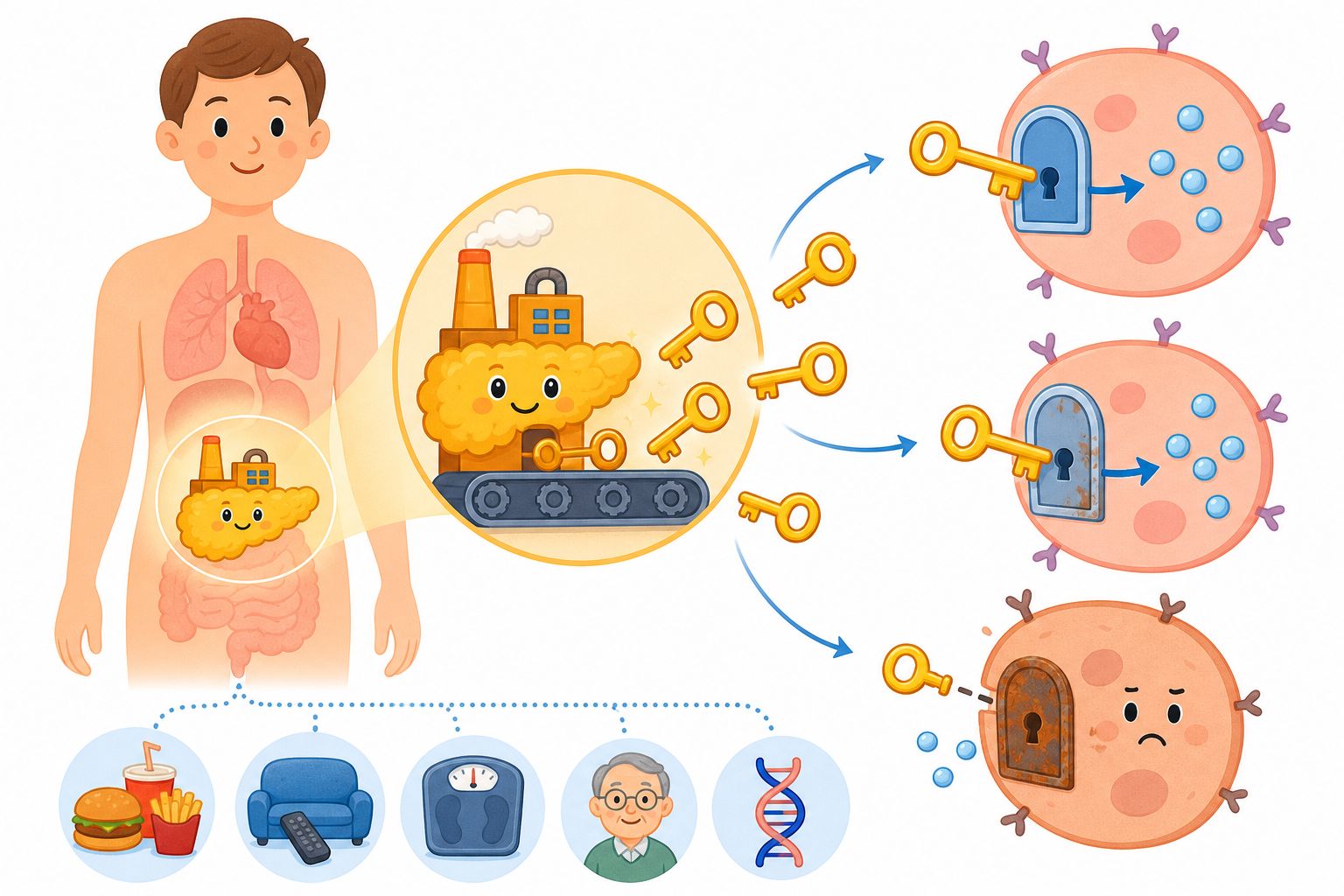
The insulin secreted by the pancreas works like a “key” that unlocks cell doors, allowing glucose in the blood to enter your cells and transform into energy for walking, thinking, and breathing.
When this “insulin” key breaks or the cell’s lock rusts, glucose cannot enter the cells and starts accumulating in the blood.
When blood sugar spikes, the kidneys try to flush out the excess sugar through urine, which is where the term “diabetes” (sweet urine) comes from.
What are the Main Types of Diabetes?
| Type | Percentage | Causes |
|---|---|---|
| Type 1 Diabetes | Approx. 5% | The immune system mistakenly destroys the insulin-producing β cells, leaving the body completely unable to secrete insulin (no key made) |
| Type 2 Diabetes | Approx. 95% | Cells develop resistance to insulin (rusty lock), and after the pancreas burns out, insulin secretion becomes insufficient (not enough keys) |
| Gestational Diabetes | A minority | Hormones during pregnancy disrupt insulin function, with most cases returning to normal post-delivery |
What is “Insulin Resistance”?
For Type 2 Diabetes, which accounts for over 95% of cases, the core problem is insulin resistance.
Think of your cells as residents in a gated community, where
insulinacts as the access card at the door.
Normally, when insulin taps the sensor, the cell doors open, and glucose is successfully delivered inside.
However, when someone is in a long-term state of obesity (especially excess visceral fat), sedentary lifestyle, and a high-sugar, high-fat diet, the cell surface becomes clogged with grease.
Even if
insulintries to tap the card, the reader responds sluggishly due to the grease buildup.
As a result, the pancreas has to work overtime, secreting 2 to 3 times more insulin to force the doors open. In the short term, blood sugar levels can barely be kept down, but over the long run, the β cells of the pancreas burn out and can no longer produce enough insulin.
| Stage | Condition | Outcome |
|---|---|---|
| Early Stage | Cells become numb to insulin (rusty locks) | The pancreas works overtime frantically, keeping blood sugar barely normal |
| Middle Stage | The pancreas is overloaded long-term |
Blood tests show hyperinsulinemia |
| Late Stage | β cells die off en masse due to burnout |
Insulin production plummets, and blood sugar spins completely out of control |
Genetics also play a major role. If both parents have Type 2 diabetes, the children’s risk of developing it is as high as 70%.
Genetics determine the inherent “resilience” of your pancreas, while lifestyle factors like obesity and a refined diet act as the hand that flips the switch to trigger diabetes.
What Harm Does High Blood Sugar Do to the Body?
When sugar in the blood cannot enter the cells, it means your blood vessels are essentially soaked in thick syrup for a long time.
This leads to two destructive outcomes:
| Type of Damage | Explanation |
|---|---|
| Vessel Inflammation and Hardening | High sugar concentrations generate massive amounts of free radicals, attacking vessel walls and making them inflamed, stiff, and brittle |
| Microvascular Blockage | Thick blood flows slower, and the microvessels feeding delicate areas are the first to clog and cut off circulation |
Since blood vessels cover the entire body, the damage of high blood sugar is “from head to toe”:
| Organ | Damage Caused |
|---|---|
| Eyes | Microvessels rupture and bleed, potentially leading to blindness in severe cases |
| Kidneys | The filtration system is ruined, eventually requiring dialysis |
| Nerves | Hands and feet begin to feel numb or tingle, eventually losing sensation |
| Heart & Brain | Large blood vessels harden and clog, triggering myocardial infarction or stroke |
When treating diabetes, the goal is never just to lower the numbers on your blood sugar meter, but to protect the blood vessels throughout your body.
Can Prediabetes Be Reversed?
Before being officially diagnosed with diabetes, there is a buffer period of about 5 to 10 years called “prediabetes”.
| Indicator | Normal | Prediabetes | Diabetes |
|---|---|---|---|
| Fasting Blood Sugar | < 100 mg/dL | 100 ~ 125 mg/dL | ≧ 126 mg/dL |
| HbA1c | < 5.7% | 5.7% ~ 6.4% | ≧ 6.5% |
During this stage, you will not experience any symptoms at all—no pain, no discomfort—and it can only be detected through blood tests.
Prediabetes is entirely reversible.
Once you notice numbers crossing the threshold during a health checkup, immediately adjusting your diet, doing regular exercise, and practicing weight management will give you a very high chance of returning blood sugar to normal, preventing it from ever developing into full-blown diabetes.
Studies have shown that losing just 5% to 7% of your initial body weight can reduce the risk of developing diabetes by more than 50%.
Diabetes is Not a Death Sentence; It’s a Warning from Your Metabolic System
Diabetes is not an illness that “suddenly arrives”; it is an alarm sounded by your body after years of experiencing “energy overload”.
Re-evaluating your own eating habits and reducing the burden on your body is the most fundamental way to steer clear of diabetes.
If you or your family members have a history of diabetes, are overweight, or habitually consume refined starch and sugary drinks, you might want to pay closer attention to your fasting blood sugar and HbA1c levels during your next checkup.
Detecting it one step earlier means you can hit the brakes one step sooner.