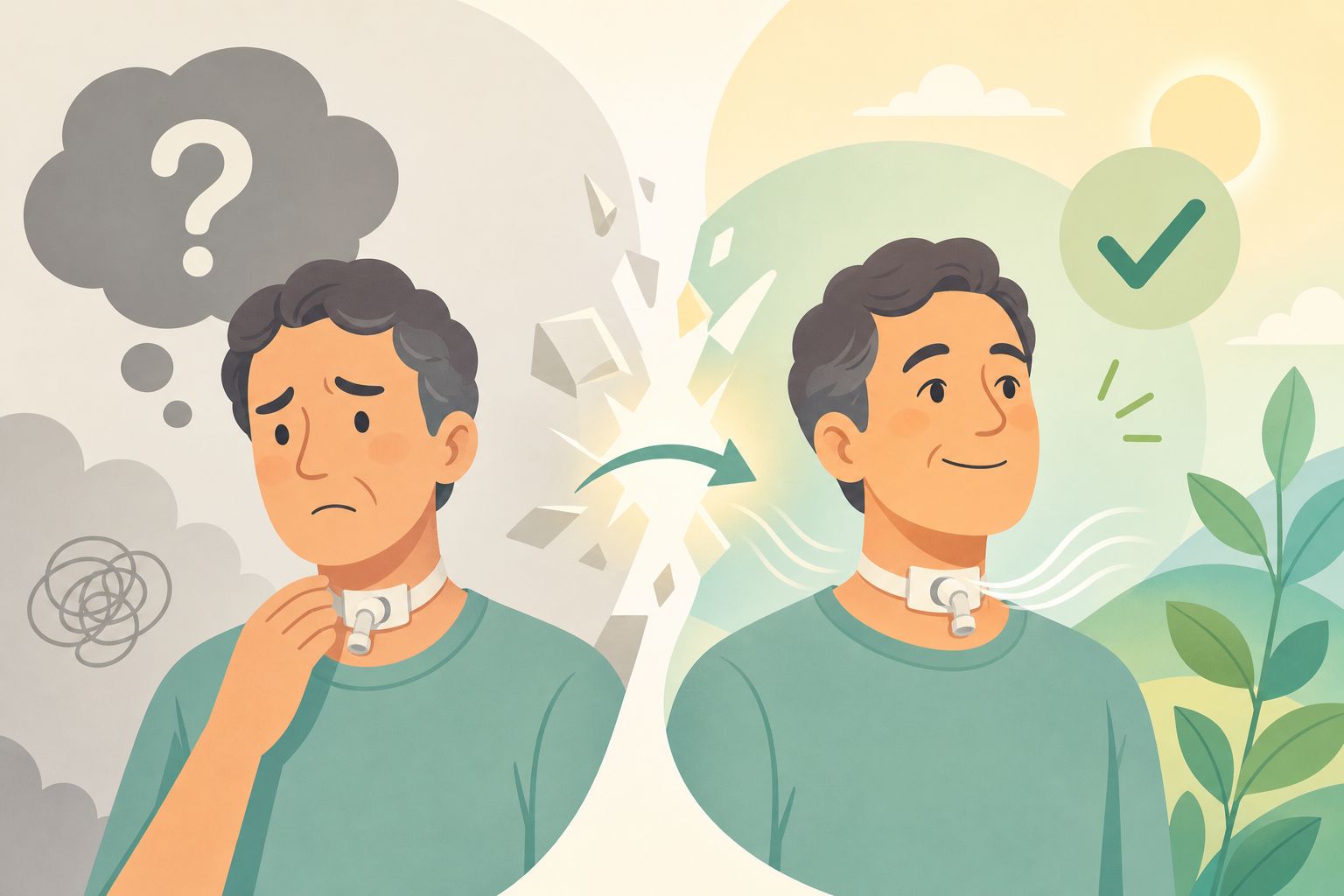
“I heard that getting a tracheostomy ruins your life forever, we absolutely cannot do it!”
This is often the very first thought that pops into the minds of ICU family members when a doctor suggests a tracheostomy.
But did you know? Refusing a tracheostomy out of fear might actually subject the patient to much more unnecessary suffering.
Why Do Doctors Recommend a Tracheostomy? What Harm is Long-Term Intubation Causing?
When intubation lasts longer than two to three weeks, that tube which initially saved their life gradually turns from a “lifesaver” into a “destroyer.”
| Damage of Long-Term Intubation | What is Happening |
|---|---|
| Vocal Cord & Tracheal Damage | Constant friction from the tube causes mucosal ulcers and scarring |
| Ventilator-Associated Pneumonia | Oral bacteria slide down the tube, entering the lungs like a water slide |
| Degeneration of Swallowing Function | The mouth is occupied by the tube for so long that swallowing muscles gradually forget how to function |
The purpose of a tracheostomy is never to give up, but to relieve the pain and damage caused by long-term intubation.
A tracheostomy is a procedure where a small opening is made in the front of the neck, and a shorter tracheostomy tube is inserted directly into the windpipe, bypassing the long, throat-obstructing oral route.
Does a Tracheostomy Equal Waiting to Die? Dispel 3 Major Myths
Families’ fear of tracheostomy almost always stems from three long-standing misunderstandings. Let’s break them down one by one:
| Myth | Truth |
|---|---|
| Tracheostomy leads to quick death | It is the severe illness itself that leads to death. A tracheostomy just happens to appear in the later stages of the illness; it is a means of relieving pain, not the cause of death |
| A tracheostomy tube can never be removed | Once the primary disease improves and the patient can cough up sputum on their own, removal can be evaluated. The wound usually heals on its own within 7 to 10 days |
| You can never speak after a tracheostomy | As long as a speaking valve is installed, air flowing through the vocal cords still allows the patient to speak, and they can also practice eating once stable |
What truly determines life and death is the severity of the illness, not the surgical wound of the tracheostomy.
Many people equate “tracheostomy” with “end-of-life” simply because patients who need a tracheostomy are already in critical condition. Mistaking correlation for causation has led to this most widespread misunderstanding.
What Are the Benefits of a Tracheostomy Compared to Long-Term Intubation?
The reason why a tracheostomy is seen as a “turning point” by pulmonologists and respiratory therapists is that it brings a comprehensive “system upgrade”:
| Benefits of Tracheostomy | Why It Helps |
|---|---|
| Significant Increase in Comfort | The mouth regains its freedom, and the foreign body sensation is greatly reduced |
| Easier to Wean Off the Ventilator | The tracheostomy tube is short and wide, greatly reducing breathing resistance, making it less tiring |
| Safer Tube Management | Fixed securely on the neck, it is less likely to slip out, reducing care risks |
| Reduced Risk of Infection | Bypassing the oral cavity reduces the entry of oral bacteria into the lungs |
| Earlier Rehabilitation | Patients are more comfortable and cooperative, allowing early out-of-bed training to rebuild strength |
For patients who need a ventilator for the long term, a tracheostomy is often a shortcut to weaning off the ventilator faster, rather than a point of no return.
There are many clinical cases where patients breathe much easier after a tracheostomy, successfully get out of bed for rehab, then speak with a speaking valve, and finally have the tracheostomy tube successfully removed.
What is the Difference Between Intubation and Tracheostomy?
If it still feels abstract, comparing long-term intubation and tracheostomy side-by-side makes the differences clear:
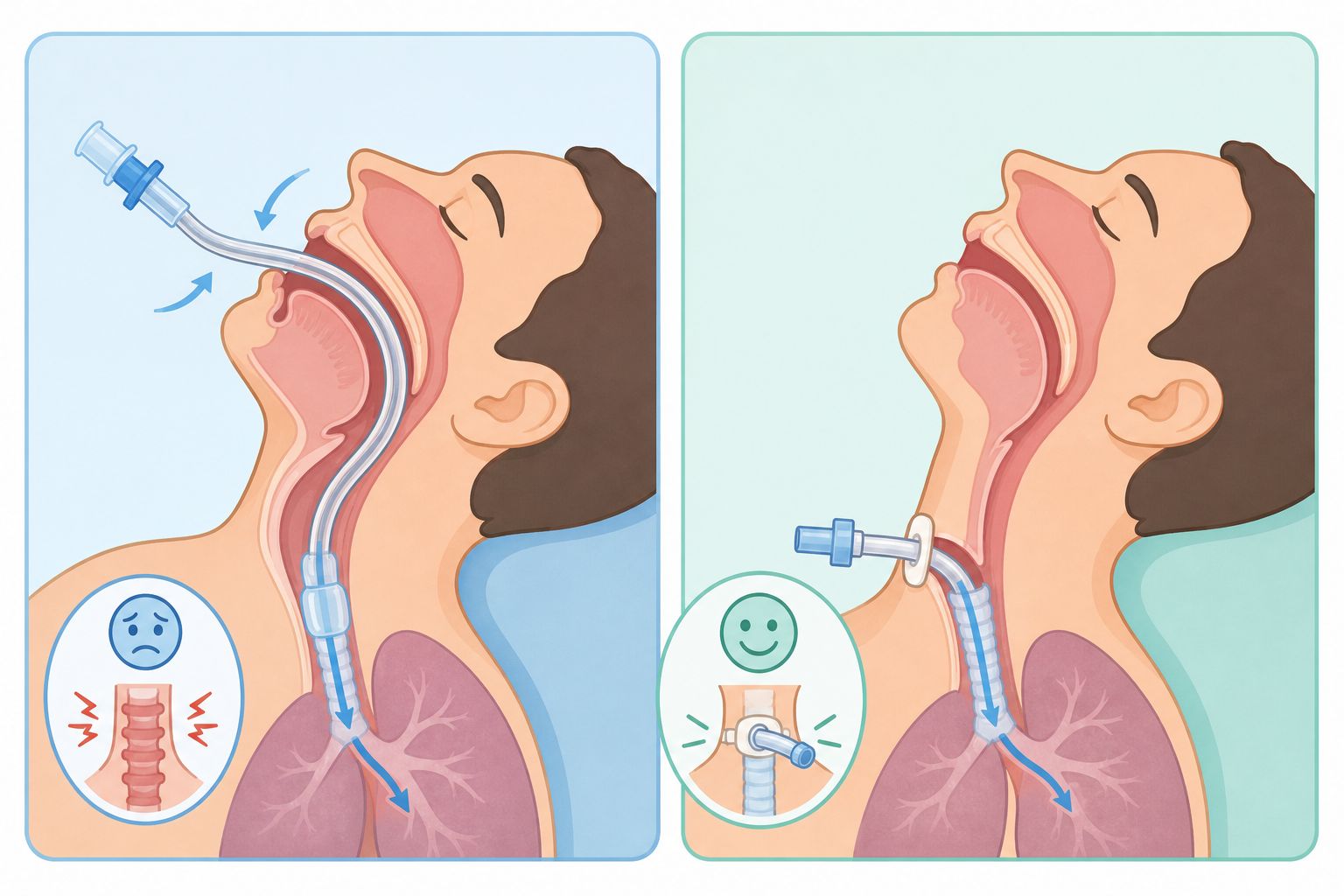
| Comparison Item | Long-Term Intubation | Tracheostomy |
|---|---|---|
| Tube Length | Long and curved, passing through the mouth to the trachea | Short and straight, passing from the neck directly into the trachea |
| Breathing Resistance | High resistance, making weaning off the ventilator harder | Low resistance, making weaning off the ventilator easier |
| Speaking and Eating | Almost impossible to speak or eat | Can speak with a speaking valve, can eat once stable |
| Oral Hygiene | Difficult, high risk of infection | Easy, lower risk of infection |
| Comfort Level | Intense foreign body sensation | Significantly more comfortable |
Therefore, a tracheostomy is not surrendering to death, but a “rehabilitation transfer” that changes the strategy.
By giving the patient a comfortable and safe breathing pathway, they will have the strength to fight the tough recovery battle ahead.
Reference
- Tracheotomy - Wikipedia
- Is Intubation First Aid, and Tracheostomy Means the Patient is Dying? Pulmonologist: Big Misconception! Actually Tracheostomy Has 5 Great Benefits - Breathe Free Health Network
- Thoracic Surgery Education - Far Eastern Memorial Hospital
- Can a Tracheostomy Never Be Removed in a Lifetime? Doctor: Common Misunderstanding! - Health News
- Intubation and Tracheostomy Are Not Points of No Return; Respiratory Therapist: On the contrary, it helps to wean off the ventilator as soon as possible - Fu Jen Catholic University Hospital Thoracic Medicine
- Understanding Tracheostomy Surgery - Tri-Service General Hospital Nursing Department