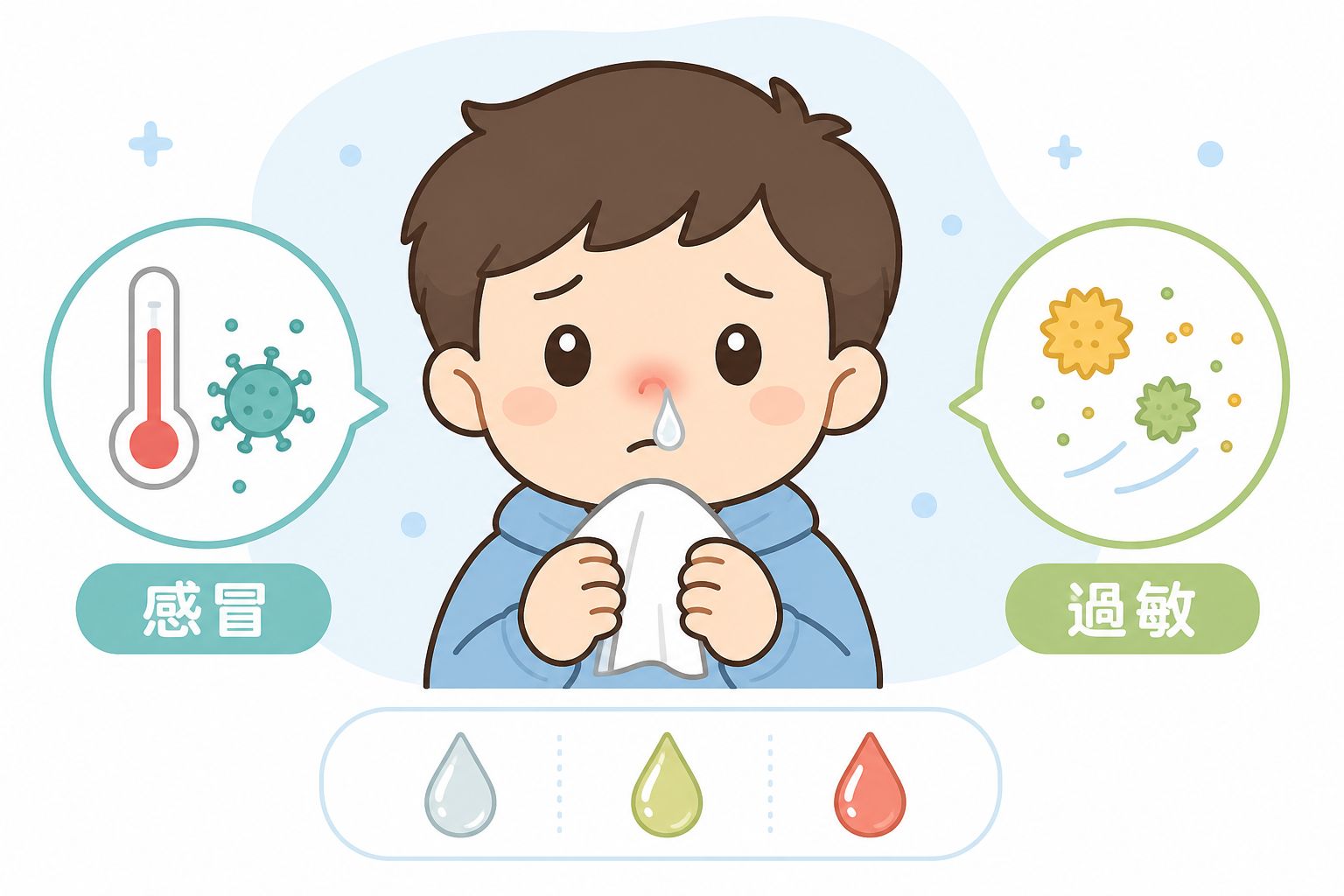
Every time the season changes or the weather gets cold, your nose runs like a leaky faucet and you can’t stop sneezing.
Even though you don’t feel sick, you burn through box after box of tissues, driving yourself crazy.
A runny nose is your body sending a signal: listen to what it is trying to say first, then decide how to handle it.
Is Your Runny Nose a Cold or Allergy? 4 Indicators to Tell the Difference
Many people think they have a cold as soon as their nose starts running, but it could actually be allergic rhinitis or temperature-sensitive vasomotor rhinitis.
The treatments for these two conditions are different. Use these indicators to make a quick judgment.
| Indicator | Allergy | Cold |
|---|---|---|
| Is it itchy? | Significant itching in the nose, eyes, and throat | Usually not very itchy |
| How long does it last? | Recurs repeatedly, often lasting over 1 to 2 weeks | Slowly improves in about a week |
| Occurrence pattern | Especially severe in the morning, before bed, or during large temperature shifts | No specific pattern of time |
| Is there a fever? | A simple allergy usually doesn’t cause a fever | Prone to fever and body aches |
If it is itchy and lasts a long time, it is mostly allergies; if accompanied by fever and body aches, it is likely a cold.
What Health Secrets Are Hidden in Your Mucus Color?
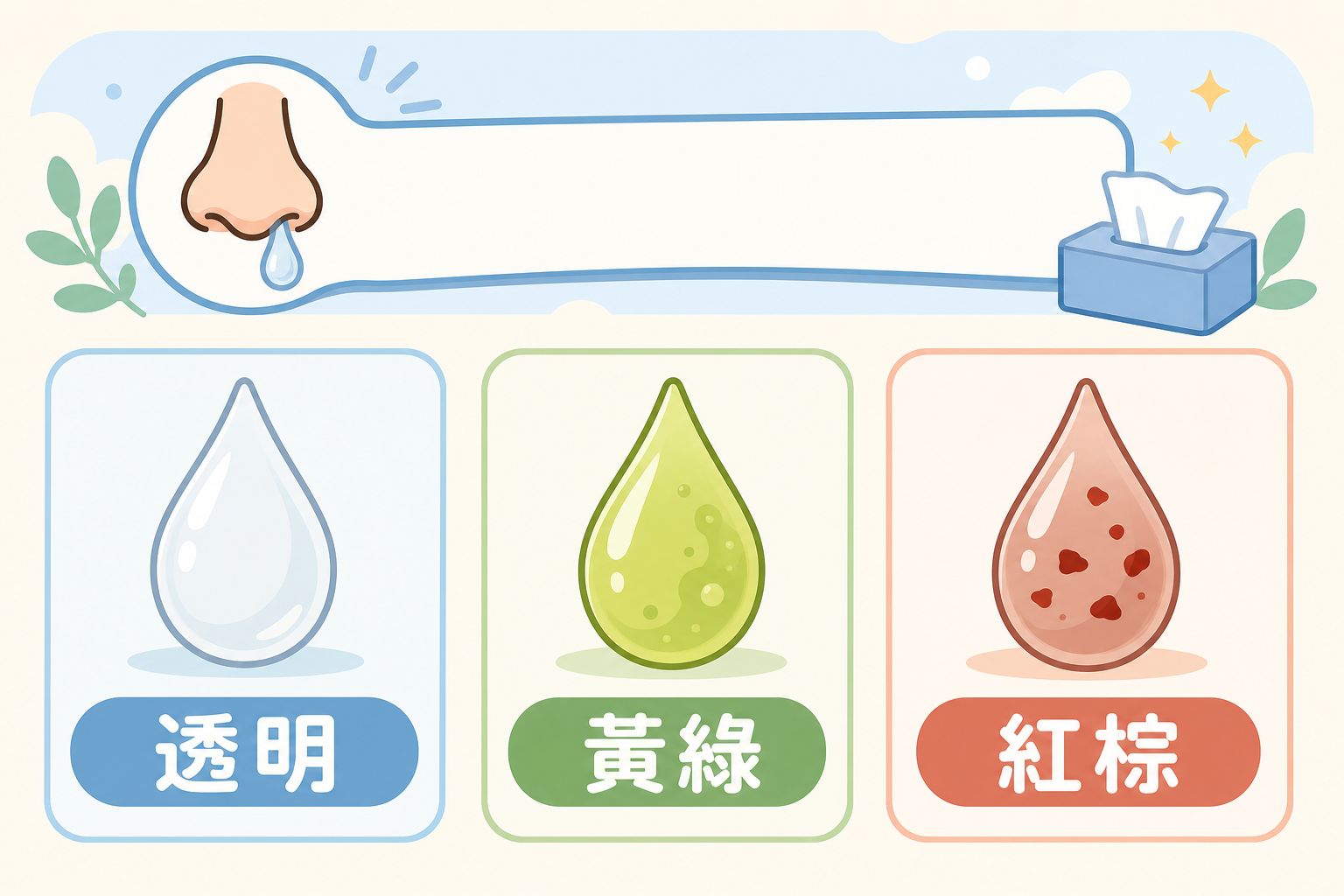
The mucus you blow out actually records your body’s condition. Next time you blow your nose, don’t rush to throw the tissue away—take a look at the color first.
| Color | What it represents |
|---|---|
| Clear and watery | Mostly allergies or cold air irritation; the body wants to flush out irritants with plenty of clear water |
| Thick yellow-green | The immune system is fighting germs; it contains dead white blood cells and pathogen debris |
| Red-brown with blood streaks | The nasal cavity is too dry, causing microcapillaries to rupture, combined with dried mucus forming hard scabs |
If you see red-brown streaks with blood, do not pick at it.
The nasal mucosa is very fragile; picking at it will only tear the wound and cause more bleeding.
How to Stop a Runny Nose? Fast-Acting Home Relief Methods
Now that you know the cause, how do you get your runny nose to stop quickly?
The key is not to slowly warm up your entire body, but to directly apply heat to the local area, letting your brain quickly receive the warmth signal.
| Method | How to do it |
|---|---|
| Precise local heating | Apply a hot towel to your eyes and nose when washing, or use a hair dryer on warm to blow on the Dazhui point on the back of your neck to make your brain think the environment has warmed up |
| Lock in the warmth | Put on a mask immediately when your nose is running, keeping the inhaled air warm and humid |
| Nasal rinse & acupressure | Rinse with warm saline to flush out allergens, or press Yingxiang points on both sides of the nose for relief |
Instead of drinking lots of hot water and waiting for your body to warm up, applying heat directly to your nose and back of the neck is several times more efficient.
When Should a Runny Nose Prompt an Immediate Doctor Visit?
Most runny noses resolve on their own, but some situations cannot be delayed.
| Warning Sign | Potential Issue |
|---|---|
| Thick yellow-green mucus lasting over 10 days | Possible complication of sinusitis; needs doctor evaluation |
| One-sided runny nose with foul odor | Especially in young children, beware of foreign body blockage in the nasal cavity |
| Accompanied by severe headache or facial pain | A signal of sinusitis or worsening infection |
If you have a one-sided, foul-smelling, blood-streaked runny nose that you can’t blow out, don’t handle it yourself—see a doctor directly.
A Runny Nose is Your Body’s Defense, Not Your Enemy
Looking back, a runny nose is actually your body working hard to protect you:
Flushing out allergens with clear water and trapping germs with thick mucus after the battle.
Instead of blindly suppressing it with medicine, learn to understand these signals.
Regularly control dust mites at home, stay warm, and use local heating and nasal rinses to soothe. You can slowly shake off the title of tissue killer and regain smooth breathing.