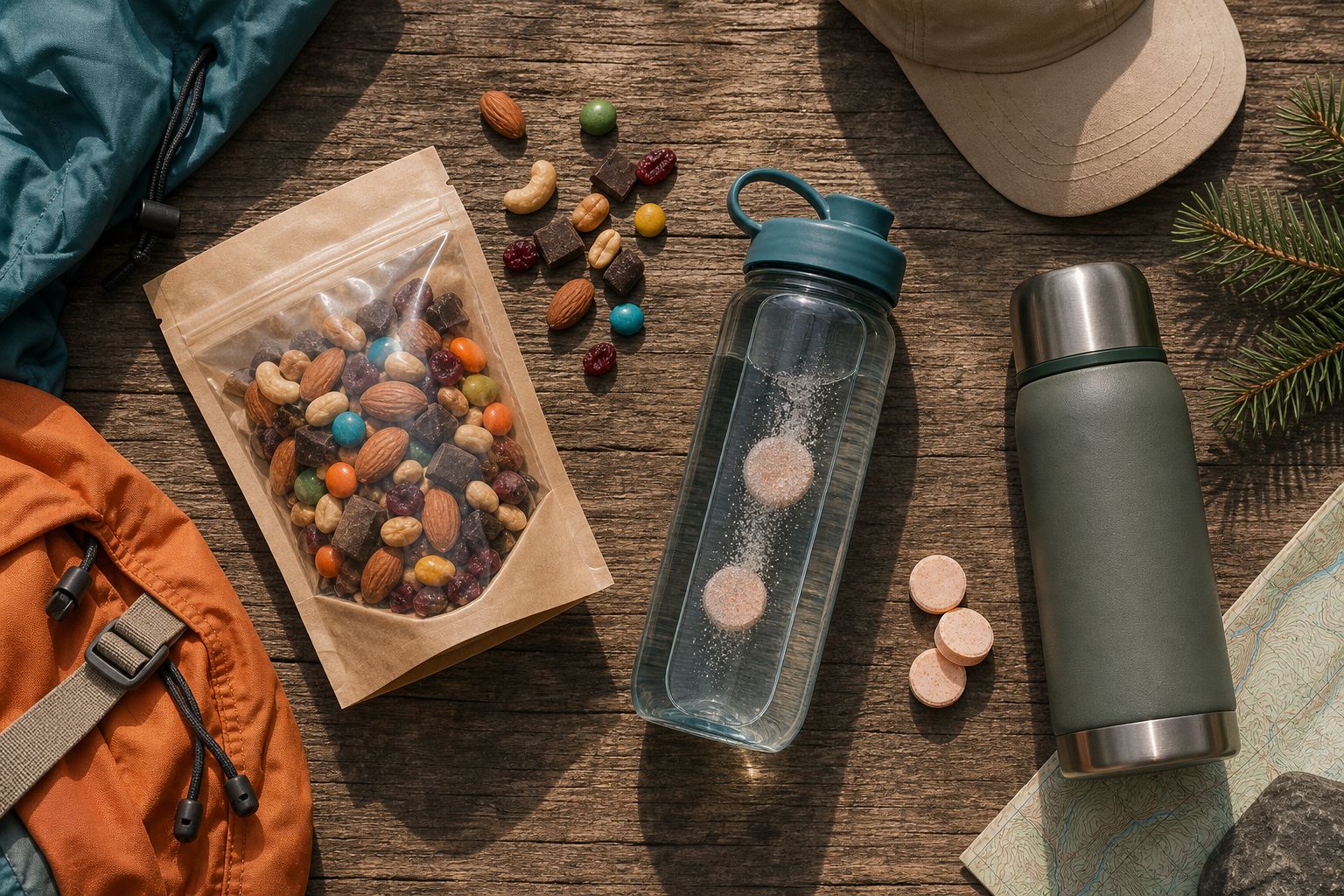
When climbing, guides always tell you to suck on a candy or eat a chocolate bar. What is the science behind this?
At high altitudes, eating the right things is more important than eating well. Choosing the wrong food will make your body suffer more in a low-oxygen environment, while choosing the right food can help you last for several more hours.
Why Keep Eating Candy at High Altitudes? The Oxygen-Saving Science of Carbohydrates
You might think eating candy is just for “replenishing energy,” but in low-oxygen high-altitude environments, the significance of eating candy goes far beyond that.
For the human body to convert food into energy, it needs to consume oxygen. Comparing carbohydrates and fat, when consuming the same amount of oxygen, burning sugar generates 8% to 10% more energy than burning fat.
| Energy Source | Characteristics | Oxygen Efficiency |
|---|---|---|
| Carbohydrates (Sugar) | Simple structure, high proportion of oxygen atoms | Oxygen Saver, quickly converted to energy with little oxygen |
| Fat | Complex structure, requires a lot of oxygen to decompose | High Oxygen Consumer, a slow remedy for an urgent need |
At high altitudes, your body faces a “tight oxygen budget” every second.
Eating candy is like choosing the “oxygen-saving mode”.
Save precious oxygen for your brain and muscles, and you will naturally breathe easier.
This is why guides always tell you to suck on brown sugar, eat chocolate, or gummies.
Eating Candy Helps Red Blood Cells Release More Oxygen?
When the human body is in a high-altitude low-oxygen environment, red blood cells will absorb a large amount of glucose from the blood.
Red blood cells use this sugar to produce a molecule called 2,3-BPG. This molecule goes and binds with hemoglobin, forcing hemoglobin to “let go” and release the oxygen it holds to surrounding oxygen-deprived tissues and organs.
Replenishing enough sugar is like providing an endless supply of raw materials for red blood cells, speeding up oxygen release and utilization within the body.
Red blood cells release more oxygen the following steps:
- Eat candy
- Red blood cells absorb glucose
- Produce 2,3-BPG
- Increase oxygen release to surrounding oxygen-deprived tissues and organs
Eating Candy Can Make You Breathe Deeply Automatically?
Burning carbohydrates produces more carbon dioxide than burning fat.
After the concentration of carbon dioxide in the blood rises slightly, it triggers the respiratory center of the brain, which commands the lungs to spontaneously deepen and speed up breathing.
This deep breathing induced by eating candy actually allows you to unconsciously inhale more thin air from high altitudes, thereby increasing blood oxygen saturation.
What Foods to Eat at High Altitudes? Which Ones are Landmines?
Now that we know the benefits of carbohydrates, the next question is: how should we choose foods?
Trail Food: What to Eat While Hiking?
When climbing, the body is very short of oxygen, so you won’t have the energy to chew hard nuts or beef jerky.
Chewing itself consumes oxygen, and liquid or semi-liquid sugars are the best instant fuels.
| Recommended Food | Reason |
|---|---|
| Energy Gel (Energy Drink) | Liquid, no chewing required, rapid absorption |
| Gummies, Brown Sugar Bars | High carb, easy to swallow |
| Raisins, Yogurt Bars | Small size, high calorie density |
The core principle of trail food: high carb, easy to swallow, no long chewing required.
Meals: What to Eat at Camp?
Digestion at camp is slightly better than during movement, but gastrointestinal blood flow decreases at high altitudes, and digestion speed is still greatly reduced.
| Recommended Food | Reason |
|---|---|
| Dehydrated Rice, Instant Noodles | Easy to digest, high calorie, dehydrated vegetables or egg drops can be added |
| Instant Mashed Potatoes | High carbohydrate content, virtually no chewing required |
Why is Flatulence Easy at High Altitudes? Which Foods to Avoid at All Costs?
This is related to the physical law of Boyle's Law.
When atmospheric pressure drops, the volume of gas inside a closed container expands.
Your stomach and intestines originally contain gas; at high altitudes, these gases expand collectively.
In addition, when the body is hypoxic at high altitudes, it prioritizes sending blood to the brain and heart, reducing blood flow to the gastrointestinal tract and severely reducing digestive function.
Low air pressure + slow digestion = severe flatulence. Eating too full actually increases the cardiopulmonary burden.
High Altitude Diet Landmine List
| Foods to Avoid | Reason |
|---|---|
| Beans (Red Beans, Soybeans) | Gas-producing food, worsens gastrointestinal flatulence |
| Carbonated Drinks (Cola, Beer) | A large amount of gas expands in low-pressure environments |
| Sweet Potatoes, Onions | Intestinal fermentation produces a large amount of gas |
| High-fat Foods | Digestion is highly oxygen-consuming, increasing the burden in hypoxic environments |
How to Drink Water at High Altitudes? “Precise Hydration Method”
Many people “drink only when thirsty” when climbing, which is very dangerous on mountains.
High-altitude air is extremely dry, and combined with faster breathing, the body loses up to 1 to 2 liters of water per day just through breathing.
By the time you feel thirsty, your body is already dehydrated.
Hydration Formula: Small Amounts, Multiple Periods, Regularly
| Timing | Water Intake | Principle |
|---|---|---|
| During Movement | Drink 50-100 ml (2-3 sips) every 15-20 minutes | Never chug 500 ml at once |
| Daily Total | Weight(kg) × 30ml + Climbing Hours × 300ml |
60 kg climbing 6 hours = at least 3,600 ml |
Water Temperature Matters: Refuse Ice Water
On dry and cold mountains, drinking ice water forces the body to consume precious calories to “heat” the water in the stomach to body temperature.
You must have a thermos in your backpack. Drinking warm water saves energy and prevents cold air from inducing airway spasms (high altitude cough).
Electrolyte Replenishment to Prevent Cramps
Drinking only pure water accelerates salt loss from the body; panting and sweating take away a lot of salt, and pure water will only make it worse.
| Replenishment Method | Explanation |
|---|---|
| Add sports drink powder or effervescent tablets to the water bladder | Replenish lost sodium, potassium, magnesium |
| Suck on a salt candy regularly | Lowest cost, most effective for preventing thigh cramps |
What is the Relationship Between Dehydration and Altitude Sickness?
This is the most easily overlooked yet most impactful link.
When the body is dehydrated, blood becomes thick. If blood is too thick, red blood cells flow slower, and the efficiency of carrying oxygen drops like an avalanche.
Dehydration not only makes you uncomfortable, it directly worsens altitude sickness, and can even cause your symptoms to be misdiagnosed as altitude sickness.
| Chain Reaction of Dehydration | Result |
|---|---|
| Thick blood | Red blood cells flow slower |
| Reduced oxygen delivery efficiency | Increased tissue hypoxia |
| Headache, nausea, fatigue | Symptoms are almost identical to altitude sickness |
Drinking plenty of water to keep blood thin allows red blood cells to flow smoothly like traffic on a highway, quickly delivering inhaled oxygen to the entire body.
Conscious and regular hydration is the simplest yet most easily overlooked step to prevent altitude sickness.
Reference
- Altitude sickness - Wikipedia, the free encyclopedia
- Altitude sickness - Taiwan Centers for Disease Control
- High Altitude Physiology, Prevention and Treatment of Altitude Sickness - Yushan National Park Headquarters, Ministry of the Interior
- Introduction to Medications for Preventing Altitude Sickness in Mountaineering - China Medical University Hospital
- Travel Medicine Education and Training Center