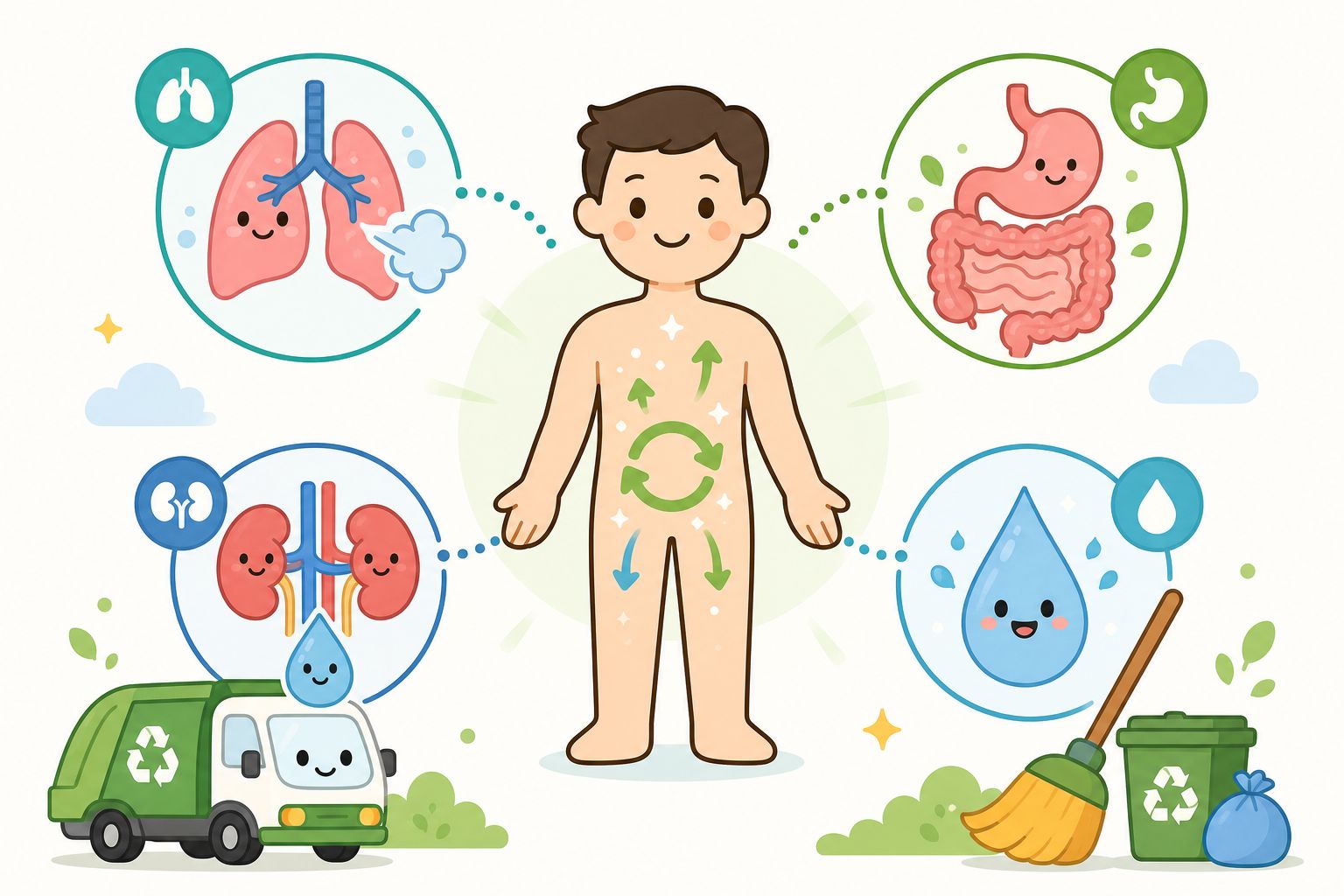
When you have a cold, your immune system fights a tough battle against the virus.
How do those white blood cells killed in battle and destroyed viral fragments eventually get discharged from the body?
Actually, it’s not just through runny nose; the body clears waste through multiple paths, operating like a garbage removal system after a major city war.
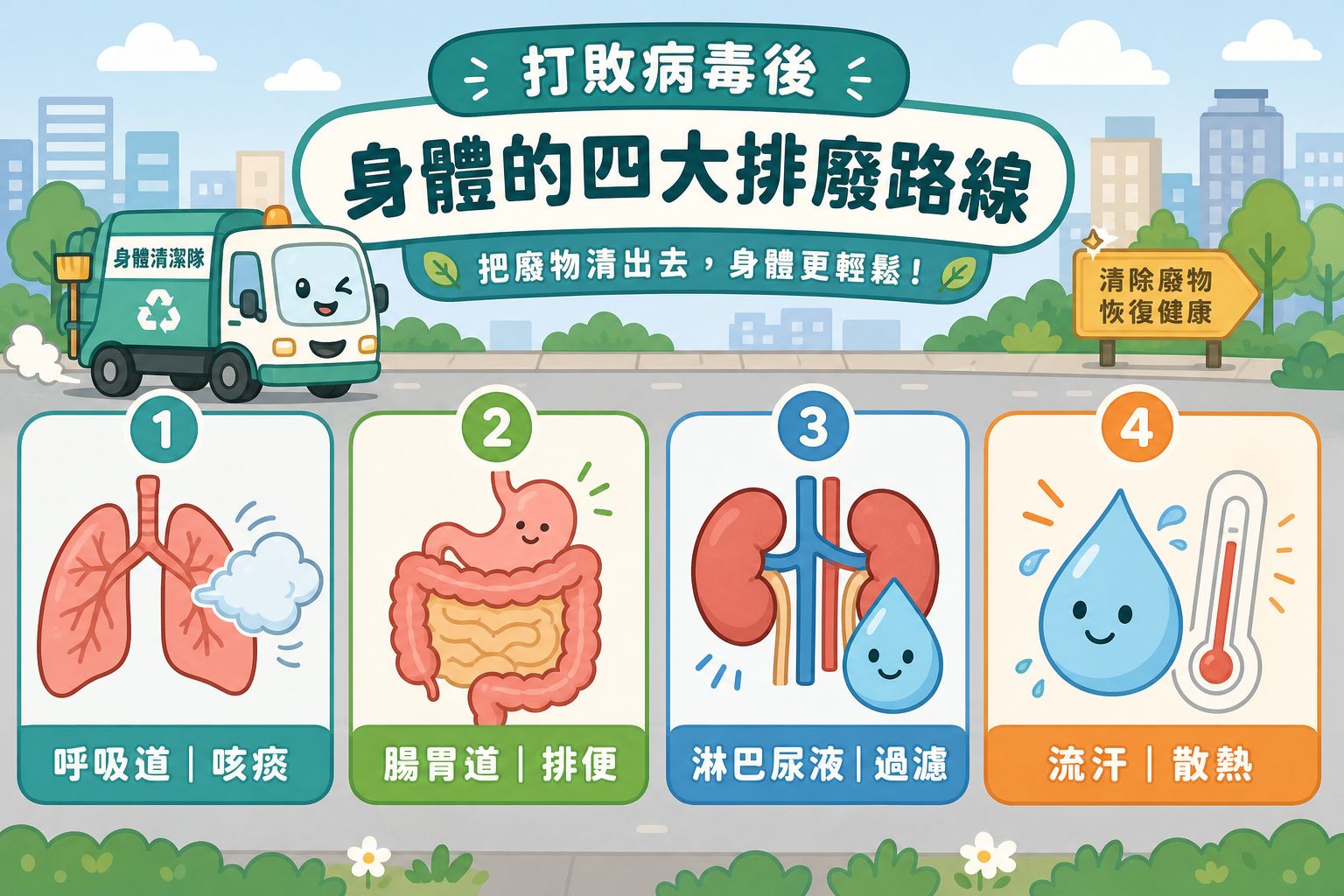
After Viruses Die in Battle, Which Channels Are They Mainly Discharged From?
The two most direct waste removal routes for battle waste are the respiratory tract and the gastrointestinal tract.
| Channel | Waste Removal Method |
|---|---|
| Respiratory Frontline | When viruses invade the trachea and bronchi, the mucous membrane packages the corpses into phlegm, pushing them up via cilia and discharging them through coughing |
| Gastrointestinal Clearance | Phlegm from post-nasal drip or coughed up is often swallowed into the stomach, decomposed by strong stomach acid, and mixed into feces to be discharged |
Many people are surprised to learn that a large amount of cold waste is actually “swallowed” and then discharged by us.
Don’t worry about getting sick from swallowing it; stomach acid is a strong acid, and the vast majority of remaining viruses will be directly dissolved.
How Is Waste Cleared from Deep Inside the Body?
Not all waste can be directly coughed up or discharged. Waste that dies deep in the lymph nodes, muscles, and blood must be processed by micro-biochemical systems.
The body has an amazing mechanism called Autophagy.
After winning the battle, the responsible
macrophagesfunction like robot vacuums, “eating” and decomposing viral fragments and cell debris.
These decomposed small-molecule wastes enter the lymph and blood circulation, and are finally sent to the kidney for filtration, turning into urine to be discharged from the body.
This is also why doctors always tell you to drink more water and use the restroom frequently during a cold, because drinking water accelerates the efficiency of this micro waste removal route.
Can Sweating Really Detoxify?
There is a common folk saying: “Go exercise or take a hot bath when you have a cold, sweat it out and you’ll be fine,” which leads many to believe viruses are discharged through sweat.
This is actually a misunderstanding.
| Myth | Reality |
|---|---|
| Sweating discharges viruses | There are almost no viral corpses in sweat; it is 99% water and a small amount of salt |
| Sweating represents detoxifying | Sweating is the body’s physical mechanism for reducing fever and dissipating heat, indicating the battle is coming to an end |
Sweating when sick is the body “lowering its temperature”, not that the sweat itself has a detoxifying function.
Why Do Lymph Nodes Swell During a Cold?
When you have a cold, touching both sides of your neck or jaw often reveals a few painful lumps, which are the lymph nodes.
You can think of them as the human body’s military bases and waste collection sites.
A large number of viruses are intercepted here, where the immune army battles them. Cells killed or injured in action cannot be transported to the kidneys by the lymph in time, temporarily jamming here, causing the lymph nodes to swell and become inflamed.
Once the illness is cured and the waste removal trucks carry the waste away to be filtered into urine, these lumps will naturally disappear.
Drinking More Water and Resting Is Helping the Waste Removal System Work Overtime
Looking back, during a cold, the body actually starts several waste removal channels simultaneously, from coughing up phlegm, defecating, to urinating, each performing its duties.
The so-called drinking more water and resting are, in essence, helping these waste removal systems operate efficiently:
| Method | Explanation |
|---|---|
| Drink more water | Accelerates the lymph and kidneys in filtering waste into urine |
| Rest more | Saves energy for the immune system to clean up the battlefield |
The next time you feel groggy during a cold, you’ll know your body is busy spring cleaning. Treat it well and let it focus on clearing the battlefield.