
“To save, or not to save?”
When a loved one reaches the end of life and their breathing becomes weaker and weaker, the moment the doctor asks whether you want to intubate is often the most painful test for a family.
There is no standard answer to this question, but knowing more can help reduce panic and lead to a more reassuring choice.
What is a “Do Not Intubate Order”? And How is it Different from “Do Not Resuscitate”?
At the end of life, when the condition is already irreversible, excessive medical interventions sometimes only increase the patient’s suffering.
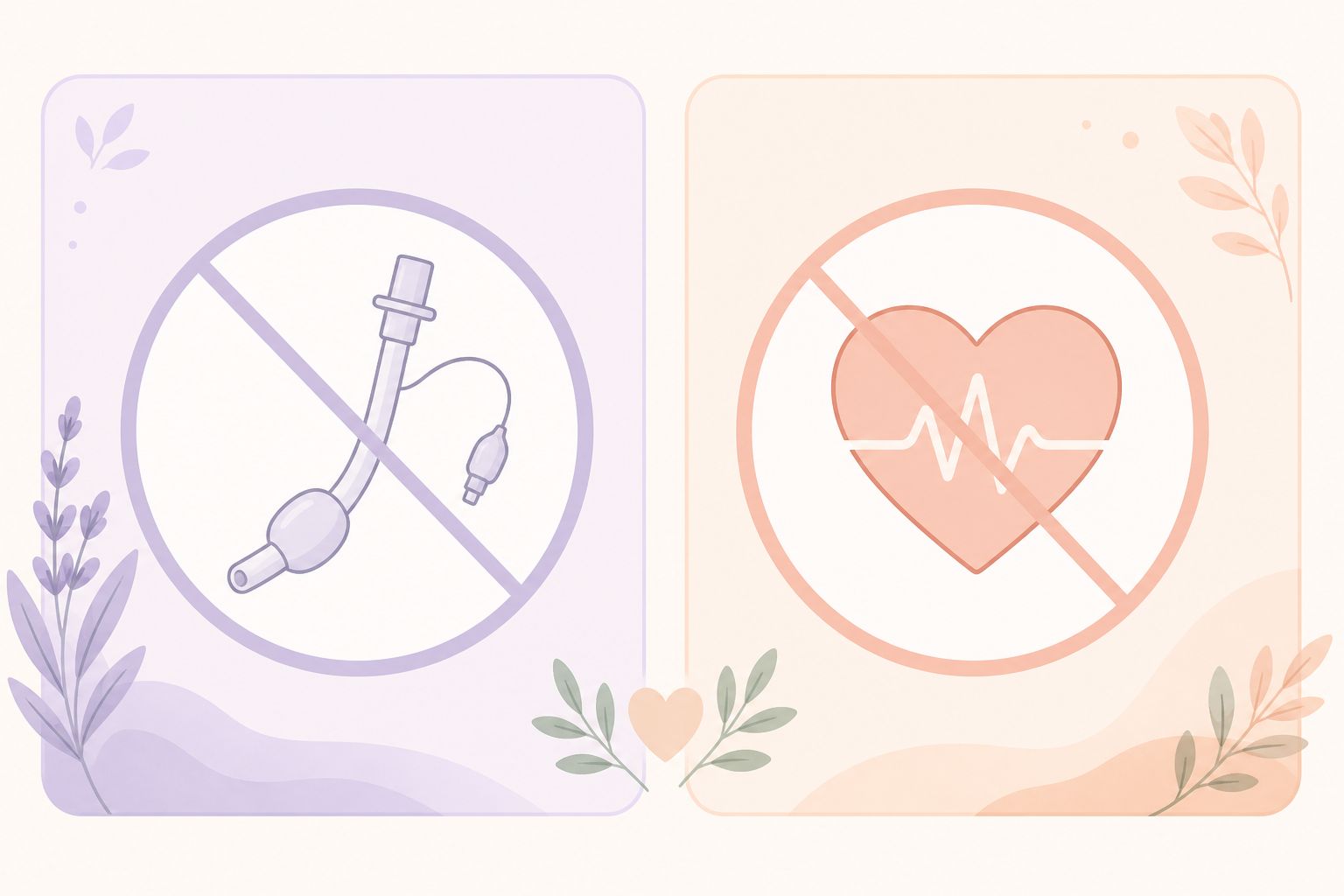
At this time, healthcare professionals often mention two terms: DNI and DNR. They are often confused, but their scopes are actually quite different:
| Order | Full Name | Content |
|---|---|---|
| DNI | Do Not Intubate | Allows other basic resuscitation, but does not insert a breathing tube or intubate |
| DNR | Do Not Resuscitate | When the heart stops, no chest compressions, defibrillation, or other resuscitation is performed |
Choosing
DNIdoes not mean giving up treatment, but rather choosing a care method that prioritizes comfort.
For example, when a patient with a DNI is short of breath, the medical team will still provide oxygen masks and medication to relieve discomfort, they just will not place an invasive breathing tube.
This is also why advance care planning is so important:
Expressing one’s own wishes for the end of life while the patient is still conscious prevents leaving this heavy decision entirely to the confused family.
Once Intubated, Can the Tube Still Be Removed?
If a patient is already intubated but has reached an irreversible end-of-life stage, can the tube still be removed?
The answer is yes. In hospice care, this is called palliative extubation. Its purpose is completely different from rehabilitative extubation when the condition improves:
| Extubation Type | Purpose |
|---|---|
| Rehabilitative Extubation | The illness has improved, the patient can breathe on their own, and the tube is removed to return to normal life |
| Palliative Extubation | The condition is irreversible, meaningless life support is withdrawn, allowing the patient to pass away naturally and comfortably |
Palliative extubation is not “removing life support and waiting for them to pass,” but rather stopping futile delays and returning comfort and dignity to the patient.
During the process, the medical team will use medications to ensure the patient does not feel shortness of breath or pain, allowing the family to accompany them peacefully.
This period is also the time to embrace the “four stages of life”:
| Action | Description |
|---|---|
| Expressing Gratitude | Thank you for everything you have done for us in this lifetime |
| Expressing Love | Say the love hidden in your heart out loud |
| Apologizing | Let go of regrets and grudges between each other |
| Saying Goodbye | Bid a proper farewell |
True love is not necessarily holding on at all costs.
Sometimes, choosing to let go and ease a loved one’s suffering is actually the deepest farewell.
Discussing advance care planning with family as early as possible can reduce regrets for both the patient and the family.